Industry News
Curation by industry experts
Hot Articles
Popular Tags
Industrial Hardware Selection: Hidden Failure Costs to Watch
Choosing industrial hardware is rarely a unit-price decision. Hidden failure costs often appear later through downtime, claims, compliance gaps, replacement labor, and supplier inconsistency.
As supply chains become performance-driven, industrial hardware selection must include lifecycle reliability, traceability, certification quality, and total cost of ownership.
Industrial Hardware Selection and the Real Cost of Failure
Industrial hardware covers fastening, joining, supporting, locking, moving, and load-bearing components used across factories, buildings, vehicles, equipment, displays, and furniture systems.
Common examples include bolts, nuts, hinges, brackets, clamps, springs, anchors, latches, slides, casters, handles, and precision metal fittings.
These parts may look simple, yet they often determine safety, durability, installation speed, service life, and customer perception.
A low-cost industrial hardware item can become expensive when it causes rework, stoppage, returns, or accelerated replacement.
The strongest evaluation model connects specification, application environment, production consistency, and after-installation performance.
This approach helps identify risks before they become field failures or commercial disputes.
Why Hidden Failure Costs Are Increasing
Global sourcing has made industrial hardware more competitive, but it has also added complexity to material verification, logistics control, and supplier comparison.
Longer supply chains can separate design intent from production reality. A drawing may be correct, while execution still varies between batches.
Cost pressure also encourages substitution of coatings, steel grades, tolerances, packaging methods, and inspection steps.
When these substitutions are undocumented, industrial hardware risk increases across assembly, transport, installation, and long-term use.
The Main Hidden Costs Behind Industrial Hardware Failure
Downtime and Production Interruption
A failed hinge, anchor, clamp, or fastener can stop an entire line or delay site installation.
The hardware cost may be small, but lost production hours can exceed the purchase value many times over.
For industrial hardware used in repeat assemblies, downtime risk should be priced into the selection model.
Replacement Labor and Rework
Field replacement is usually more expensive than the original installation. It requires labor, access, tools, scheduling, and supervision.
Poorly selected industrial hardware can also damage surrounding materials during removal, increasing rework scope and waste.
Warranty Claims and Brand Damage
Small components can create visible failures. Loose handles, corroded screws, broken slides, and noisy casters quickly affect product confidence.
Warranty records often reveal whether industrial hardware was evaluated for real service conditions or only compared by quotation.
Compliance Gaps and Documentation Delays
Documentation failures can delay shipments, inspections, customer approvals, and regulatory submissions.
Reliable industrial hardware sourcing requires material certificates, coating details, RoHS or REACH relevance, and process records where applicable.
Inventory Instability and Supplier Variation
Inconsistent suppliers create hidden carrying costs. Extra safety stock may be needed to protect against batch variation or late deliveries.
Stable industrial hardware supply depends on repeatable tooling, controlled raw materials, and transparent change management.
Lifecycle Value as a Better Evaluation Method
Total cost of ownership gives a fuller view than unit price. It measures cost across sourcing, installation, operation, service, and disposal.
For industrial hardware, lifecycle value begins with confirming whether the component matches the load, environment, movement, and maintenance pattern.
A zinc-plated fastener may perform well indoors, yet fail quickly in humid or chemical environments.
A hinge rated for light cabinet use may not survive repeated commercial opening cycles.
A caster may carry static load, yet fail under shock, vibration, or uneven flooring.
The key is matching industrial hardware performance to the real duty cycle, not only the catalog description.
- Material grade and mechanical strength
- Surface treatment and corrosion resistance
- Dimensional tolerance and fit consistency
- Cycle life, fatigue resistance, and vibration behavior
- Packaging protection and transport damage control
- Traceability, test records, and supplier change notice
Typical Industrial Hardware Scenarios and Risk Priorities
Different applications expose hardware to different failure modes. A single checklist cannot cover every operating condition.
Segmenting industrial hardware by scenario helps define the right tests, documents, and acceptance thresholds.
Specification Details That Prevent Expensive Surprises
A precise specification reduces interpretation gaps. It also gives suppliers a measurable basis for production and inspection.
Industrial hardware specifications should avoid vague phrases such as “good quality,” “standard finish,” or “strong enough.”
Instead, requirements should define material, standard, hardness, coating thickness, salt spray target, tolerance, load rating, and packaging method.
Where safety matters, the specification should include testing method, sampling plan, and rejection criteria.
For custom industrial hardware, drawings should control critical dimensions, surface zones, mating interfaces, and assembly orientation.
- Use recognized standards where possible, such as ISO, DIN, ASTM, ANSI, or EN.
- Define critical-to-function dimensions separately from cosmetic dimensions.
- Require approval before material, coating, tooling, or production site changes.
- Keep golden samples for color, finish, fit, and movement comparison.
- Align packaging with humidity, abrasion, stacking, and transport conditions.
Supplier Capability Signals Worth Checking
Supplier assessment should go beyond product photos and quotation sheets. The strongest signals are process-based and evidence-backed.
Industrial hardware quality depends on tooling maintenance, forming accuracy, heat treatment control, plating stability, and final inspection discipline.
Factory capability can be validated through audit records, equipment lists, calibration reports, and defect history.
A strong supplier can explain how nonconforming industrial hardware is isolated, reviewed, corrected, and prevented from recurring.
Practical Selection Framework for Lower Risk
A structured framework makes industrial hardware decisions more consistent across categories, regions, and suppliers.
The goal is not to over-engineer every part. The goal is to align control intensity with business risk.
- Classify the component by safety, downtime, warranty, and compliance impact.
- Define the operating environment, including load, humidity, chemicals, vibration, and cycles.
- Translate the environment into measurable industrial hardware specifications.
- Compare suppliers using evidence, not only price and delivery promises.
- Validate samples under realistic assembly and service conditions.
- Monitor early batches and capture field performance data.
For high-risk industrial hardware, pilot runs are especially useful. They expose fit issues, coating defects, fatigue concerns, and packaging weaknesses.
For lower-risk parts, standardized specifications and approved supplier lists may provide adequate control.
Common Mistakes in Industrial Hardware Evaluation
One common mistake is treating catalog equivalence as performance equivalence. Similar dimensions do not guarantee similar strength or durability.
Another mistake is accepting certificates without checking whether they match the batch, material, process, and shipment.
A third mistake is ignoring installation behavior. Hardware that performs in a lab may fail when tools, torque, or site conditions vary.
Industrial hardware should also be reviewed after design changes. A small dimensional adjustment can alter load path or assembly stress.
Cost models should include freight, inspection, scrap, warranty, service labor, downtime, and replacement stock.
Using Market Intelligence to Strengthen Decisions
Reliable sourcing depends on current information. Material prices, coating capacity, trade rules, and factory availability can shift quickly.
Industrial hardware decisions improve when market intelligence is combined with technical validation and supplier transparency.
Global Supply Review focuses on the foundational sectors that support consumer and industrial trade.
Its coverage connects hardware, packaging, textiles, lighting, displays, furniture, and decor with sourcing risk and operational performance.
This cross-sector view is useful because industrial hardware often sits at the interface between product design and supply chain execution.
Better intelligence helps identify where quality claims are credible, where documentation is weak, and where supplier capability supports scale.
Action Steps Before the Next Sourcing Decision
Before approving industrial hardware, build a short risk file for each critical component.
The file should include drawings, standards, sample approvals, test evidence, supplier records, packaging requirements, and batch traceability expectations.
Review past failures and customer complaints. They often reveal hidden cost drivers that quotations never show.
Set approval gates for sample testing, first article inspection, early production review, and recurring performance monitoring.
For complex industrial hardware, compare at least two qualified supply options to reduce dependency and improve continuity.
The most economical choice is rarely the cheapest line item. It is the component that protects uptime, compliance, and long-term reliability.
A disciplined industrial hardware selection process turns hidden failure costs into visible decision criteria before contracts are finalized.
Recommended News
 Home DecorHow order size affects wholesale prices for round linen tableclothsBuying round linen tablecloths wholesale? Discover how order size, freight, and inventory costs affect pricing—and choose the right quantity to maximize real savings.Interior Sourcing LeadOct 14, 2026
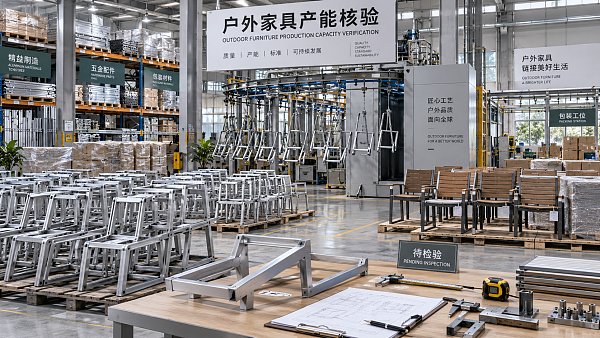
 Outdoor FurnitureHow to verify outdoor furniture manufacturers' production capacityCan outdoor furniture manufacturers deliver on time? Learn how to verify production capacity, uncover bottlenecks, and validate supplier commitments before placing your next order.Interior Sourcing LeadOct 13, 2026
 Commercial DisplaysWhat makes an outdoor digital signage display manufacturer reliable?Discover how to choose a reliable outdoor digital signage display manufacturer with proven weather protection, quality control, smart visibility, and responsive after-sales support.Commercial Tech EditorOct 12, 2026
 Garment MfgWhen do bulk embroidered hoodies offer better value than printed ones?Bulk embroidered hoodies deliver lasting value for uniforms and premium branding. Compare durability, design, comfort, and cost to choose the right decoration.Textile Industry AnalystOct 11, 2026