Industry News
Curation by industry experts
Hot Articles
Popular Tags
SGS Launches Fast-Track Certification for Compostable Gifting Packaging
On May 28, 2026, during the Asia-Pacific Seafood Exhibition in Dalian, SGS and the China Federation of Packaging jointly released the Eco-Packaging Fast-Track Protocol for Bridal Gifting. This initiative introduces a 48-hour rapid testing and 7-day certification pathway for compostable cardboard gift boxes used by bridal photography studios and formalwear brands. The protocol is recognized under both EU EN 13432 and US ASTM D6400 standards—making it directly relevant to exporters in home décor and eco-packaging sectors.
Event Overview
On May 28, 2026, at the Asia-Pacific Seafood Exhibition in Dalian, SGS and the China Federation of Packaging announced the Eco-Packaging Fast-Track Protocol for Bridal Gifting. The protocol establishes a streamlined certification process—48-hour laboratory testing and certificate issuance within seven calendar days—for compostable cardboard used in wedding-related gift packaging. It is mutually recognized under EN 13432 (EU) and ASTM D6400 (US). The protocol applies specifically to enterprises exporting home décor and eco-packaging products.
Industries Affected
Direct Exporters (Home Décor & Eco-Packaging)
These companies face immediate implications for export compliance timelines. Because the protocol explicitly references EN 13432 and ASTM D6400—both required for market access in the EU and US—exporters targeting those regions may now align their packaging validation with a standardized, accelerated route. Impact centers on reduced time-to-market for certified sustainable packaging solutions.
Raw Material Suppliers (Compostable Paper & Board Producers)
Suppliers of uncoated or lightly coated kraft-based cardstock used in gifting applications are affected because the protocol defines eligibility criteria implicitly through its scope: ‘compostable cardboard’ for bridal gifting. While exact material specifications are not disclosed in the initial announcement, producers must verify whether their current formulations meet functional requirements (e.g., strength, printability, compostability under industrial conditions) referenced in EN 13432/ASTM D6400.
Contract Packaging & Box Manufacturers
Manufacturers producing finished gift boxes for bridal studios or apparel brands may see increased demand for certified compostable substrates. Since the fast-track applies only to final packaging units—not raw board alone—their role shifts toward ensuring full traceability from substrate sourcing to finished box assembly, including documentation that supports claim substantiation.
Distribution & Brand-Owner Channels (Bridal Studios, Formalwear Retailers)
These end-users influence specification decisions but do not conduct certification themselves. Their impact lies in procurement pressure: as marketing claims around sustainability gain regulatory scrutiny (e.g., EU Green Claims Directive), demand for third-party verified compostability will likely rise. Their packaging choices may increasingly require evidence aligned with protocols like this one—even if indirectly.
What Companies and Practitioners Should Focus On
Monitor official technical annexes and eligibility criteria
The protocol’s name and scope have been confirmed, but publicly available details—including substrate thickness limits, coating restrictions, labeling requirements, and acceptable test methods—are not yet published. Stakeholders should track updates from SGS and the China Federation of Packaging for implementation guidance.
Assess applicability to current product lines—not just bridal categories
Although branded for ‘bridal gifting’, the underlying certification framework relies on internationally harmonized compostability standards. Analysis shows that any home décor or gifting product using identical materials and construction could potentially qualify, provided it meets functional performance benchmarks. Companies should evaluate cross-category reuse potential before committing to new supply chain workflows.
Distinguish between protocol adoption and regulatory obligation
Observably, this is a voluntary fast-track service—not a new legal requirement. Its value lies in speed and recognition, not mandatory compliance. Companies should avoid conflating participation with regulatory readiness; existing EN 13432 or ASTM D6400 certifications remain valid outside this pathway.
Prepare internal documentation and supplier coordination now
Because the 48-hour testing window assumes ready availability of representative samples and full material disclosure, companies intending to use the fast-track should begin aligning internal quality records and supplier data sheets. Delays are more likely to stem from incomplete documentation than lab capacity.
Editorial Perspective / Industry Observation
This development is better understood as an operational signal—not an immediate regulatory shift. From an industry perspective, it reflects growing alignment between certification bodies and trade associations to reduce friction in sustainable packaging verification. It does not introduce new environmental thresholds, but rather compresses the timeline for demonstrating conformity to existing ones. Continued attention is warranted because similar fast-track models may expand to other packaging formats (e.g., flexible films, molded fiber) or adjacent sectors (e.g., foodservice, cosmetics) where green claims face increasing regulatory and consumer scrutiny.
Conclusion: The launch represents a procedural refinement—not a paradigm shift—in how compostable packaging is validated for export markets. It lowers time barriers for specific high-value gifting applications but does not alter baseline compliance expectations. Currently, it is most appropriately interpreted as a targeted efficiency tool for exporters already committed to meeting EN 13432 or ASTM D6400 requirements—and as an early indicator of institutional coordination around verifiable sustainability claims.
Information Source: Official joint announcement by SGS and the China Federation of Packaging, issued on May 28, 2026, during the Asia-Pacific Seafood Exhibition in Dalian. Technical annexes and detailed eligibility criteria remain pending publication and are subject to ongoing observation.
Recommended News
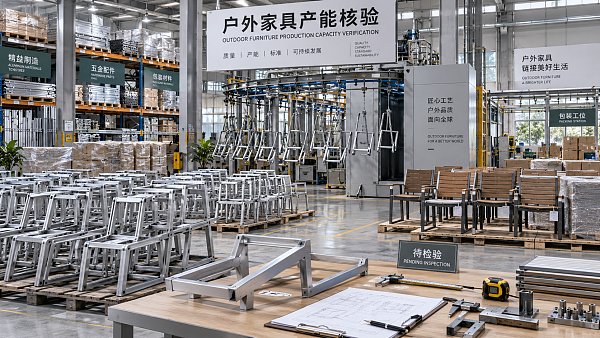
 Outdoor FurnitureHow to verify outdoor furniture manufacturers' production capacityCan outdoor furniture manufacturers deliver on time? Learn how to verify production capacity, uncover bottlenecks, and validate supplier commitments before placing your next order.Interior Sourcing LeadOct 13, 2026
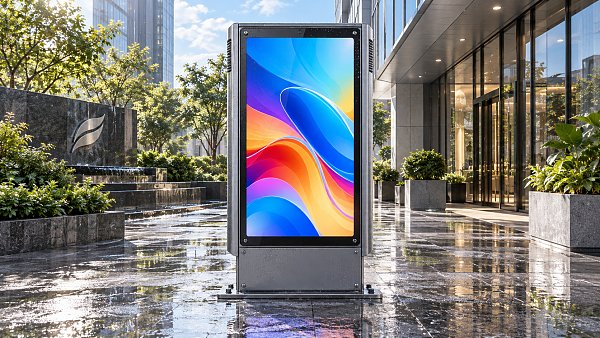
 Commercial DisplaysWhat makes an outdoor digital signage display manufacturer reliable?Discover how to choose a reliable outdoor digital signage display manufacturer with proven weather protection, quality control, smart visibility, and responsive after-sales support.Commercial Tech EditorOct 12, 2026
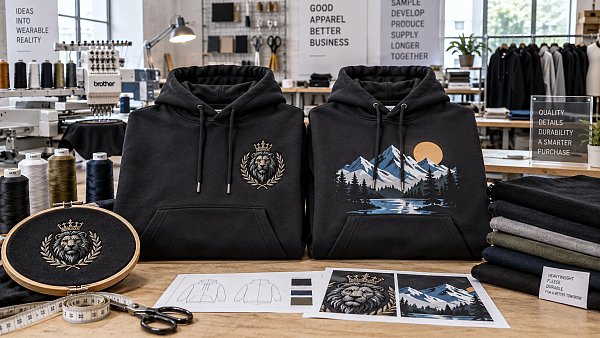
 Garment MfgWhen do bulk embroidered hoodies offer better value than printed ones?Bulk embroidered hoodies deliver lasting value for uniforms and premium branding. Compare durability, design, comfort, and cost to choose the right decoration.Textile Industry AnalystOct 11, 2026
 Carton & PlasticsHow to compare packaging automation suppliers for line integrationPackaging automation supplier comparison guide: evaluate line integration, controls, safety, testing, lifecycle costs, and support to select a proven partner.Packaging Supply ExpertOct 10, 2026