Industry News
Curation by industry experts
Hot Articles
Popular Tags
Vietnam Mandates Dual FSC+PEFC Certification for Wooden Photo Prop Packaging
Starting 1 July 2026, Vietnam will require all wooden outdoor props used in wedding photography — including artificial trees, wooden crates, and scenic panels — to be packaged with materials certified under both FSC and PEFC standards. This regulation directly affects export-oriented manufacturers in East and South China, particularly those supplying to Vietnamese photo studios and rental services.
Event Overview
On 25 May 2026, Vietnam’s Ministry of Industry and Trade issued an official notice stating that, effective 1 July 2026, imported wooden outdoor photography props must use packaging bearing simultaneous FSC (Forest Stewardship Council) and PEFC (Programme for the Endorsement of Forest Certification) certification. Non-compliant shipments will be denied customs clearance. The stated objective is to strengthen traceability across the timber supply chain.
Industries Affected
Export Manufacturing Enterprises
Manufacturers in China’s East and South regions — especially those producing wooden photo props for overseas markets — are directly impacted. Over 120 such enterprises have been identified as affected. Their impact stems from the need to revise packaging specifications, verify upstream material sourcing, and update documentation for customs submission. Compliance failure may result in shipment rejection or delays at Ho Chi Minh City or Hai Phong ports.
Packaging Material Suppliers
Suppliers of corrugated boxes, wooden pallets, and protective framing used for prop packaging must now ensure their products carry both FSC and PEFC chain-of-custody certification. Single-certified or uncertified packaging will no longer meet regulatory requirements. This may necessitate new supplier qualification processes and revised procurement contracts.
Logistics & Customs Service Providers
Freight forwarders and customs brokers handling shipments of wooden photo props to Vietnam must verify dual certification on packaging before filing import declarations. Absence of valid certification documents — including certificate numbers and scope statements — may trigger inspection or hold orders. Documentation review procedures are expected to become more stringent post-July 2026.
Key Considerations and Recommended Actions
Monitor Official Updates from Vietnam’s Ministry of Industry and Trade
The May 2026 notice is the first public announcement; detailed implementation guidelines — such as acceptable certificate formats, validity periods, and verification mechanisms — have not yet been published. Exporters should track follow-up circulars or FAQs released by Vietnamese customs authorities.
Identify High-Risk Product Categories and Packaging Components
Focus initial compliance efforts on items explicitly named in the notice: artificial trees, wooden crates, and scenic panels. Review all associated packaging — inner lining, outer cartons, pallets, and dunnage — for certification status. Prioritize components sourced from non-certified vendors or third-party packagers.
Distinguish Between Policy Signal and Operational Readiness
This requirement reflects a tightening of timber-related import controls, but its enforcement intensity — e.g., sampling rate, document audit depth, or penalties for minor discrepancies — remains unconfirmed. Companies should treat it as a binding obligation while recognizing that practical execution may evolve during the first six months post-implementation.
Initiate Supplier Engagement and Documentation Preparation Now
Reach out to packaging suppliers to confirm dual certification availability and request updated certificates. Begin compiling internal records linking each product SKU to its packaging certification details. Where gaps exist, allow sufficient lead time — typically 8–12 weeks — for supplier re-certification or alternative sourcing.
Editorial Perspective / Industry Observation
Observably, this regulation signals Vietnam’s broader alignment with international timber legality frameworks, rather than an isolated trade barrier. It mirrors similar due diligence expectations seen in EU Timber Regulation (EUTR) and U.S. Lacey Act enforcement, but applies specifically to a niche B2B segment. Analysis shows the mandate is less about immediate market access restriction and more about institutionalizing supply chain accountability within a high-volume, low-value-added import category. From an industry perspective, it functions primarily as a procedural signal — one that highlights growing certification interdependence across adjacent environmental standards, rather than indicating an imminent shift in demand or design requirements.

Conclusion: This requirement does not alter product functionality or core material composition, but introduces a mandatory documentation and sourcing layer for packaging. It underscores how sustainability certifications are increasingly treated as operational prerequisites — not voluntary differentiators — in cross-border trade for wood-adjacent goods. Current interpretation should focus on implementation readiness, not strategic redirection.
Source: Official Notice No. [unspecified number], issued by Vietnam’s Ministry of Industry and Trade on 25 May 2026.
Note: Detailed enforcement protocols, certificate validation methods, and transitional arrangements remain pending official clarification and are subject to ongoing observation.
Recommended News
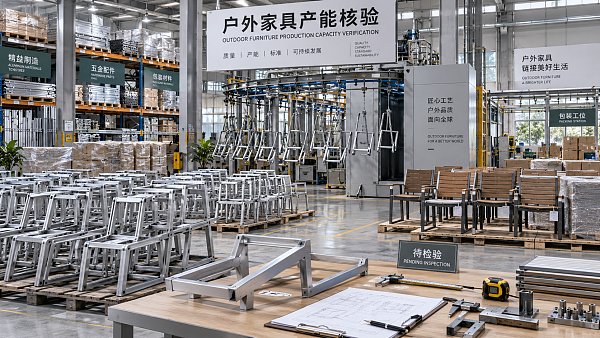
 Outdoor FurnitureHow to verify outdoor furniture manufacturers' production capacityCan outdoor furniture manufacturers deliver on time? Learn how to verify production capacity, uncover bottlenecks, and validate supplier commitments before placing your next order.Interior Sourcing LeadOct 13, 2026
 Commercial DisplaysWhat makes an outdoor digital signage display manufacturer reliable?Discover how to choose a reliable outdoor digital signage display manufacturer with proven weather protection, quality control, smart visibility, and responsive after-sales support.Commercial Tech EditorOct 12, 2026
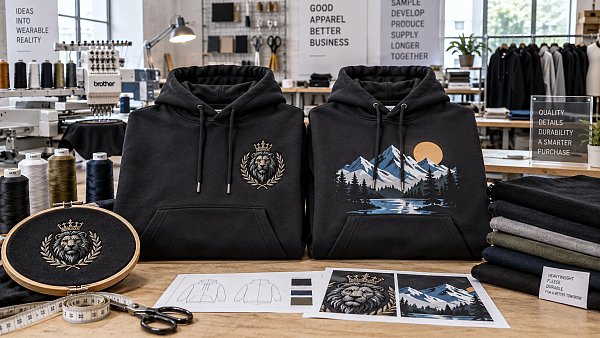
 Garment MfgWhen do bulk embroidered hoodies offer better value than printed ones?Bulk embroidered hoodies deliver lasting value for uniforms and premium branding. Compare durability, design, comfort, and cost to choose the right decoration.Textile Industry AnalystOct 11, 2026
 Carton & PlasticsHow to compare packaging automation suppliers for line integrationPackaging automation supplier comparison guide: evaluate line integration, controls, safety, testing, lifecycle costs, and support to select a proven partner.Packaging Supply ExpertOct 10, 2026