Industry News
Curation by industry experts
Hot Articles
Popular Tags
Middle East Green Building Materials Whitelist Includes Chinese ENF Panels
On March 31, 2026, the GCC Green Building Certification Center (GCC-GBC), jointly established by regulatory authorities from the UAE, Saudi Arabia, and Qatar, released its first 'Green Building Materials Whitelist.' Chinese companies such as Qiannianzhou and Wanhua Hexing saw their ENF-grade decorative panels and formaldehyde-free MDI adhesive particle boards included. This development is particularly relevant for the building materials, construction, and international trade sectors, as it signals a shift toward stricter environmental standards in key Middle Eastern markets.
Event Overview
The GCC-GBC announced its inaugural Green Building Materials Whitelist on March 31, 2026. Products from Chinese manufacturers, including ENF-grade decorative panels and formaldehyde-free MDI adhesive particle boards, were among the first to be approved. Selected items will benefit from expedited customs clearance, priority inclusion in government procurement programs for affordable housing, and exemption from redundant testing.

Impact on Key Industries
Direct Exporters
Manufacturers and traders of ENF-grade panels and formaldehyde-free boards now have a competitive edge in Middle Eastern markets. The whitelist simplifies compliance and reduces trade barriers, making it easier to penetrate government-backed projects.
Supply Chain and Procurement
Businesses sourcing raw materials for Middle Eastern projects must align with the new standards. The inclusion of Chinese products suggests that suppliers with verified green certifications will gain preference in procurement processes.
Construction and Developers
Developers in the GCC region are likely to prioritize whitelisted materials for compliance and sustainability goals. This could accelerate demand for certified products, affecting project timelines and cost structures.
Key Considerations for Industry Players
Monitor Policy Updates
Companies should track further announcements from GCC-GBC, as additional product categories or revised standards may follow.
Focus on Certification Readiness
Exporters should prepare for potential audits or documentation requests to prove compliance with GCC-GBC criteria.
Evaluate Market Entry Strategies
Businesses not yet active in the region may need to reassess entry plans, given the preferential treatment for whitelisted suppliers.
Industry Perspective
From an industry standpoint, this move reflects the GCC's commitment to sustainable construction. While the immediate impact is limited to a few product categories, it sets a precedent for future regulatory tightening. Companies should view this as a signal to align long-term strategies with evolving environmental standards in the region.
Conclusion
The GCC-GBC whitelist represents a significant step toward standardized green building practices in the Middle East. For now, it primarily benefits certified Chinese suppliers, but the broader industry should prepare for similar requirements in other markets. Stakeholders are advised to treat this as an early indicator of shifting regional priorities rather than an isolated development.
Source
GCC Green Building Certification Center (GCC-GBC), official announcement dated March 31, 2026. Further updates on expanded product categories are pending.
Recommended News
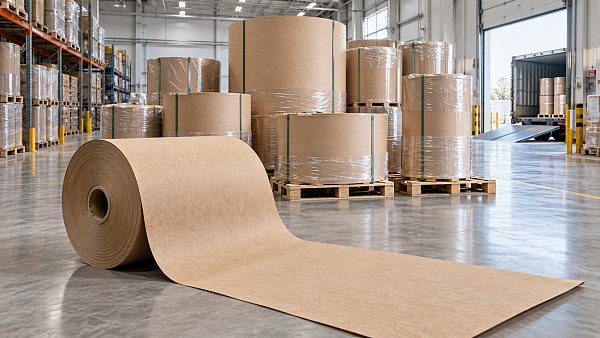
 Eco PackagingWhat affects the price of kraft paper rolls bought wholesale?Kraft paper rolls wholesale pricing depends on grade, basis weight, roll size, order volume, freight, and certifications. Learn how to compare landed costs and choose reliable value.Packaging Supply ExpertOct 03, 2026
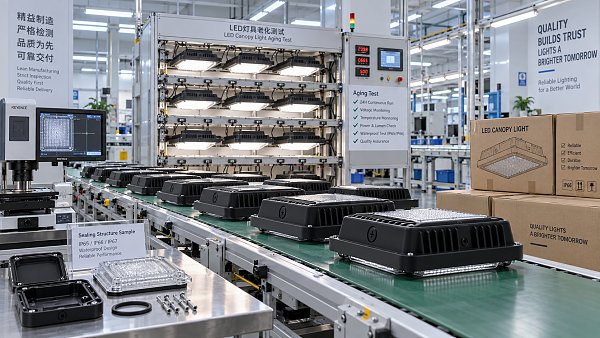
 Commercial LEDHow to evaluate a canopy lights factory before placing a bulk orderCanopy lights factory evaluation guide: verify specifications, compliance, quality control, capacity, and after-sales support before placing a bulk order.Commercial Tech EditorOct 02, 2026
 Commercial LEDHow to choose lighting systems that meet workplace safety needsLighting systems for workplace safety: learn how to control glare, improve visibility, meet environmental demands, and protect workers with reliable, compliant lighting choices.Commercial Tech EditorOct 01, 2026
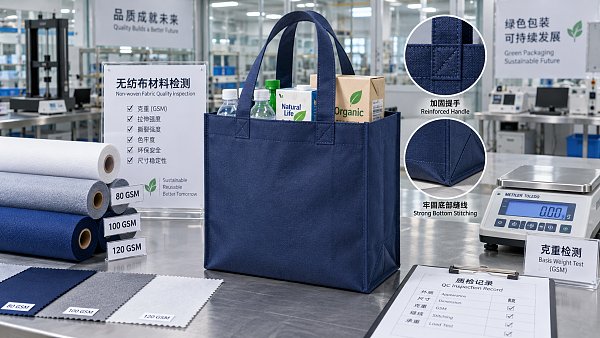
 Fabrics & YarnsWhat fabric weight works best for reusable non woven fabric bags?Non woven fabric for bags: discover the best GSM range for durability, load capacity, print quality, and cost-effective reusable bag sourcing.Textile Industry AnalystSep 30, 2026