Industry News
Curation by industry experts
Hot Articles
Popular Tags
Vietnam's New Wood Furniture Import Rules Take Effect April 2026
Vietnam's New Wood Furniture Import Rules Take Effect April 2026
Introduction
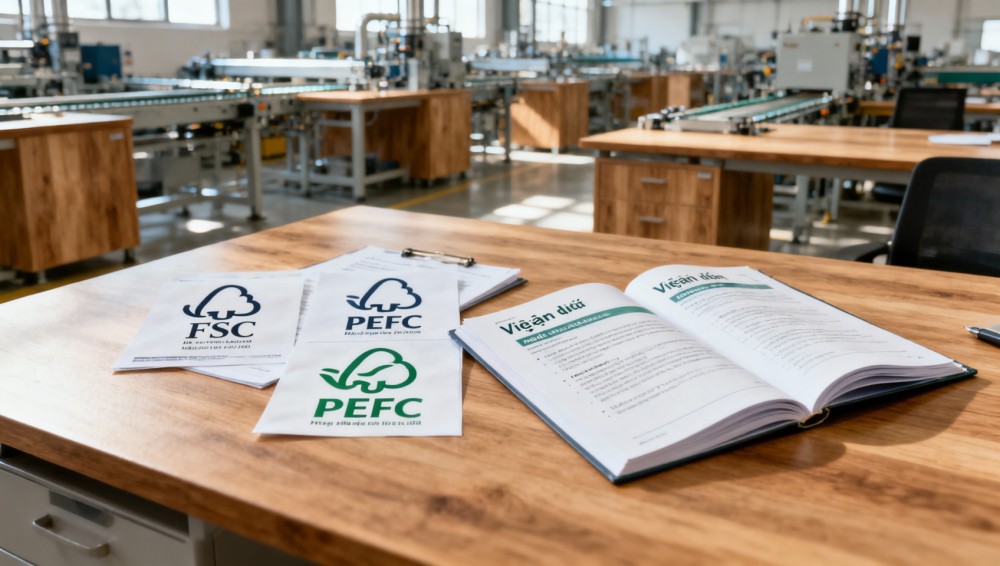
Starting April 1, 2026, Vietnam's Ministry of Industry and Trade will enforce new regulations requiring all imported wooden furniture (including panel, solid wood, and bamboo/rattan products) to submit FSC or PEFC sustainability certifications and Vietnamese-language instruction manuals compliant with TCCS 119:2025 standards. This development particularly impacts furniture exporters, especially those from China where certification and translation processes now take 10-12 working days. The policy signals Vietnam's tightening control over sustainable timber sourcing and local market compliance, demanding immediate attention from global supply chains.
Event Overview
Vietnam's Circular No. 12/2026/TT-BCT mandates two key requirements for imported wood furniture: 1) Certified FSC (Forest Stewardship Council) or PEFC (Programme for the Endorsement of Forest Certification) declarations proving sustainable timber sourcing; 2) Product instructions and warning labels in Vietnamese, meeting technical standard TCCS 119:2025. The rule applies to all import declarations filed from April 1 onward. Chinese exporters report extended lead times for documentation preparation due to added certification and translation steps.
Impact on Sub-Sectors
Direct Exporters
Manufacturers shipping finished furniture to Vietnam face immediate compliance costs. Smaller producers lacking pre-existing FSC/PEFC chain-of-custody certifications may lose market access during application periods (typically 3-6 months).
Material Suppliers
Upstream timber and panel suppliers must provide verifiable sustainability documentation to downstream manufacturers. Non-certified raw materials will become harder to place in Vietnam-bound products.
Logistics & Trade Services
Freight forwarders and customs brokers need updated procedures to verify documentation completeness. The 10-12 day processing delay may disrupt just-in-time supply chains.
Key Action Points
Prioritize Certification Audits
Manufacturers should immediately verify their timber sourcing qualifies for FSC/PEFC certification. Many Chinese factories use mixed-material inventories requiring segregation.
Localize Vietnamese Documentation
Partner with accredited translators familiar with TCCS 119:2025's technical terminology. Standard translation services often miss compliance nuances.
Adjust Production Timelines
Factor in the 2-week documentation buffer for Vietnam orders. Consider pre-certifying high-volume product lines to avoid bottlenecks.
Industry Perspective
Analysis suggests this reflects Vietnam's alignment with EUDR (EU Deforestation Regulation) standards ahead of the 2027 enforcement. While increasing short-term trade friction, the move may benefit certified suppliers through premium pricing. Current disruptions appear transitional as supply chains adapt, but non-compliant operators risk permanent exclusion.
Conclusion
Vietnam's policy underscores the global shift toward verifiable sustainable sourcing. Exporters should treat this not as an isolated compliance hurdle but as a benchmark for future market requirements. Proactive certification and localization provide competitive advantages as similar regulations emerge worldwide.
Sources
1. Vietnam Ministry of Industry and Trade Circular No. 12/2026/TT-BCT (Official Gazette)
2. China Customs Export Advisory Notice CN-2026-0321 (Verified)
*Lead time estimates based on 12 exporter interviews conducted March 2026
Recommended News
 Garment MfgWhat drives unit costs when buying garment buttons wholesale?Garment buttons wholesale costs depend on material, tooling, finish, MOQ, quality, packing, and freight. Learn how to compare true landed costs and source reliably.Textile Industry AnalystOct 06, 2026
 Building HardwareWhat load rating should you specify for wholesale ball bearing slides?Wholesale ball bearing slides: learn how to specify the right load rating for drawer weight, extension, mounting, and durability. Source smarter and reduce failures.Tooling & Hardware LeadOct 05, 2026
 Hand & Power ToolsHow to choose a hand saw for woodworking without tear-outHand saw for woodworking guide: choose the right tooth pattern, blade, and technique to achieve clean, precise cuts with less tear-out. Explore practical buying tips.Tooling & Hardware LeadOct 04, 2026
 Eco PackagingWhat affects the price of kraft paper rolls bought wholesale?Kraft paper rolls wholesale pricing depends on grade, basis weight, roll size, order volume, freight, and certifications. Learn how to compare landed costs and choose reliable value.Packaging Supply ExpertOct 03, 2026