Industry News
Curation by industry experts
Hot Articles
Popular Tags
Red Sea Crisis Drives Up Asia-Europe Shipping Costs, Furniture Container Rates Surge 23%
Introduction
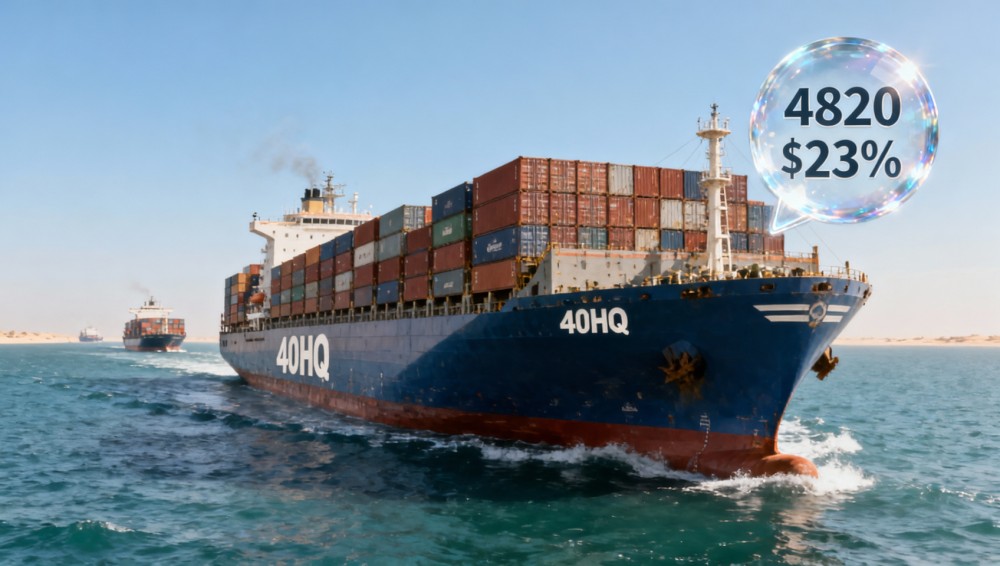
As of April 5, 2026, the ongoing Red Sea crisis has significantly impacted Asia-Europe shipping routes, with container rates for furniture surging 23% week-over-week. The Freightos Baltic Index (FBX) reports that the Shanghai-Rotterdam route for 40HQ containers has reached $4,820, driven by extended voyage times and increased Suez Canal fees. Industries heavily reliant on shipping, particularly furniture, are facing heightened costs, with freight now accounting for 35%–45% of FOB prices. This development warrants close attention from trade-dependent sectors and logistics planners.
Event Overview
On April 5, 2026, FBX data revealed a sharp rise in shipping costs for the Shanghai-Rotterdam route, with 40HQ container rates hitting $4,820—a 23% increase from late March. The primary causes include 12-day longer voyages due to Red Sea diversions and higher Suez Canal tolls. Furniture exports, which are low-value but bulky, are disproportionately affected, prompting some Middle Eastern buyers to shift to China-Europe rail services.
Impact on Sub-Sectors
1. Furniture Exporters
With freight costs consuming 35%–45% of FOB prices, profit margins are under severe pressure. Smaller exporters may struggle to absorb these costs, potentially losing orders to competitors using alternative transport like rail.
2. Logistics Providers
Demand for rail and air freight alternatives is rising, particularly for time-sensitive or high-value goods. Providers must adapt to shifting client preferences and capacity constraints.
3. Retailers and Importers
Delays and higher costs could lead to inventory shortages or price hikes for end consumers, especially in Europe. Businesses should reassess lead times and diversify suppliers where feasible.
Key Focus Areas and Responses
Monitor Rate Fluctuations
Weekly FBX updates and carrier surcharge announcements are critical to anticipate cost changes.
Evaluate Modal Shifts
For non-perishable goods, rail or combined transport may offer cost and time savings, though capacity is limited.
Renegotiate Contracts
Exporters should discuss cost-sharing mechanisms with buyers, such as CIF-to-FOB conversions or price adjustments.
Editor’s Observation
This surge is more than a temporary spike—it reflects structural risks in global shipping. The furniture industry’s vulnerability highlights how low-margin, high-volume sectors are disproportionately affected by logistics disruptions. While rail provides a partial solution, capacity constraints mean sea freight remains essential. Businesses should view this as a signal to build long-term resilience, not just a short-term cost challenge.
Conclusion
The Red Sea crisis has exposed fragility in Asia-Europe supply chains, with furniture exporters bearing the brunt. While immediate responses like modal shifts and contract renegotiations are necessary, the broader lesson is the need for diversified logistics strategies. Companies should treat this as a wake-up call to reassess their supply chain dependencies.
Sources
• Freightos Baltic Index (FBX), April 5, 2026 data release
• Industry reports on Suez Canal fee adjustments (pending further verification)
• Observations from logistics providers on Middle Eastern demand shifts
Recommended News
 Garment MfgWhat drives unit costs when buying garment buttons wholesale?Garment buttons wholesale costs depend on material, tooling, finish, MOQ, quality, packing, and freight. Learn how to compare true landed costs and source reliably.Textile Industry AnalystOct 06, 2026
 Building HardwareWhat load rating should you specify for wholesale ball bearing slides?Wholesale ball bearing slides: learn how to specify the right load rating for drawer weight, extension, mounting, and durability. Source smarter and reduce failures.Tooling & Hardware LeadOct 05, 2026
 Hand & Power ToolsHow to choose a hand saw for woodworking without tear-outHand saw for woodworking guide: choose the right tooth pattern, blade, and technique to achieve clean, precise cuts with less tear-out. Explore practical buying tips.Tooling & Hardware LeadOct 04, 2026
 Eco PackagingWhat affects the price of kraft paper rolls bought wholesale?Kraft paper rolls wholesale pricing depends on grade, basis weight, roll size, order volume, freight, and certifications. Learn how to compare landed costs and choose reliable value.Packaging Supply ExpertOct 03, 2026