Industry News
Curation by industry experts
Hot Articles
Popular Tags
US CPSC Updates Child Furniture Stability Standards: Key Impacts on Exporters
Introduction
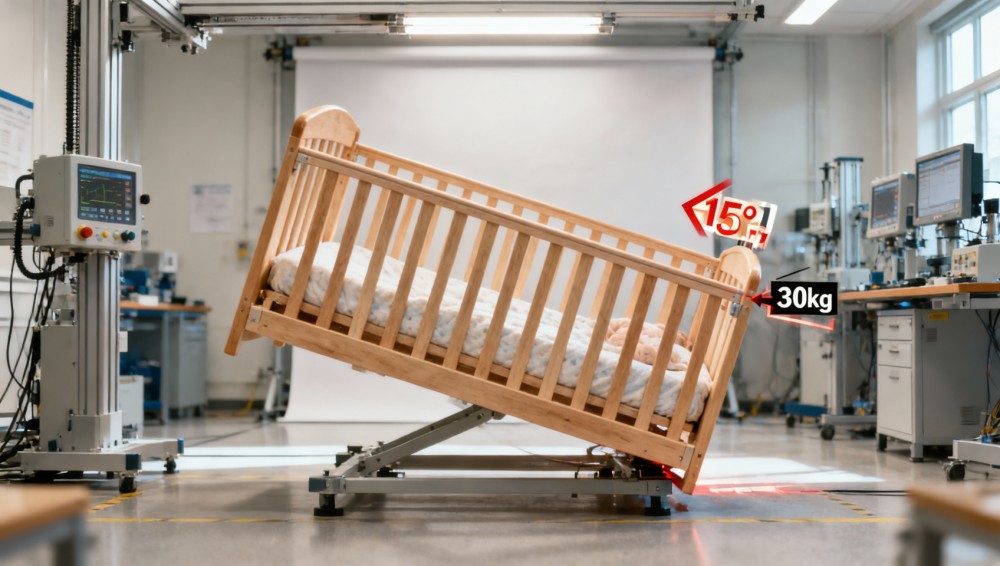
On April 3, 2026, the U.S. Consumer Product Safety Commission (CPSC) announced an update to its mandatory Child Furniture Stability Standards, requiring all infant cribs, changing tables, children's bookshelves, and similar products exported to the U.S. to comply with the new ASTM F2057-24 test (including a 15° tilt + 30kg lateral force dual verification). The regulation took immediate effect, with reports of containers from Shenzhen and Foshan factories being held at the Port of Los Angeles due to missing updated test reports. This development is critical for manufacturers, exporters, and supply chain stakeholders in the children's furniture industry.
Event Overview
The CPSC's updated standards now mandate compliance with ASTM F2057-24, which introduces stricter testing protocols for child furniture stability. Key changes include:
- New 15° incline and 30kg lateral force testing requirements.
- Immediate enforcement, with no grace period for existing shipments.
- Reports of detained shipments at U.S. ports due to non-compliance.
Impacted Sub-Sectors
1. Direct Exporters
Manufacturers and trading companies exporting child furniture to the U.S. must now ensure products meet the updated ASTM F2057-24 standards. Non-compliant shipments face detention or rejection, leading to potential financial losses and supply chain disruptions.
2. Supply Chain & Logistics Providers
Freight forwarders and customs brokers need to verify that all child furniture shipments include updated test reports. Delays due to missing documentation could affect delivery timelines and incur additional storage fees.
3. Testing & Certification Agencies
Third-party testing labs must adapt quickly to offer ASTM F2057-24 compliance services. Increased demand for certification may lead to bottlenecks if capacity is not scaled promptly.
Key Actions for Businesses
1. Verify Compliance Immediately
Exporters should confirm whether their products meet the new ASTM F2057-24 requirements. Retesting may be necessary for previously certified items.
2. Update Documentation
Ensure all shipping documents, including test reports, clearly reference the updated standard to avoid customs delays.
3. Monitor Enforcement Trends
Track CPSC announcements and port enforcement patterns to anticipate potential inspection focus areas.
Industry Observations
From an industry perspective, this update signals the CPSC's heightened focus on child furniture safety. While the immediate impact is operational (testing and documentation), the broader trend suggests increasing regulatory scrutiny for juvenile products. Businesses should treat this as a prompt to review their compliance frameworks, not just for current standards but also for potential future updates.
Conclusion
The CPSC's updated child furniture stability standards represent a significant compliance shift for exporters. While the immediate priority is adapting testing and documentation processes, the longer-term implication is a need for proactive regulatory monitoring in this sector. Companies that act swiftly to align with ASTM F2057-24 can mitigate disruptions while positioning themselves as reliable partners in a tightening compliance landscape.
Source Information
Primary source: U.S. CPSC official announcement (April 3, 2026). Additional details from port detention reports. Continued monitoring recommended for CPSC enforcement patterns and potential industry feedback periods.
Recommended News
 Garment MfgWhat drives unit costs when buying garment buttons wholesale?Garment buttons wholesale costs depend on material, tooling, finish, MOQ, quality, packing, and freight. Learn how to compare true landed costs and source reliably.Textile Industry AnalystOct 06, 2026
 Building HardwareWhat load rating should you specify for wholesale ball bearing slides?Wholesale ball bearing slides: learn how to specify the right load rating for drawer weight, extension, mounting, and durability. Source smarter and reduce failures.Tooling & Hardware LeadOct 05, 2026
 Hand & Power ToolsHow to choose a hand saw for woodworking without tear-outHand saw for woodworking guide: choose the right tooth pattern, blade, and technique to achieve clean, precise cuts with less tear-out. Explore practical buying tips.Tooling & Hardware LeadOct 04, 2026
 Eco PackagingWhat affects the price of kraft paper rolls bought wholesale?Kraft paper rolls wholesale pricing depends on grade, basis weight, roll size, order volume, freight, and certifications. Learn how to compare landed costs and choose reliable value.Packaging Supply ExpertOct 03, 2026