Industry News
Curation by industry experts
Hot Articles
Popular Tags
EU Launches Anti-Circumvention Probe on Chinese Metal Hardware Exports
Introduction
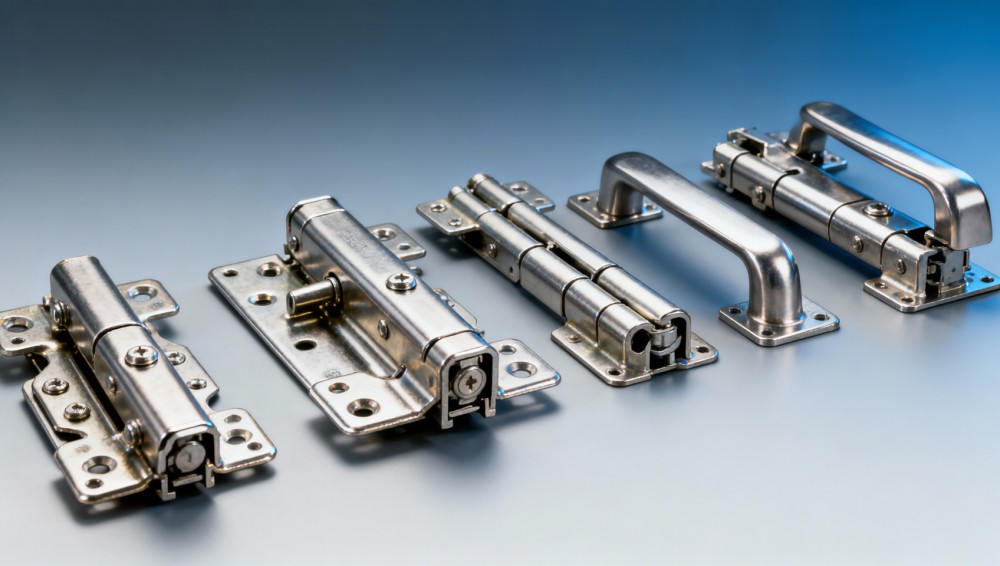
On March 27, 2026, the European Commission officially initiated an anti-circumvention investigation targeting Chinese metal door and window hardware products, including hinges, butt hinges, and handles. This move directly impacts export clearance procedures, tariff applications, and compliance risk assessments for Chinese manufacturers, particularly those in Guangdong and Zhejiang provinces. The investigation focuses on verifying whether products are being rerouted through third countries or undergoing minimal processing before entering the EU market. Importers and supply chain stakeholders must now scrutinize origin documentation and production depth proofs.
Event Overview
The EU's investigation covers core categories of metal hardware used in construction and furniture manufacturing. The probe will examine whether Chinese exporters are bypassing existing trade measures by altering supply chains through intermediary countries. Current public notices indicate the review will assess production processes, value-added thresholds, and customs declarations for shipments entering the EU market.
Impact on Sub-Sectors
Direct Export Enterprises
Manufacturers shipping finished goods to Europe face immediate customs delays and potential retroactive tariffs. Documentation proving complete manufacturing within China becomes critical for maintaining existing duty rates.
Component Suppliers
Upstream producers of semi-finished hardware components may see order reductions as exporters restructure supply chains to demonstrate sufficient local transformation.
Logistics Providers
Freight forwarders and customs brokers must prepare for heightened scrutiny of shipping routes and bills of lading, particularly for transshipment through Southeast Asia or Eastern Europe.
Key Action Points
Prioritize Origin Documentation
Exporters should immediately audit and reinforce their Certificate of Origin (CO) issuance processes, ensuring alignment with EU customs requirements.
Map Production Value Chains
Detailed records of manufacturing processes - from raw material sourcing to final assembly - will be essential for responding to potential questionnaires.
Engage EU Importers Proactively
Jointly review compliance protocols with European partners, particularly regarding customs classification and declared production costs.
Industry Perspective
From an industry standpoint, this investigation signals the EU's tightening enforcement of trade defense instruments. While not yet resulting in new tariffs, the probe creates immediate operational hurdles for Sino-European hardware trade. The focus on processing depth suggests Brussels may be testing a broader framework for addressing transshipment concerns across multiple industrial sectors.
Conclusion
This development represents a procedural escalation rather than a finalized trade measure. Businesses should approach it as a compliance wake-up call, using the investigation period to strengthen evidentiary chains and explore value-added production models that withstand regulatory scrutiny.
Sources
• European Commission Official Journal Notice (2026/03/27)
• Pending: Final investigation scope and respondent selection criteria (expected Q2 2026)
Recommended News
 Eco PackagingWhat affects the price of kraft paper rolls bought wholesale?Kraft paper rolls wholesale pricing depends on grade, basis weight, roll size, order volume, freight, and certifications. Learn how to compare landed costs and choose reliable value.Packaging Supply ExpertOct 03, 2026
 Commercial LEDHow to evaluate a canopy lights factory before placing a bulk orderCanopy lights factory evaluation guide: verify specifications, compliance, quality control, capacity, and after-sales support before placing a bulk order.Commercial Tech EditorOct 02, 2026
 Commercial LEDHow to choose lighting systems that meet workplace safety needsLighting systems for workplace safety: learn how to control glare, improve visibility, meet environmental demands, and protect workers with reliable, compliant lighting choices.Commercial Tech EditorOct 01, 2026
 Fabrics & YarnsWhat fabric weight works best for reusable non woven fabric bags?Non woven fabric for bags: discover the best GSM range for durability, load capacity, print quality, and cost-effective reusable bag sourcing.Textile Industry AnalystSep 30, 2026