Industry News
Curation by industry experts
Hot Articles
Popular Tags
Factors That Affect the Slip Resistance of Ceramic Floor Tiles
Slip resistance is a critical safety parameter influencing the performance and longevity of ceramic floor tiles, especially in high-traffic commercial and industrial environments. For procurement professionals in packaging and printing facilities, understanding the factors that affect tile traction can prevent costly accidents and ensure compliance with international safety standards. As Global Supply Review (GSR) continues to provide actionable insights across products like ergonomic office chairs, corrugated carton boxes, and cabinet hardware, this analysis explores how surface texture, glaze composition, and installation method define the true durability and dependability of ceramic floor tiles.
Understanding Slip Resistance in Industrial Floor Tiles
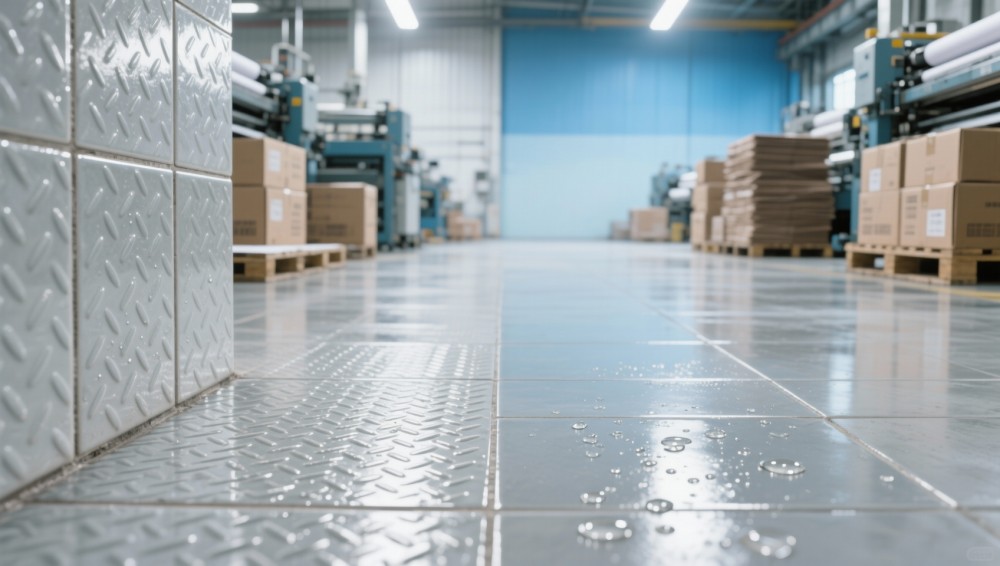
In packaging and printing facilities, floors regularly experience exposure to moisture, ink residues, paper dust, and lubricants. These elements directly impact surface friction and traction. Slip resistance, commonly expressed through coefficients of friction (CoF), measures the ability of a tile to prevent slippage under varying loads and conditions. Values of 0.42 or higher in dynamic CoF tests (as per ANSI A137.1) are typically required for commercial-grade environments.
Ceramic floor tiles can have varying CoF results based on their glaze composition and surface roughness. For instance, unglazed porcelain often achieves static CoF values ranging between 0.6 and 0.8, offering enhanced traction even in damp settings. Glazed tiles, while more aesthetic, usually require special additives or etching to achieve equivalent grip levels.
In a typical mid-scale packaging facility, where trolley loads average 300–500 kg and operators move continuously across the floor, slip resistance plays a direct role in occupational safety and productivity. Therefore, technical specifiers routinely align the tile’s frictional profile with expected operational intensity.
Understanding these parameters early helps procurement teams minimize costly redesigns post-installation — a common risk when CoF values fall below international norms or local regulations such as EN 14411 or ISO 10545‑17.
Core Elements Influencing Slip Resistance
- Surface micro-texture and finishing technique
- Moisture, ink, and chemical exposure levels
- Cleaning and maintenance cycles (typically every 24–48 hours)
- Load-bearing capacities and traffic frequency
Technical Parameters and Material Selection
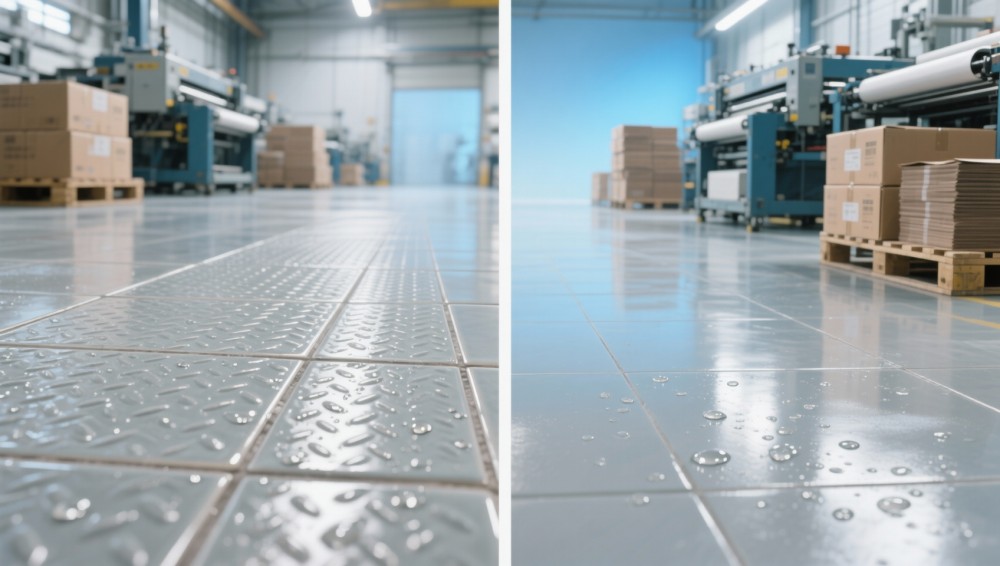
Selecting the right ceramic tile for a printing factory depends on proper interpretation of multiple technical criteria. Procurement professionals should analyze glaze composition, abrasion class, water absorption rate, and installation methods. For high-impact zones like packaging lines, tile thickness between 9 mm and 12 mm and water absorption below 0.5% are generally recommended.
Below is a comparative table outlining the typical technical specifications of ceramic tiles used in food packaging, printing workshops, and logistics centers:
The data above demonstrates how material parameters shift with operational load. A warehouse floor subjected to forklifts and pallets exceeding 1 ton requires stronger mechanical integrity, which correlates with lower absorption and higher slip-resistance thresholds. Correct matching of mechanical and frictional parameters enhances longevity by an estimated 25–30% over a 5‑year maintenance cycle.
Technical qualification should also review surface porosity and micro‑groove depth, measured in microns, since even 15–20 µm variation can alter friction performance when wet cleaning routines are frequent.
Compliance Standards and Safety Testing
International compliance remains central to procurement processes for global packaging and printing buyers. Safety standards such as ANSI A326.3 (DCOF AcuTest™), EN 14411, and ISO 10545 series establish test methods and acceptable thresholds for industrial flooring. Testing intervals typically occur every 12 months or after 5,000 m² of tile application, ensuring consistency over time.
To facilitate comparison, the table below presents key test categories and their relevance to slip resistance evaluation.
For facilities targeting ISO 45001 safety certification, adherence to these benchmarks not only mitigates accident liability but also enhances ESG audit performance. Slip‑resistant layouts often form part of wider safety programs alongside operator footwear standards, ramp gradients, and drainage efficiency, creating a systematic approach toward risk management.
Testing laboratories usually deliver reports within 7–10 days, and large procurement orders exceeding 2,000 m² should require batch sampling before final shipment. GSR-recommended suppliers integrate these checks automatically into QC stages to ensure compliance consistency across export markets.
Procurement Strategies and Selection Recommendations
For sourcing managers in the packaging and printing sectors, balancing cost efficiency with workplace safety can be challenging. Typical procurement evaluations encompass 5 dimensions: slip coefficient, mechanical strength, chemical resistance, maintainability, and lifecycle ROI. A rational approach includes phased implementation across 3 stages — sample validation, pilot installation, and bulk rollout — minimizing replacement risks in year 1–2 of operation.
Procurement personnel should verify production lead times, which often range between 20–30 days for standard ceramic tiles and 35–45 days for customized textures. Logistics planners should consider palletized packaging with 6–8 tile units per carton, meeting impact resistance tests of ≥ 50 kgf to prevent in‑transit fractures.
A concise sourcing checklist ensures consistent evaluation:
- Confirm CoF ≥ 0.55 under wet test conditions.
- Assess water absorption ≤ 0.5 % for high‑humidity zones.
- Verify mechanical bending strength ≥ 35 MPa in QC reports.
- Ensure supplier provides 12‑month product warranty and factory audit documents.
- Request post‑installation maintenance guidelines, including recommended non‑acidic cleaners.
Strategic sourcing platforms such as GSR compile supplier performance data and historical defect rates, helping enterprises cut procurement evaluation time by up to 40 %. Integrating these insights aligns safety compliance with cost reduction goals — a key differentiator in contemporary industrial procurement.
Common Misconceptions and Preventive Measures
A frequent misconception is that higher surface roughness always equates to better slip resistance. In fact, excessive roughness can accumulate paper fibre dust or ink residues, reducing performance after just 2–3 months of regular operation. Sustainable slip resistance calls for balanced micro-relief patterns combined with hydrophobic glazing techniques.
Another misconception involves cleaning protocols. The use of overly aggressive alkaline detergents (> pH 9) may erode glaze surfaces over 6–12 months, lowering friction coefficients by 10–15 %. Quality control staff should enforce routine inspection intervals and specify neutral cleaners (pH 6–8) for daily maintenance.
Preventive measures also include scheduling friction retesting every 18 months using standardized devices under 10 kg vertical load to maintain consistent results. Data from these tests feed back into facility safety records, ensuring continuous compliance improvement.
Why Partner with Global Supply Review (GSR)
Global Supply Review integrates verified data from over 120 audited ceramic flooring manufacturers worldwide, delivering procurement intelligence tuned to the packaging and printing industry’s safety and operational demands. By embedding verified supplier statistics, compliance matrices, and field‑tested product insights, GSR helps enterprise buyers make faster, evidence‑driven sourcing decisions.
Enterprises seeking to upgrade flooring systems within 3–6 months can leverage GSR’s supplier alignment reports, complete with CoF certifications, test results, and ESG credentials. This reduces bidding rounds from 4 weeks to 2 weeks while providing confidence in long‑term durability.
To explore customized guidance on slip‑resistant ceramic tiles for your facility — including parameter confirmation, certified supplier references, and lead‑time optimization — contact the GSR industry analyst team. Empower your procurement strategy with reliable data and global‑ready sourcing intelligence that supports both safety compliance and operational efficiency.
Recommended News
 Eco PackagingWhat affects the price of kraft paper rolls bought wholesale?Kraft paper rolls wholesale pricing depends on grade, basis weight, roll size, order volume, freight, and certifications. Learn how to compare landed costs and choose reliable value.Packaging Supply ExpertOct 03, 2026
 Commercial LEDHow to evaluate a canopy lights factory before placing a bulk orderCanopy lights factory evaluation guide: verify specifications, compliance, quality control, capacity, and after-sales support before placing a bulk order.Commercial Tech EditorOct 02, 2026
 Commercial LEDHow to choose lighting systems that meet workplace safety needsLighting systems for workplace safety: learn how to control glare, improve visibility, meet environmental demands, and protect workers with reliable, compliant lighting choices.Commercial Tech EditorOct 01, 2026
 Fabrics & YarnsWhat fabric weight works best for reusable non woven fabric bags?Non woven fabric for bags: discover the best GSM range for durability, load capacity, print quality, and cost-effective reusable bag sourcing.Textile Industry AnalystSep 30, 2026