Industry News
Curation by industry experts
Hot Articles
Popular Tags
How to Evaluate a Hardware Products Manufacturer for Stable Quality and Lead Times
How to Evaluate a Hardware Products Manufacturer for Stable Quality and Lead Times
Choosing the right hardware products manufacturer is critical for procurement teams balancing cost, quality consistency, and on-time delivery.
In global sourcing, a weak supplier can quickly lead to delays, defects, rework, and unexpected cost increases.
That is why evaluating a hardware products manufacturer requires more than checking quotes or sample photos.
You need evidence that the factory can deliver stable quality, controlled processes, and dependable lead times at scale.
This guide breaks down the practical criteria buyers should use before approving a supplier.
Start with manufacturing fit, not price
A hardware products manufacturer may look competitive on price while still being the wrong operational fit.
The first question is simple: does this factory regularly make products like yours?
For hardware, process capability matters more than generic capacity claims.
A supplier experienced in stamped brackets may struggle with threaded fasteners, precision hinges, or multi-step surface finishing.
Review the factory’s core production routes, including stamping, CNC machining, die casting, cold heading, welding, polishing, plating, and assembly.
Then compare those strengths with your exact part requirements, tolerance levels, materials, and end-use environment.
- Ask for similar product case histories.
- Confirm material grades and finishing options.
- Check whether tooling is developed in-house or outsourced.
- Verify typical tolerance ranges by process.
Assess process control behind stable quality
Stable quality is rarely the result of final inspection alone.
A reliable hardware products manufacturer controls quality throughout production, not only at shipment.
This means incoming material checks, in-process inspection, tool maintenance, gauge calibration, and documented corrective actions.
Ask how defects are identified, traced, and prevented from repeating.
More importantly, ask to see records, not just certificates.
In actual sourcing work, the stronger signal is consistency in data.
Look for inspection reports across multiple batches, not one polished sample run.
What to verify in the quality system
- Incoming material verification against specifications.
- First article inspection before mass production.
- In-process checks at critical control points.
- Final inspection standards and AQL methods.
- Calibration logs for measuring equipment.
- CAPA records for recurring failures.
- Traceability by lot, date, and operator.
If a hardware products manufacturer cannot explain control points clearly, stable quality will remain uncertain.
Check production planning and real lead-time discipline
Lead time problems usually start long before a shipment misses its date.
They often come from overloaded machines, weak material planning, tool bottlenecks, or poor order prioritization.
A dependable hardware products manufacturer should be able to explain how orders move through production.
Ask for standard production lead times by product category, plus the drivers behind rush orders or delays.
It also helps to review on-time delivery performance over the past six to twelve months.
Recent changes in freight or raw materials matter, but internal planning still decides whether schedules hold.
Questions that expose lead-time risk
- What is the current machine utilization rate?
- Which components or materials have the longest replenishment cycle?
- How are urgent orders inserted without disrupting existing commitments?
- What is the average on-time delivery rate by month?
- What backup exists if a critical machine fails?
A strong answer will include capacity data, planning logic, and contingency steps, not vague promises.
Review supply chain depth and subcontracting exposure
Many buyers assume the quoted factory controls every process directly.
In hardware sourcing, that is often not the case.
A hardware products manufacturer may perform forming in-house, then outsource plating, heat treatment, coating, or packaging.
This is not automatically a problem, but it changes the risk profile.
Every outsourced step adds another handoff, another queue, and another quality control point.
You need visibility into which processes are internal and which depend on approved partners.
More importantly, check how the manufacturer manages those partners.
- Request the process flow from raw material to shipment.
- Identify every outsourced operation.
- Verify approval standards for subcontractors.
- Ask how outsourced quality issues are contained.
- Confirm whether alternate suppliers are prequalified.
This step is especially important for corrosion-resistant finishes, safety-critical parts, and customer-specific packaging.
Validate engineering support and change management
Stable supply depends on more than shop floor execution.
A capable hardware products manufacturer should also manage drawings, revisions, tooling updates, and process changes carefully.
This matters because many quality failures begin after a small engineering change.
The supplier may switch a material source, adjust tooling, or alter a finish sequence without fully assessing downstream effects.
You want a factory that treats change as a controlled event.
Look for these engineering signals
- Version control for drawings and specifications.
- Formal approval before process or material changes.
- DFM feedback before tooling release.
- PPAP or equivalent submission discipline where needed.
- Clear sample validation before volume production.
In practical terms, better engineering control usually leads to fewer surprises after the first order.
Use audits, samples, and pilot orders together
No single checkpoint can fully qualify a hardware products manufacturer.
A certification review is useful, but it does not replace direct validation.
A polished pre-production sample is useful, but it does not prove batch stability.
The most reliable approach combines document review, factory audit, sample testing, and a controlled pilot order.
This layered method shows how the supplier performs under real operating conditions.
When these four steps align, confidence in the hardware products manufacturer becomes much stronger.
Watch communication quality and response discipline
Communication is often treated as a soft issue.
In reality, it is an early operating signal.
A strong hardware products manufacturer answers technical questions directly, confirms assumptions, and flags risk before it becomes a problem.
A weaker one sends slow replies, avoids detail, or changes commitments without formal notice.
This also affects lead times because unclear communication creates approval delays and production errors.
During qualification, measure response speed, technical depth, and issue ownership just as carefully as unit price.
Make the final decision with a weighted scorecard
The best sourcing decisions usually come from structured comparison.
Instead of choosing the lowest quote, score each hardware products manufacturer across the factors that drive long-term performance.
- Process fit and product experience
- Quality system maturity
- Lead-time reliability
- Subcontracting control
- Engineering and change management
- Communication discipline
- Commercial competitiveness
This approach keeps evaluation grounded in operational reality.
It also helps internal stakeholders align on trade-offs between cost, risk, and supply stability.
In the end, the right hardware products manufacturer is the one that can repeat performance, not just win the first quote.
For buyers building a resilient supply base, that distinction matters more every year.
Use these checkpoints early, test them with evidence, and turn supplier selection into a controlled decision rather than a pricing exercise.
Recommended News
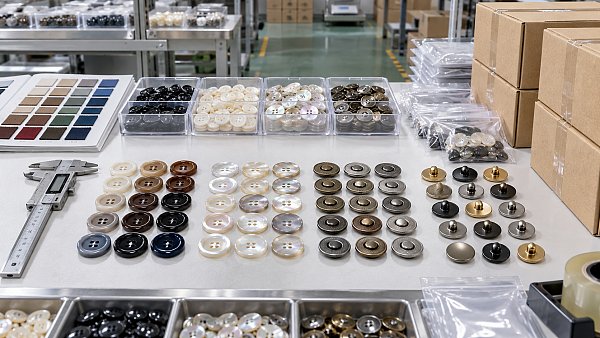
 Garment MfgWhat drives unit costs when buying garment buttons wholesale?Garment buttons wholesale costs depend on material, tooling, finish, MOQ, quality, packing, and freight. Learn how to compare true landed costs and source reliably.Textile Industry AnalystOct 06, 2026
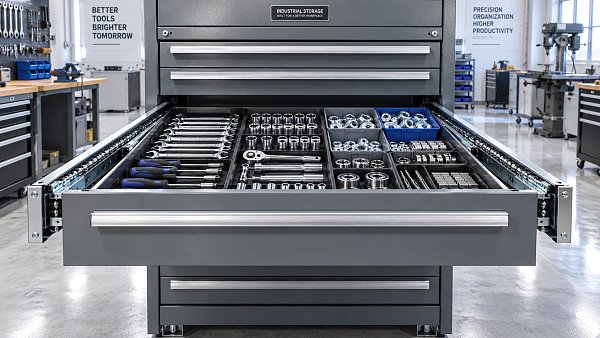
 Building HardwareWhat load rating should you specify for wholesale ball bearing slides?Wholesale ball bearing slides: learn how to specify the right load rating for drawer weight, extension, mounting, and durability. Source smarter and reduce failures.Tooling & Hardware LeadOct 05, 2026
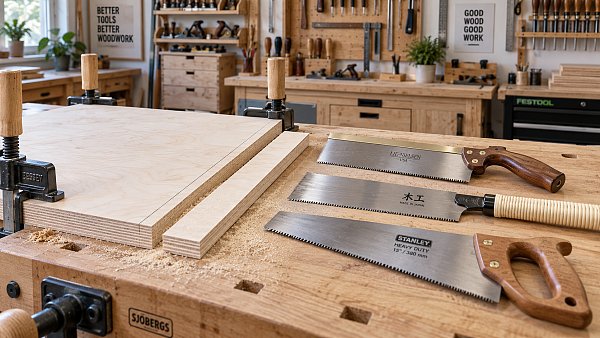
 Hand & Power ToolsHow to choose a hand saw for woodworking without tear-outHand saw for woodworking guide: choose the right tooth pattern, blade, and technique to achieve clean, precise cuts with less tear-out. Explore practical buying tips.Tooling & Hardware LeadOct 04, 2026
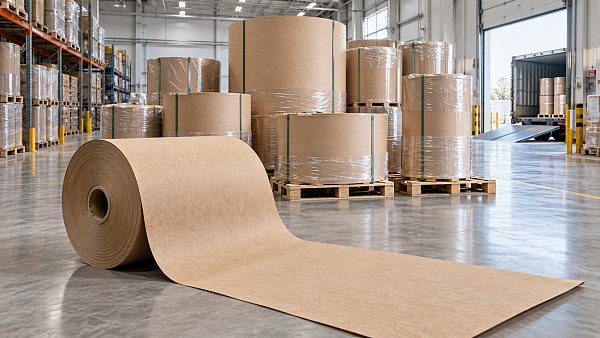
 Eco PackagingWhat affects the price of kraft paper rolls bought wholesale?Kraft paper rolls wholesale pricing depends on grade, basis weight, roll size, order volume, freight, and certifications. Learn how to compare landed costs and choose reliable value.Packaging Supply ExpertOct 03, 2026