Industry News
Curation by industry experts
Hot Articles
Popular Tags
Heavy Duty Tool Boxes Manufacturer Comparison: Steel Gauge, Load Rating, and OEM Options
Selecting a heavy duty tool boxes manufacturer now involves more than comparing unit cost. Steel gauge, verified load rating, and OEM flexibility shape product life, freight performance, and long-term sourcing stability. In hardware and industrial supply chains, these details often determine whether a toolbox performs as a durable asset or becomes an avoidable warranty issue.
That is why manufacturer comparison has become a practical sourcing exercise rather than a catalog review. For organizations tracking global capacity through platforms such as Global Supply Review, the most useful comparison points are measurable: material thickness, structural design, testing discipline, finish quality, and the ability to adapt production to market-specific requirements.
Why heavy duty tool box specifications deserve closer attention
A heavy duty tool box is expected to protect weight, vibration, sharp tools, and repeated handling. That seems straightforward, yet products with similar dimensions can perform very differently in the field.
The gap usually comes from three areas. One is steel gauge. Another is how the stated load rating was engineered and tested. The third is whether the manufacturer can adapt the design without weakening the structure.
This matters across several sectors. Workshop storage, service vehicles, industrial maintenance, construction fleets, and retail hardware programs all rely on consistent durability. A weak box affects not only replacement cost, but also labor, safety, and brand reputation.
Steel gauge is not a small detail
When evaluating a heavy duty tool boxes manufacturer, steel gauge is one of the first numbers worth verifying. In simple terms, lower gauge numbers indicate thicker steel.
However, thicker steel alone does not guarantee better performance. The real question is where the thickness is used and how the body is reinforced.
What buyers should look for
- Body panels and lids should not be assessed separately from frame design.
- Drawer fronts often need different thickness than side panels.
- Mounting points, hinge zones, and corner joints reveal real structural intent.
- Weld quality and bend geometry can offset or expose material weakness.
A lighter gauge may still be appropriate for portable or cost-sensitive formats. A thicker gauge is more suitable for fixed industrial storage, truck-mounted boxes, or high-load drawer systems.
The stronger suppliers explain gauge choices by use case. A less mature heavy duty tool boxes manufacturer may only provide a generic thickness claim without design context.
Load rating should be treated as an engineering claim
Load rating is often listed in marketing sheets, but the number has little value unless the test method is clear. Static load, dynamic load, and distributed load are not the same thing.
For drawers, the rating should reflect slide capacity, travel stability, and deformation resistance. For top lids or chests, the issue is whether the structure holds weight during transport, stacking, or repeated opening cycles.
A reliable heavy duty tool boxes manufacturer usually supports load claims with internal test records, third-party verification, or at least defined testing protocols. This is especially relevant when comparing OEM programs from different regions.
OEM capability often separates factories from long-term partners
OEM options matter because heavy duty tool boxes rarely serve one market in exactly the same way. A distributor may need different dimensions, branding, drawer layouts, lock systems, or packaging specifications.
Customization, though, should not be viewed only as a design service. It is also a measure of engineering discipline. A capable heavy duty tool boxes manufacturer can modify a product while preserving load performance, assembly efficiency, and compliance requirements.
Useful OEM questions during supplier comparison
- Can dimensions be adjusted without new tooling on every part?
- Are custom colors supported through powder coating control?
- Can logos be applied through stamping, plate mounting, or durable labeling?
- What is the minimum order quantity for modified structures?
- How are packaging changes handled for e-commerce, retail, or export distribution?
These points affect lead time and hidden cost. They also show whether the supplier is set up for structured account development or only standard product export.
How manufacturers differ beyond the visible product
Two samples can appear similar on a trade show floor, yet factory capability may be very different. The comparison should include process control, sourcing consistency, and finish reliability.
Material and component control
Steel grade sourcing, drawer slide quality, lock hardware, and caster performance all influence the final result. A heavy duty tool boxes manufacturer with traceable procurement tends to deliver more stable repeat orders.
Surface treatment and corrosion resistance
Powder coating is common, but pretreatment quality is what supports adhesion and rust resistance. Coastal markets, humid warehouses, and outdoor service environments raise the importance of salt spray performance.
Packaging and logistics fit
Protective packaging, pallet logic, and carton design matter more than many teams expect. A well-built box can still arrive damaged if shipment packaging ignores weight concentration and corner impact.
This is where a broader sourcing lens helps. GSR-style market intelligence is useful because it frames factory comparison within supply chain resilience, not just product specification.
Where comparison criteria change by application
Not every program should prioritize the same attributes. The best heavy duty tool boxes manufacturer for an industrial workstation may not be ideal for a mobile service fleet.
This is why comparison should begin with use conditions. Without that step, even detailed technical data can be interpreted the wrong way.
A practical framework for supplier evaluation
A clear framework keeps discussion focused and reduces confusion between sales language and engineering evidence. It also helps standardize review across multiple suppliers.
- Match steel gauge to the actual weight, mobility, and handling conditions.
- Request load rating definitions, not just headline numbers.
- Review sample build quality at hinges, welds, drawer travel, and corners.
- Test OEM responsiveness through one controlled modification request.
- Check packaging method against export route and destination risks.
- Compare warranty logic with the actual construction and test evidence.
In many cases, the strongest heavy duty tool boxes manufacturer is not the one with the thickest sheet metal. It is the one that can explain performance, document production control, and adapt the product without losing consistency.
What to assess next
A solid comparison should end with a shortlist built on evidence, not broad impressions. Narrow the review to a few suppliers, align product requirements with actual use conditions, and verify claims through samples, test data, and OEM response quality.
That approach turns the search for a heavy duty tool boxes manufacturer into a disciplined sourcing decision. It also creates a stronger basis for cost analysis, quality forecasting, and long-term supplier alignment in global hardware trade.
Recommended News
 Garment MfgWhat drives unit costs when buying garment buttons wholesale?Garment buttons wholesale costs depend on material, tooling, finish, MOQ, quality, packing, and freight. Learn how to compare true landed costs and source reliably.Textile Industry AnalystOct 06, 2026
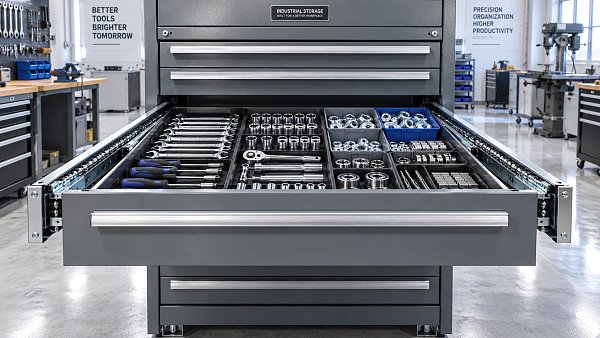
 Building HardwareWhat load rating should you specify for wholesale ball bearing slides?Wholesale ball bearing slides: learn how to specify the right load rating for drawer weight, extension, mounting, and durability. Source smarter and reduce failures.Tooling & Hardware LeadOct 05, 2026
 Hand & Power ToolsHow to choose a hand saw for woodworking without tear-outHand saw for woodworking guide: choose the right tooth pattern, blade, and technique to achieve clean, precise cuts with less tear-out. Explore practical buying tips.Tooling & Hardware LeadOct 04, 2026
 Eco PackagingWhat affects the price of kraft paper rolls bought wholesale?Kraft paper rolls wholesale pricing depends on grade, basis weight, roll size, order volume, freight, and certifications. Learn how to compare landed costs and choose reliable value.Packaging Supply ExpertOct 03, 2026