Industry News
Curation by industry experts
Hot Articles
Popular Tags
Furniture and Decor Trends for 2026: Materials, Color Shifts, and Buyer Demand
Furniture and decor trends for 2026 are moving from style cycles to strategic signals
Furniture and decor trends for 2026 are no longer defined by aesthetics alone.
Material science, cost volatility, sustainability metrics, and regional demand shifts are now shaping category decisions much earlier.
That change matters across the broader light manufacturing ecosystem.
Furniture now intersects with textiles, hardware, coatings, lighting, packaging, and logistics in more visible ways.
From recent market activity, the stronger signal is clear.
Buyers are narrowing portfolios, asking harder questions on durability and compliance, and expecting faster response to shifting design language.
In that environment, furniture and decor trends become a planning issue, not just a merchandising topic.
This is also why platforms such as Global Supply Review matter in 2026.
The value is not in broad commentary, but in connecting sourcing intelligence with material, compliance, and demand-side evidence.
The market is still creative, but it is becoming less forgiving of assumptions.
The material story is getting more technical, and buyers are noticing
One of the defining furniture and decor trends for 2026 is the shift from raw material novelty to performance-based selection.
That means alternative materials must do more than look sustainable on paper.
They need repeatable quality, finish consistency, repair potential, and measurable environmental claims.
Engineered wood remains important, but the conversation is changing.
Low-emission boards, traceable timber inputs, recycled composites, bio-based laminates, and water-based coatings are moving closer to the commercial center.
Metal is also returning with a different role.
Instead of purely industrial expression, metal is being specified for structural reliability, slimmer profiles, and longer lifecycle performance.
Textile inputs are changing as well.
Upholstery demand is leaning toward recycled yarn blends, tactile woven surfaces, and finishes that balance cleanability with lower chemical burden.
- Natural-looking surfaces are being favored, but only when they meet commercial durability standards.
- Multi-material constructions are growing, which raises assembly, repair, and end-of-life questions.
- Documentation is becoming part of the product itself, especially for export-facing lines.
This is where furniture and decor trends begin to affect supply chain design.
The winning material is often the one with fewer surprises after scale-up, not the one with the strongest sample-room appeal.
Color shifts are becoming quieter, warmer, and more commercial
Color direction in 2026 is not moving toward dramatic visual extremes.
The more durable shift is toward muted warmth, mineral depth, and layered neutrals that work across residential and contract settings.
This matters because color now carries inventory risk.
A finish that photographs well but fails in mixed lighting or regional taste bands can slow turnover quickly.
Among furniture and decor trends, the strongest palettes include clay tones, softened greens, smoked blues, warm greige, cocoa undertones, and off-black accents.
High-contrast white-and-charcoal schemes are not disappearing, but they are becoming less dominant.
The preference is for visual calm with enough texture to avoid flatness.
That shift is linked to broader buyer behavior.
Commercial interiors want longevity across refresh cycles, while residential channels want colors that survive trend turnover.
The point is not that every market will prefer the same palette.
The real signal is that furniture and decor trends are rewarding flexible color systems over isolated statement shades.
Demand is becoming more selective, and that changes the product brief
A few years ago, broad assortment growth looked like a competitive advantage.
In 2026, sharper demand is pointing the market in another direction.
Across furniture and decor trends, buyers are showing stronger interest in products that solve several needs at once.
That includes adaptable dimensions, easier assembly, space efficiency, low maintenance surfaces, and verified material narratives.
There is also less patience for decorative excess with weak utility.
Pieces that feel honest, repairable, and operationally manageable are outperforming heavily styled items with narrow use cases.
This does not mean design has become secondary.
It means design is being judged through performance, cost-to-serve, and relevance across channels.
For enterprise planning, that changes the product brief in practical ways.
- Collections need clearer material logic and fewer unnecessary finish variations.
- Packaging design must protect margins, not just protect the item.
- Hardware choices affect assembly complaints, returns, and perceived quality.
- Digital presentation must reflect real texture, scale, and finish behavior.
In other words, furniture and decor trends are now tied closely to downstream execution.
The impact is spreading well beyond the furniture category itself
One reason these shifts deserve attention is their cross-sector impact.
Furniture and decor trends increasingly influence adjacent sourcing decisions across packaging, coatings, fabrics, fasteners, and display systems.
That is especially visible in export programs and mixed-category retail strategies.
A warmer color direction affects carton graphics and showroom display planning.
A move toward lower-emission finishes changes qualification standards for material partners.
More modular furniture increases the importance of precision hardware and dimensional consistency.
Global Supply Review is relevant here because these are not isolated product decisions.
They sit inside a wider light manufacturing network where one specification change can reshape several cost lines at once.
The commercial effect usually appears in three areas.
The next useful read is not hype, but where friction is building
The most useful way to read furniture and decor trends is to watch where execution friction is increasing.
That is often where the market is quietly changing direction.
If sustainable materials are specified more often but claims remain hard to verify, that gap matters.
If preferred colors vary sharply between digital channels and physical environments, that gap also matters.
If buyers ask for simpler products but return rates remain high, the issue may sit in assembly design or packaging.
For 2026, several watchpoints stand out.
- Track which material innovations hold up after repeated production runs.
- Review whether current color systems translate across markets and lighting conditions.
- Test whether sustainability claims are backed by documentation buyers can actually use.
- Measure how packaging, hardware, and finish choices affect total landed performance.
These steps are more practical than chasing every seasonal style signal.
They also align better with the way furniture and decor trends now influence margin quality and brand trust.
What deserves attention now
The strongest furniture and decor trends for 2026 point to a market that is becoming more disciplined.
Materials are judged by proof, colors by versatility, and design by operational relevance.
That combination changes how collections should be planned and how market signals should be interpreted.
The better response is not to react to every visible shift.
It is to compare trend signals against sourcing readiness, compliance depth, and category economics.
In practical terms, the next step is to review material portfolios, reassess color assumptions, and map where buyer expectations have become stricter.
From there, build a staged response around verified specifications, fewer weak variants, and closer coordination across adjacent supply categories.
That is where furniture and decor trends become genuinely useful: not as surface prediction, but as a clearer basis for better decisions.
Recommended News
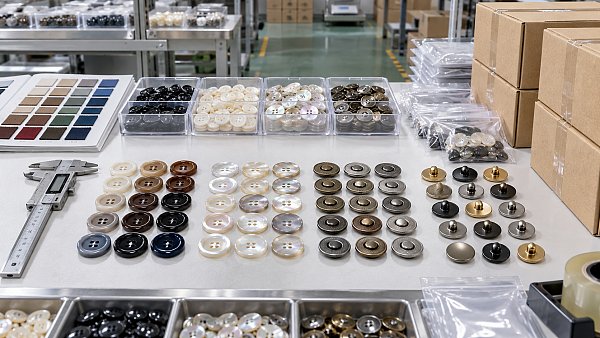
 Garment MfgWhat drives unit costs when buying garment buttons wholesale?Garment buttons wholesale costs depend on material, tooling, finish, MOQ, quality, packing, and freight. Learn how to compare true landed costs and source reliably.Textile Industry AnalystOct 06, 2026
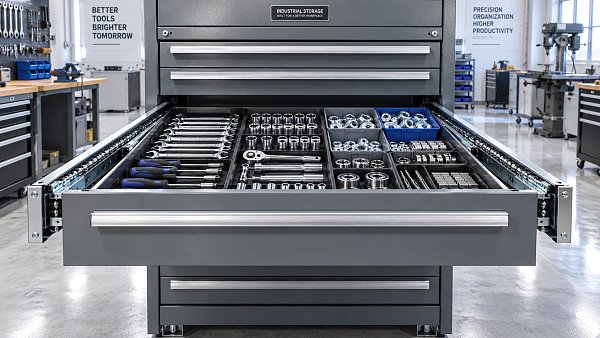
 Building HardwareWhat load rating should you specify for wholesale ball bearing slides?Wholesale ball bearing slides: learn how to specify the right load rating for drawer weight, extension, mounting, and durability. Source smarter and reduce failures.Tooling & Hardware LeadOct 05, 2026
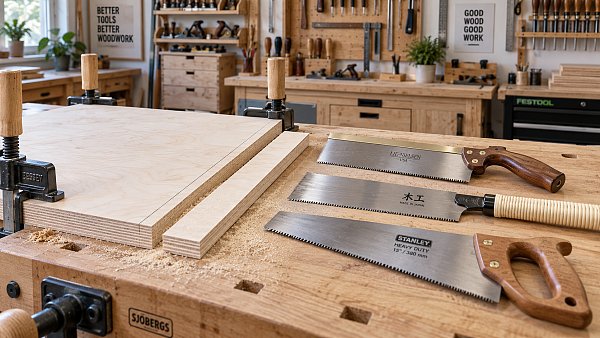
 Hand & Power ToolsHow to choose a hand saw for woodworking without tear-outHand saw for woodworking guide: choose the right tooth pattern, blade, and technique to achieve clean, precise cuts with less tear-out. Explore practical buying tips.Tooling & Hardware LeadOct 04, 2026
 Eco PackagingWhat affects the price of kraft paper rolls bought wholesale?Kraft paper rolls wholesale pricing depends on grade, basis weight, roll size, order volume, freight, and certifications. Learn how to compare landed costs and choose reliable value.Packaging Supply ExpertOct 03, 2026