Industry News
Curation by industry experts
Hot Articles
Popular Tags
India Extends BIS Certification to Wedding Photography Devices
India’s Bureau of Indian Standards (BIS) has expanded mandatory certification requirements to lithium-ion battery-powered equipment widely used in wedding photography—marking a significant regulatory shift with immediate implications for global exporters, particularly those based in China. The move, announced on 2026-05-20, reflects heightened safety oversight for portable consumer electronics and signals tightening market access conditions in one of Asia’s fastest-growing creative-tech import markets.
Event Overview
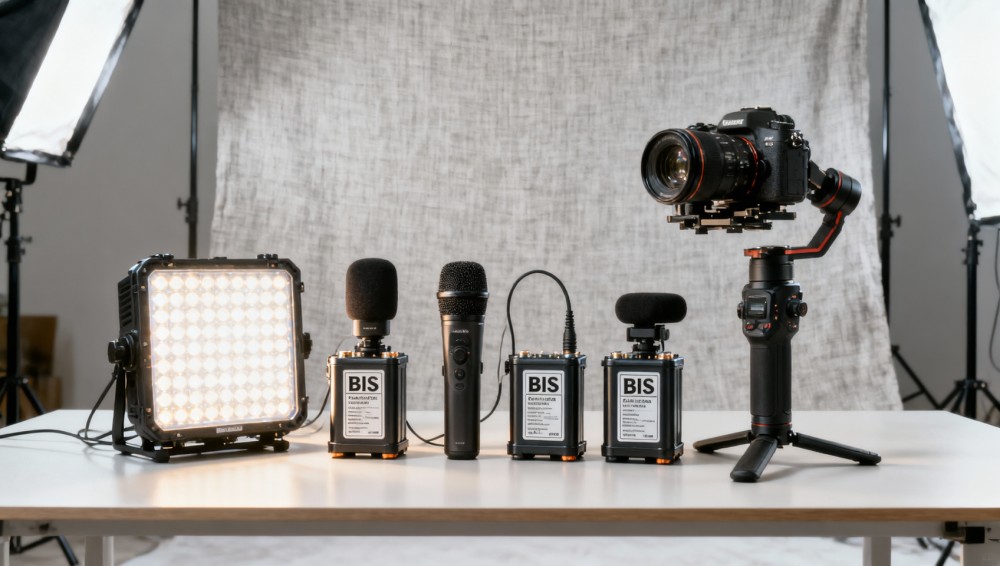
The Bureau of Indian Standards (BIS) issued a notification on 20 May 2026 mandating compliance with IS 13252(Part 1):2023 for portable LED fill lights, wireless microphones, and handheld gimbals powered by lithium-ion batteries—specifically those deployed in wedding photography applications. Effective from December 2026, non-certified products will be barred from customs clearance and domestic sale in India.
Industries Affected
Direct trading enterprises: Exporters and distributors handling cross-border shipments of such devices face direct compliance liability. As China accounts for 68% of India’s imports in this category, manufacturers and trading firms without existing BIS representation or certification history must now secure local Authorized Indian Representatives (AIRs), initiate product testing, and complete registration—adding lead time, cost, and documentation complexity to every shipment.
Raw material procurement enterprises: Firms sourcing lithium cells, PCBs, or battery management systems (BMS) for these devices are indirectly affected: BIS certification requires full bill-of-materials traceability and component-level conformity evidence. Suppliers may be asked to provide IS-certified sub-assemblies or test reports aligned with IS 13252(Part 1):2023—prompting upstream qualification reviews and potential re-sourcing.
Contract manufacturing and OEM enterprises: Factories producing private-label or white-label gear for Indian brands must now embed BIS-compliant design controls—including overcharge/overdischarge protection, thermal cutoff mechanisms, and labeling per Clause 7.3 of IS 13252(Part 1):2023. Retrospective design validation may be required for legacy models, delaying new production runs or requiring firmware/hardware revisions.
Supply chain service providers: Third-party testing labs, BIS liaison agents, and freight forwarders specializing in Indian market entry must scale capacity for surge demand in pre-market verification. Notably, only BIS-recognized labs (e.g., SGS India, TÜV SÜD India, or BIS’s own laboratories) can issue valid test reports—limiting options and increasing turnaround times for applicants unfamiliar with the ecosystem.
Key Focus Areas and Recommended Actions
Confirm product scope eligibility before June 2026
Not all lithium-powered photography tools fall under the mandate—only those explicitly classified as ‘portable’, ‘user-replaceable battery equipped’, and marketed for wedding/event use. Enterprises should conduct preliminary classification audits against IS 13252(Part 1):2023 Annex A and BIS’s latest explanatory note (Ref: BIS/CE/NOT/2026/047).
Engage an Authorized Indian Representative (AIR) no later than August 2026
An AIR is mandatory for foreign applicants. Delays in AIR appointment often cause 4–6 week bottlenecks in application submission. Firms should verify AIR credentials via BIS’s public register and ensure contractual clarity on liability for non-compliance during transition.
Initiate type testing at BIS-recognized labs by Q3 2026
Testing covers electrical safety, mechanical robustness, battery cell stability under abnormal charging, and marking durability. Average test duration is 8–10 weeks; concurrent submission of technical documentation (including circuit diagrams and BOM) is advised to avoid sequential delays.
Editorial Perspective / Industry Observation
Observably, this expansion is not an isolated safety measure—but part of BIS’s broader consolidation of electronics regulation under IS 13252(Part 1):2023, which now serves as the umbrella standard for IT and multimedia equipment with rechargeable batteries. Analysis shows that over 70% of recent BIS notifications targeting consumer electronics since 2024 reference this standard, suggesting a strategic pivot toward harmonized, risk-based certification rather than product-by-product rulemaking. From industry perspective, the timing—six months ahead of the enforcement date—appears calibrated to allow orderly transition while still pressuring laggard suppliers to formalize their India market presence.
Conclusion
This regulatory development underscores how localized safety frameworks increasingly shape global supply chain decisions—not just for high-risk categories like power tools or medical devices, but also for lifestyle-oriented professional equipment. Rather than signaling market closure, it better reflects institutional maturation: clearer rules, higher baseline expectations, and greater emphasis on accountability across the value chain. For stakeholders, proactive alignment offers competitive differentiation—not just compliance.
Source Attribution
Official notice published by the Bureau of Indian Standards (BIS), Ref: BIS/CE/NOT/2026/047, dated 20 May 2026. Full text available at https://www.bis.gov.in. Ongoing updates—including lab recognition status, AIR registry revisions, and clarification FAQs—are subject to monitoring through BIS’s Weekly Notification Bulletin (WNB), issued every Friday.
Recommended News
 Garment MfgWhat drives unit costs when buying garment buttons wholesale?Garment buttons wholesale costs depend on material, tooling, finish, MOQ, quality, packing, and freight. Learn how to compare true landed costs and source reliably.Textile Industry AnalystOct 06, 2026
 Building HardwareWhat load rating should you specify for wholesale ball bearing slides?Wholesale ball bearing slides: learn how to specify the right load rating for drawer weight, extension, mounting, and durability. Source smarter and reduce failures.Tooling & Hardware LeadOct 05, 2026
 Hand & Power ToolsHow to choose a hand saw for woodworking without tear-outHand saw for woodworking guide: choose the right tooth pattern, blade, and technique to achieve clean, precise cuts with less tear-out. Explore practical buying tips.Tooling & Hardware LeadOct 04, 2026
 Eco PackagingWhat affects the price of kraft paper rolls bought wholesale?Kraft paper rolls wholesale pricing depends on grade, basis weight, roll size, order volume, freight, and certifications. Learn how to compare landed costs and choose reliable value.Packaging Supply ExpertOct 03, 2026