Industry News
Curation by industry experts
Hot Articles
Popular Tags
Vietnam Customs Tightens Import Checks on Wedding Photography LED Lights
Starting May 22, 2026, Vietnam’s Ho Chi Minh City and Hai Phong Port Customs have launched a targeted inspection regime for imported LED lighting equipment designated for wedding photography. The measure requires original CE + RoHS conformity declarations validated by QUATEST 3 — Vietnam’s nationally recognized certification body. Affected sectors include LED lighting exporters, cross-border logistics providers, and international buyers sourcing from China’s manufacturing hubs — particularly in East and South China.
Event Overview
Effective May 22, 2026, Vietnamese customs authorities at Ho Chi Minh City and Hai Phong ports began mandatory verification of CE and RoHS compliance documentation for imported LED布光 lamps used exclusively in wedding photography. Under the new procedure, shipments must be accompanied by an original conformity declaration certified by QUATEST 3. Failure to provide such documentation results in full-container detention and a penalty equal to 15% of the declared cargo value.
Industries Affected by This Measure
Direct Exporters (China-based LED lighting manufacturers)
Over 230 LED lighting export enterprises located in East China (e.g., Jiangsu, Zhejiang) and Guangdong are directly impacted. These firms supply wedding-photography-specific LED fixtures to global buyers, many of whom rely on just-in-time delivery schedules. The requirement introduces new pre-shipment compliance steps, increasing lead time and administrative burden.
International Buyers & Importers (especially in ASEAN, Middle East, and North America)
Buyers placing orders with Chinese suppliers now face higher risk of port delays and cost overruns if compliance documentation is incomplete or unvalidated. Since the declaration must be issued by QUATEST 3 — not self-declared or third-party EU-certified — buyers cannot assume existing CE/RoHS reports suffice.
Supply Chain Service Providers (freight forwarders, customs brokers, compliance consultants)
These intermediaries must now verify document authenticity prior to shipment, including checking whether the declaration bears QUATEST 3’s official endorsement. The absence of standardized templates or public validation channels increases verification complexity and liability exposure.
What Relevant Enterprises or Practitioners Should Focus On
Verify QUATEST 3 recognition status before shipment
CE and RoHS declarations must be issued or formally endorsed by QUATEST 3 — not merely bearing CE marking or referencing EU directives. Exporters and buyers should request proof of QUATEST 3’s acceptance of the specific declaration format in advance, rather than assuming equivalence with standard EU-conformity statements.
Prioritize pre-submission review of compliance documents
Given the 15% penalty and container detention risk, it is advisable for exporters to submit draft declarations to QUATEST 3 or authorized local representatives for pre-clearance assessment. Some Vietnamese importers report turnaround times of 5–7 working days for such reviews — a timeline that must be built into order planning.
Update commercial terms and Incoterms® clauses
Contracts between Chinese suppliers and overseas buyers should explicitly assign responsibility for obtaining and validating the QUATEST 3-recognized declaration. FOB or EXW terms may shift undue compliance burden to buyers; CFR or CIF arrangements with documented compliance handover points reduce ambiguity during customs clearance.
Track parallel developments in other Vietnamese ports and product categories
Although currently limited to wedding-photography LED lights at Ho Chi Minh City and Hai Phong ports, analysis shows this initiative aligns with broader Vietnamese regulatory trends toward localized conformity validation. Observably, similar checks could extend to studio lighting, video production gear, or consumer-grade LED products in coming months — especially those falling under Vietnam’s Decree No. 08/2023/ND-CP on technical standards enforcement.
Editorial Perspective / Industry Observation
This measure is better understood as a regulatory signal than an isolated enforcement action. It reflects Vietnam’s increasing emphasis on domestic verification capacity — moving beyond reliance on foreign certifications toward nationally anchored compliance oversight. From an industry perspective, it signals a structural shift: conformity is no longer about meeting generic international standards, but about demonstrating traceable, locally validated alignment. Current implementation remains narrowly scoped, yet its procedural rigor suggests scalability across adjacent electronics categories. Continued monitoring of QUATEST 3’s published guidance updates and customs circulars will be essential to distinguish policy intent from operational reality.

Conclusion
This development underscores a growing operational requirement for exporters serving the Vietnamese market: technical compliance must now be both internationally aligned and domestically authenticated. Rather than representing a temporary hurdle, it is more appropriately interpreted as an early indicator of Vietnam’s evolving regulatory maturity — one where documentation quality, institutional validation, and cross-border coordination carry measurable commercial weight. Enterprises should treat it as a procedural benchmark, not an exception.
Information Sources
Main source: Official notice issued by Vietnam Customs Department (effective May 22, 2026), referencing Directive No. 1245/TCHQ-GSQL on specialized inspection of photographic lighting equipment.
Note: QUATEST 3’s internal validation criteria and list of accepted declaration templates remain unpublished as of May 2026 and are subject to ongoing clarification.
Recommended News
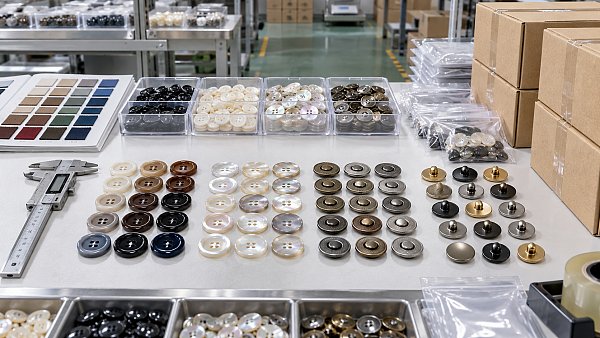
 Garment MfgWhat drives unit costs when buying garment buttons wholesale?Garment buttons wholesale costs depend on material, tooling, finish, MOQ, quality, packing, and freight. Learn how to compare true landed costs and source reliably.Textile Industry AnalystOct 06, 2026
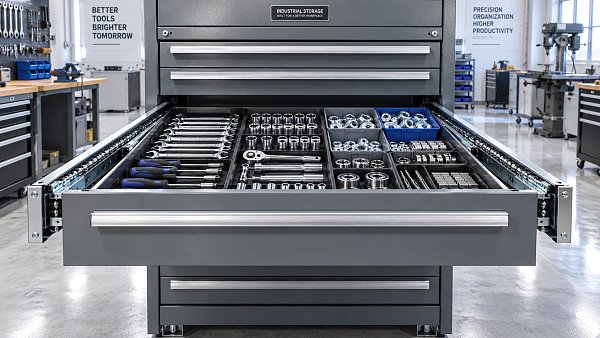
 Building HardwareWhat load rating should you specify for wholesale ball bearing slides?Wholesale ball bearing slides: learn how to specify the right load rating for drawer weight, extension, mounting, and durability. Source smarter and reduce failures.Tooling & Hardware LeadOct 05, 2026
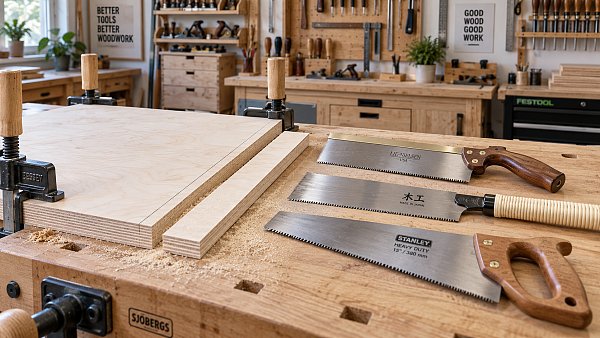
 Hand & Power ToolsHow to choose a hand saw for woodworking without tear-outHand saw for woodworking guide: choose the right tooth pattern, blade, and technique to achieve clean, precise cuts with less tear-out. Explore practical buying tips.Tooling & Hardware LeadOct 04, 2026
 Eco PackagingWhat affects the price of kraft paper rolls bought wholesale?Kraft paper rolls wholesale pricing depends on grade, basis weight, roll size, order volume, freight, and certifications. Learn how to compare landed costs and choose reliable value.Packaging Supply ExpertOct 03, 2026