Industry News
Curation by industry experts
Hot Articles
Popular Tags
BIS Launches LED Ring Light抽查 for Wedding Photography
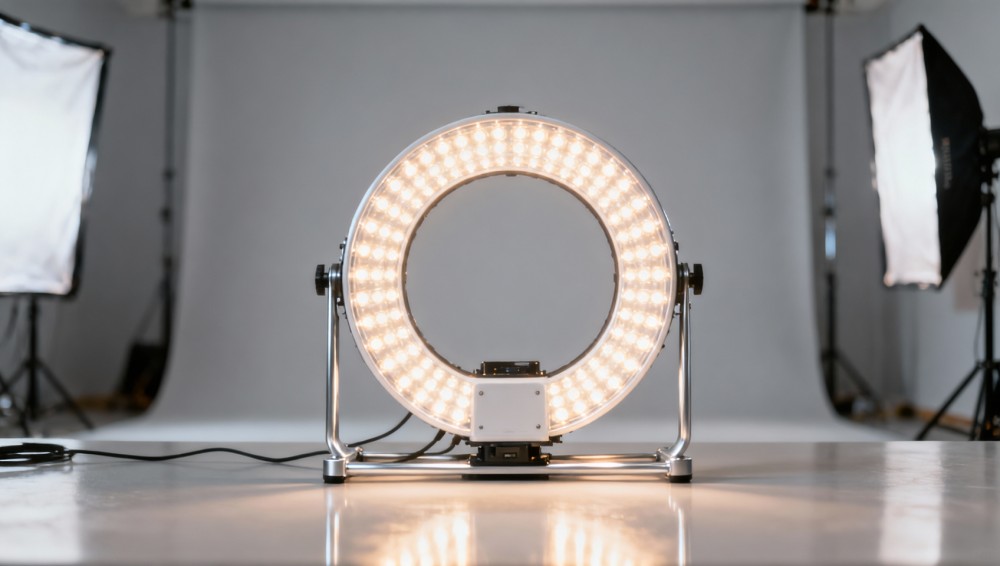
India's Bureau of Indian Standards (BIS) initiated a two-month targeted market surveillance campaign on May 9, 2026, focusing on LED ring lights used in wedding photography. The action covers major import hubs—Delhi, Mumbai, and Bengaluru—and directly impacts manufacturers, importers, and distributors of photographic lighting equipment serving the Indian consumer and professional imaging markets. This development signals heightened regulatory scrutiny on photobiological safety and electrical safety compliance, making it highly relevant for export-oriented lighting suppliers, especially those engaged in cross-border trade with India.
Event Overview
On May 9, 2026, the Bureau of Indian Standards (BIS) launched a dedicated two-month market surveillance initiative targeting LED ring lights intended for wedding photography applications. The抽查 covers Delhi, Mumbai, and Bengaluru—the three principal import gateways into India. Testing focuses exclusively on conformance with IEC 62471 (Photobiological Safety of Lamps and Lamp Systems) and IS 13252 Part 1 (Safety Requirements for Information Technology Equipment). As of the latest official update, 17 batches of products were detained for misrepresentation of blue light hazard classification; 12 of these originated from China.
Industries Affected by Segment
Direct Trading Enterprises (Importers & Exporters)
Importers placing LED ring lights into the Indian market face immediate compliance verification risk. Since BIS enforcement targets physical goods at entry points and retail distribution nodes, documentation gaps—including missing or non-validated test reports against IEC 62471 and IS 13252 Part 1—may result in detention or rejection. The fact that 12 of 17 detained batches were traced to China indicates concentrated exposure for exporters relying on standardised product declarations without India-specific validation.
Manufacturing Enterprises (OEM/ODM Lighting Producers)
Producers supplying ring lights to Indian brands or e-commerce platforms must now verify whether their current designs meet both photobiological (IEC 62471) and general electrical safety (IS 13252 Part 1) requirements—not just one. Unlike generic LED lamps, ring lights often use high-luminance, forward-facing arrays with narrow beam angles, increasing potential for retinal blue light exposure. Analysis shows that blue light hazard classification (e.g., RG0 vs. RG1) is not automatically inherited from driver or LED component certifications; system-level testing is required.
Distribution & E-Commerce Platforms
Online and offline channels distributing wedding photography gear in India may face increased pre-sale verification obligations. BIS has historically escalated scrutiny toward platforms hosting third-party sellers when non-compliant products are repeatedly identified. Observably, detained batches were found across multiple distribution tiers—not only at ports but also in local retail inventories—suggesting downstream accountability is expanding beyond importers alone.
What Relevant Enterprises Should Monitor and Do Now
Track Official Updates on BIS Surveillance Scope and Timeline
The current action is defined as a two-month专项抽查; however, BIS may convert findings into permanent compliance checkpoints or revise mandatory certification requirements. Enterprises should monitor BIS’s official portal and notifications for any extension, scope expansion (e.g., inclusion of other studio lighting types), or publication of detained product lists.
Verify Product Documentation Against Both IEC 62471 and IS 13252 Part 1
Do not assume conformity with one standard implies compliance with the other. IEC 62471 addresses optical radiation risks (especially blue light), while IS 13252 Part 1 covers electric shock, fire, mechanical, and energy hazard protection. Current detentions reflect failures in blue light hazard labelling—meaning technical files must include full photobiological safety assessment reports, not just safety data sheets or supplier declarations.
Review Supply Chain Handoffs for Labelling and Declaration Accuracy
Since mislabelled blue light hazard class was the primary cause of detention, enterprises should audit how hazard classification is communicated across the supply chain—from manufacturer datasheets to importer customs declarations to retail packaging. Any discrepancy between stated RG class (e.g., ‘RG0’) and measured values under IEC TR 62778 conditions may trigger enforcement action.
Prepare for Possible Certification Pathway Clarification
IS 13252 Part 1 falls under BIS’s Compulsory Registration Scheme (CRS) for IT equipment—but LED ring lights are not yet explicitly listed. However, this抽查 suggests BIS is interpreting them as in-scope based on functional use. Enterprises should assess whether voluntary CRS registration—supported by accredited test reports—is now operationally prudent, even ahead of formal listing.
Editorial Perspective / Industry Observation
This BIS action is best understood not as an isolated inspection, but as an observable signal of regulatory convergence: photobiological safety is being treated with equal weight to traditional electrical safety in consumer-facing lighting products. From an industry perspective, the focus on wedding photography gear—a high-visibility, mid-tier B2C segment—suggests BIS is using accessible, well-defined product categories to establish precedent before broadening enforcement. Analysis shows this is less about sudden policy change and more about operationalising existing standards in contexts where risk profiles have evolved (e.g., prolonged close-range LED exposure during photo shoots). Continued monitoring is warranted—not because rules have changed, but because enforcement intensity and interpretation thresholds are shifting.
Conclusion
While the May 9, 2026 BIS抽查 does not introduce new legislation, it confirms that LED ring lights entering India are now subject to dual-standard verification with tangible enforcement consequences. For affected stakeholders, the event serves as a concrete indicator that photobiological safety can no longer be treated as optional or secondary to electrical certification. It is more accurately interpreted as an early-stage operational alert—not a finalized regulatory mandate—highlighting where alignment between product design, testing protocols, and market documentation currently falls short.
Source Attribution:
• Bureau of Indian Standards (BIS) official announcement, May 9, 2026
• Publicly disclosed detention data released by BIS Regional Offices in Delhi, Mumbai, and Bengaluru
Note: Further updates on whether this抽查 leads to amendments in the CRS product list or revised guidance on IEC 62471 application remain pending observation.
Recommended News
 Office FurnitureHow supplier scorecards reduce risk in furniture procurementFurniture procurement supplier management becomes more resilient with supplier scorecards that track quality, delivery, compliance, and corrective actions. Learn how to reduce sourcing risk.Interior Sourcing LeadSep 26, 2026
 Office Paper & Printing PaperHow roll diameter affects downtime when using jumbo paper rollsJumbo paper rolls can cut changeovers and downtime—if your unwinder, handling, and tension control can support them. Find the optimal roll diameter for smoother output.Packaging Supply ExpertSep 25, 2026
 Office Paper & Printing PaperWhen does carbonless paper for invoices reduce billing errors?Carbonless paper for invoices reduces billing errors by creating clear, consistent copies for deliveries, service calls, and approvals. Learn when it strengthens billing control.Packaging Supply ExpertSep 24, 2026
 Home DecorHow to compare floating wall shelves suppliers for consistent load capacityFloating wall shelves supplier comparison guide: evaluate load capacity, brackets, wall fixings, testing, and production consistency before you buy.Interior Sourcing LeadSep 23, 2026