Industry News
Curation by industry experts
Hot Articles
Popular Tags
Global Wedding Photography Equipment Export Concentration Rises to 63.4%
On March 31, 2026, the Global Supply Report (GSR) pre-released data from its 2026 Global Wedding Photography Supply Chain White Paper, revealing a sharp rise in market concentration among top exporters of wedding photography equipment — driven by regulatory tightening in key export markets. This shift signals structural realignment across the global supply chain, particularly impacting firms engaged in trade, manufacturing, raw material sourcing, and logistics services for lighting, backdrop systems, and on-set environmental products.
Event Overview
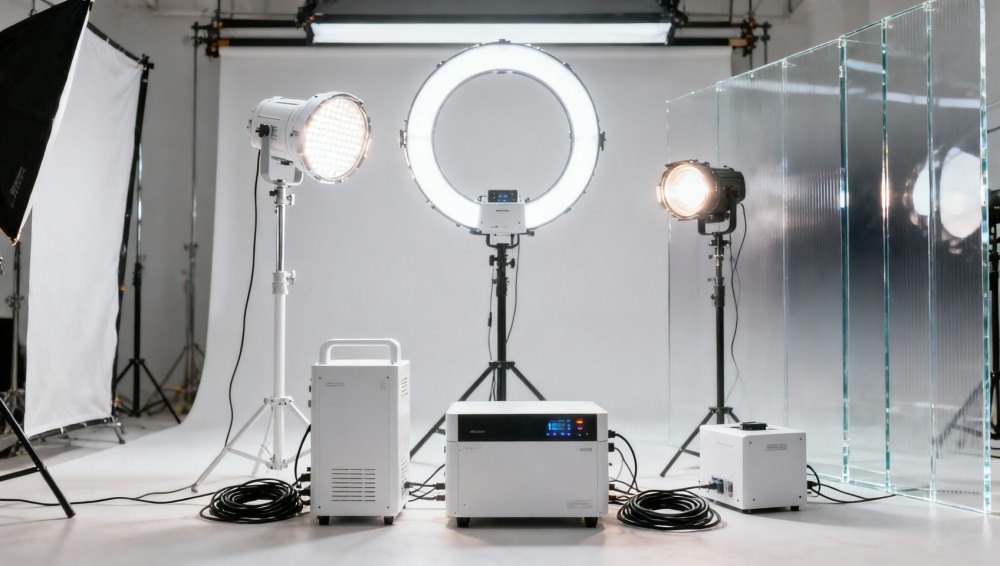
According to GSR’s pre-release data, the global export concentration index (CR5) for wedding photography equipment reached 63.4% in Q1 2026 — up 4.2 percentage points year-on-year. The top five Chinese enterprises — spanning LED lighting fixtures, smart ring lights, eco-friendly misting systems, and acrylic backdrop systems — collectively accounted for 63.7% of global export value during the same period. The primary driver cited was accelerated exit of small- and medium-sized manufacturers due to compliance pressure from updated regulations including REACH (Registration, Evaluation, Authorisation and Restriction of Chemicals) and IEC 62471 (Photobiological Safety of Lamps and Lamp Systems).
Industries Affected
Direct Trading Enterprises
Export-oriented trading companies face intensified competitive pressure as CR5 rises: pricing power consolidates with top-tier suppliers, while compliance documentation (e.g., REACH SVHC declarations, IEC test reports) becomes a non-negotiable entry barrier. Smaller traders lacking in-house regulatory support are seeing longer lead times and higher pre-shipment verification costs — especially for EU and UK-bound shipments.
Raw Material Procurement Enterprises
Firms sourcing substrates (e.g., optical-grade acrylic sheets), phosphor compounds for LEDs, or biodegradable propellants for misting systems are experiencing tightened vendor qualification requirements. Suppliers now routinely demand full material declarations (IMDS/SCIP submissions) and third-party photobiological safety certifications — increasing procurement cycle duration and raising minimum order thresholds.
Contract Manufacturing Enterprises
OEM/ODM manufacturers — particularly those serving international brands — report rising rejection rates during final audit stages due to non-conformance with updated IEC 62471 Class limits (e.g., UV/blue-light hazard assessments). Retrofitting production lines for spectral testing and thermal management validation has become a prerequisite for continued engagement with top-five clients.
Supply Chain Service Providers
Logistics and compliance consultancies report surging demand for integrated services — combining customs classification advisory (HS code 9006.59 for photographic lighting apparatus), REACH dossier preparation, and IEC 62471 lab coordination. However, capacity constraints are emerging, especially in regional hubs like Shenzhen and Dongguan, where certified testing labs face backlog delays exceeding six weeks.
Key Focus Areas & Recommended Actions
Verify Regulatory Alignment Across All Four Core Product Categories
Enterprises must map each product line — LED lamps, ring lights, misting units, and acrylic backdrops — against applicable clauses in REACH Annex XVII (e.g., restrictions on certain flame retardants) and IEC 62471 (spectral irradiance thresholds). Cross-category compliance gaps — e.g., using the same acrylic grade for both backdrops and lamp housings without verifying UV stability — have triggered recent shipment holds.
Accelerate Supplier Rationalization Based on Certification Readiness
Procurement teams should prioritize vendors with active SCIP registrations, ISO/IEC 17025-accredited test reports, and documented process controls for hazardous substance management. GSR data indicates that over 78% of CR5-exporting firms now require Tier-2 supplier audit trails — making upstream transparency a de facto commercial requirement.
Invest in In-House Photobiological Safety Assessment Capability
Rather than relying solely on external labs, mid-sized manufacturers should consider acquiring portable spectroradiometers and training QA staff on IEC/TR 62471-2 guidance. Analysis shows this reduces time-to-certification by ~35% and improves design iteration speed for new lighting models targeting EU retail channels.
Editorial Insight / Industry Observation
Observably, the CR5 surge is not merely a symptom of scale-driven consolidation — it reflects a regulatory inflection point where technical compliance has become a core competency, not an ancillary function. From an industry perspective, this marks a transition from ‘cost-driven’ to ‘compliance-integrated’ competitiveness. Current trends suggest that certification agility — measured by time-to-approval per new SKU — may soon rival unit cost as a decisive factor in client selection. That said, it remains unclear whether this concentration will sustain beyond 2027; emerging markets (e.g., Southeast Asia, GCC) are still developing enforcement capacity for REACH-equivalent frameworks — potentially creating short-term arbitrage opportunities for compliant but non-CR5 players.
Conclusion
The 63.4% CR5 figure signals more than market share redistribution: it underscores how regulatory harmonization — once considered peripheral to creative-industry hardware — now defines structural viability. For stakeholders across the wedding photography equipment value chain, long-term resilience hinges less on volume scaling and more on embedded compliance literacy, traceable material governance, and adaptive engineering workflows.
Source Attribution
Data sourced from the pre-release edition of the 2026 Global Wedding Photography Supply Chain White Paper, published by Global Supply Report (GSR), March 2026. Final report publication scheduled for June 2026. Note: REACH enforcement timelines for Annex XVII entries related to photopolymer additives (Entry 76) and IEC 62471 revision status (Edition 3.0) remain under review by ECHA and IEC TC 34 — ongoing monitoring advised.
Recommended News
 Office FurnitureHow supplier scorecards reduce risk in furniture procurementFurniture procurement supplier management becomes more resilient with supplier scorecards that track quality, delivery, compliance, and corrective actions. Learn how to reduce sourcing risk.Interior Sourcing LeadSep 26, 2026
 Office Paper & Printing PaperHow roll diameter affects downtime when using jumbo paper rollsJumbo paper rolls can cut changeovers and downtime—if your unwinder, handling, and tension control can support them. Find the optimal roll diameter for smoother output.Packaging Supply ExpertSep 25, 2026
 Office Paper & Printing PaperWhen does carbonless paper for invoices reduce billing errors?Carbonless paper for invoices reduces billing errors by creating clear, consistent copies for deliveries, service calls, and approvals. Learn when it strengthens billing control.Packaging Supply ExpertSep 24, 2026
 Home DecorHow to compare floating wall shelves suppliers for consistent load capacityFloating wall shelves supplier comparison guide: evaluate load capacity, brackets, wall fixings, testing, and production consistency before you buy.Interior Sourcing LeadSep 23, 2026