Industry News
Curation by industry experts
Hot Articles
Popular Tags
Front Service Fine Pitch LED: Key Installation Limits and Maintenance Risks
Front Service Fine Pitch LED: Key Installation Limits and Maintenance Risks
Front service fine pitch LED solutions can simplify access in premium display projects. They also create tight installation tolerances that affect cost, uptime, and future service planning.
For project teams, the real question is not whether front maintenance looks convenient. It is whether the site, structure, and operating conditions can support it over time.
That is where many deployments drift off course. A front service fine pitch LED wall may fit the visual brief, yet still fail basic serviceability expectations after handover.
This guide breaks down the main installation limits, the hidden maintenance risks, and the practical checks that help reduce disruption before procurement starts.
Why front service fine pitch LED is attractive in premium projects
The appeal is easy to understand. A front service fine pitch LED cabinet can be maintained from the viewing side without rear access aisles.
That matters in command centers, broadcast studios, retail flagships, meeting rooms, and transport hubs. Space is expensive, and wall depth is often tightly controlled.
Compared with rear service systems, front service fine pitch LED layouts can support cleaner architecture. They also help when the display sits on a fixed wall or decorative cladding.
Still, the installation model changes the engineering logic. Removing rear access does not remove service needs. It simply moves those needs to other parts of the project.
The first limit: wall flatness and structural tolerance
A front service fine pitch LED system is less forgiving than many buyers expect. Fine pixel pitch means seam alignment, cabinet flatness, and frame precision become critical.
If the wall substrate is uneven, the mounting frame may twist slightly. That small deviation can create visible panel steps, brightness inconsistency, or module stress.
In actual delivery work, structural tolerance problems often begin before the LED team arrives. Civil work, steel fabrication, and decorative finishes may already lock in errors.
This is why pre-install surveys matter. Front service fine pitch LED projects need verified wall conditions, load calculations, and frame adjustment capacity before final production drawings.
- Check wall plumbness and levelness across the full display area.
- Confirm anchor points match actual structural members.
- Review dead load, dynamic load, and vibration exposure.
- Require frame adjustability for field correction.
The second limit: front clearance is still a service requirement
One common mistake is assuming front service fine pitch LED means zero service space. In reality, technicians still need controlled clearance in front of the screen.
Modules may require vacuum tools or mechanical release access. A wall placed behind fixed furniture, counters, railings, or decorative barriers becomes difficult to maintain safely.
The risk increases in high-end interiors. Designers may prioritize flush finishes, while maintenance teams need access angles, ladder positions, and temporary work zones.
When those requirements are ignored, even simple module replacement can disrupt operations, require overnight shutdowns, or risk accidental surface damage.
Questions to resolve before sign-off
- Can maintenance staff stand, lift, and remove modules safely?
- Will nearby furniture block tool use?
- Is there enough space for temporary barriers during service?
- Can the display be serviced during business hours?
The third limit: thermal management and power access
Front service fine pitch LED walls often sit in enclosed architectural settings. That creates a thermal challenge, especially when airflow paths are reduced by decorative finishes.
Excess heat does not always trigger immediate failure. More often, it shortens component life, shifts color performance, and raises the frequency of power or receiving card issues.
Power access is another overlooked issue. A front service fine pitch LED system still needs planned routes for power supply replacement, cable inspection, and fault isolation.
If the design buries critical electrical parts behind permanent finishes, maintenance becomes slower and more expensive than the original front access concept promised.
Long-term maintenance risks that appear after handover
Many front service fine pitch LED issues do not show up during commissioning. They emerge later, when the display enters daily use and service events become less controlled.
The first risk is repeated module handling. Frequent front removal can increase the chance of pixel damage, magnetic wear, connector fatigue, or cosmetic surface marks.
The second risk is parts mismatch over time. Fine pitch displays are sensitive to batch variation, especially in color, brightness, and black level consistency.
The third risk is maintenance skill dependence. Front service fine pitch LED systems often look simple, yet improper removal methods can create new failures during routine repair.
These issues matter because downtime is rarely measured only by repair minutes. It also includes coordination delays, spare availability, access approvals, and image quality recovery.
What to lock in contractually
- Spare module quantity from the same production batch.
- Defined replacement steps and approved service tools.
- Color calibration process after module replacement.
- Response times for critical faults and on-site support.
How to evaluate site fit before choosing front service fine pitch LED
A useful decision process starts with the site, not the product brochure. Front service fine pitch LED is strong when space is constrained but service planning remains realistic.
If the display is installed very high, above fixed millwork, or inside sealed decorative cavities, the maintenance model may become fragile from day one.
This is especially relevant in corporate lobbies and control rooms, where downtime affects brand perception or operational continuity. A visually clean solution can still be operationally weak.
- Survey the wall, structure, power path, and front access route.
- Review maintenance scenarios, not just first installation steps.
- Test whether one failed module can be replaced without collateral disruption.
- Compare lifecycle service cost against rear access alternatives.
A practical decision framework for engineering teams
Front service fine pitch LED is not inherently risky. The risk appears when architecture, electrical design, maintenance access, and operational expectations are handled separately.
A better approach is to treat the display as a serviceable system from the start. That means procurement decisions should include field conditions and post-handover realities.
In practice, the strongest projects use one standard: if a front service fine pitch LED wall cannot be repaired quickly without secondary damage, the design is incomplete.
That also means vendor evaluation should go beyond screen specifications. Ask for installation tolerances, service tool requirements, spare strategy, and actual maintenance workflow examples.
When those details are clear, front service fine pitch LED can deliver both design flexibility and dependable performance. When they are vague, lifecycle costs usually rise later.
Before final approval, verify one last point: the chosen solution must work on the real site, with real access limits, under real maintenance conditions.
That final check is often the difference between a clean deployment and an expensive service problem disguised as a premium display upgrade.
Recommended News
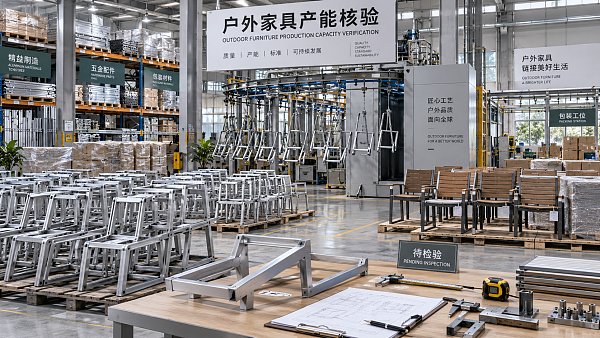
 Outdoor FurnitureHow to verify outdoor furniture manufacturers' production capacityCan outdoor furniture manufacturers deliver on time? Learn how to verify production capacity, uncover bottlenecks, and validate supplier commitments before placing your next order.Interior Sourcing LeadOct 13, 2026
 Commercial DisplaysWhat makes an outdoor digital signage display manufacturer reliable?Discover how to choose a reliable outdoor digital signage display manufacturer with proven weather protection, quality control, smart visibility, and responsive after-sales support.Commercial Tech EditorOct 12, 2026
 Garment MfgWhen do bulk embroidered hoodies offer better value than printed ones?Bulk embroidered hoodies deliver lasting value for uniforms and premium branding. Compare durability, design, comfort, and cost to choose the right decoration.Textile Industry AnalystOct 11, 2026
 Carton & PlasticsHow to compare packaging automation suppliers for line integrationPackaging automation supplier comparison guide: evaluate line integration, controls, safety, testing, lifecycle costs, and support to select a proven partner.Packaging Supply ExpertOct 10, 2026