Industry News
Curation by industry experts
Hot Articles
Popular Tags
How to Evaluate a Functional Textile Supplier for Performance and Compliance
Why does a functional textile supplier need deeper evaluation than a regular fabric source?
A functional textile supplier does more than deliver fabric.
The supplier also affects product claims, user safety, recall exposure, and audit readiness.
That matters when performance finishes, coatings, membranes, or specialty yarns are involved.
In practice, one failed lot can create two problems at once.
The first is performance failure, such as weak moisture management or reduced flame resistance.
The second is compliance failure, such as restricted substances or missing traceability records.
This is why supplier approval cannot rely on a sales presentation or a single lab report.
A stronger review looks at technical consistency, document control, and the supplier’s response under pressure.
Across global sourcing, that wider lens is increasingly important.
Market intelligence platforms such as Global Supply Review highlight the same pattern across light manufacturing.
Performance claims now sit next to ESG scrutiny, chemical disclosure, and resilience planning.
So the right question is not only, “Can this supplier make it?”
It is also, “Can this functional textile supplier prove it, repeat it, and support it through audits?”
What should you verify first when comparing a functional textile supplier?
Start with the exact performance requirement, not the marketing language.
Terms like breathable, antibacterial, waterproof, or durable can hide very different test thresholds.
A reliable functional textile supplier should translate claims into standards, methods, and acceptance limits.
Ask for recent reports linked to the same construction, finish, and production route.
Needle-punched nonwovens, knitted laminates, and coated woven fabrics do not behave the same way.
More importantly, lab data should reflect batch reality.
One development sample is useful, but it does not confirm process stability.
A better review includes production lot variation, retest history, and failure investigation records.
The checkpoints below help separate a promising source from an approval-ready one.
If those basics are unclear, the comparison should stop there.
How do you judge performance data without overtrusting a test report?
A test report is only the start.
The real question is whether the result remains stable after scale-up, finishing, storage, and use.
For example, water repellency can drop after washing.
Antimicrobial performance may depend on concentration, curing, or laundering cycles.
A capable functional textile supplier should explain those limits before you ask.
Look for alignment between claimed end use and test design.
Outdoor protective textiles, medical support fabrics, and upholstery materials require different stress conditions.
It is also worth checking sample conditioning and pre-treatment.
A result from an unfinished substrate may not represent the shipped article.
More useful questions include:
- Were tests run on production fabric or laboratory hand samples?
- Which version of the standard was used?
- What was the pass rate across recent lots?
- How often do borderline results appear?
- What corrective action follows a failed retest?
In real approvals, consistency usually matters more than one standout result.
That is especially true when warranty exposure or regulated end use is involved.
Which compliance documents actually matter before approval?
Not every certificate carries the same weight.
Some documents confirm a management system.
Others confirm product chemistry, restricted substances, or origin claims.
A functional textile supplier should be able to map documents to actual risk points.
For chemical compliance, request current RSL or MRSL declarations, test summaries, and material safety support where relevant.
For sustainability-linked programs, confirm whether recycled, organic, or chain-of-custody claims are transaction based.
That distinction avoids common confusion during external audits.
The supplier should also show version control.
Expired declarations and mixed templates often signal weak document governance.
When articles include coatings, adhesives, or laminates, request documentation for each critical input.
This is where hidden noncompliance often appears.
A fast review can miss subcontracted dyeing, finishing, or membrane bonding.
A stronger review follows the full process map.
That approach aligns with the E-E-A-T style of evidence-led sourcing analysis seen across GSR content.
Can a functional textile supplier look compliant on paper but still be high risk?
Yes, and this happens more often than many teams expect.
A supplier may hold valid certificates yet still struggle with execution discipline.
Typical warning signs appear in daily operating details.
- Test reports are always from old samples or unrelated constructions.
- Critical processes are outsourced without clear control points.
- Lot codes do not link cleanly to raw materials and finishing records.
- Corrective actions close quickly, but evidence is thin.
- Commercial teams answer technical questions better than the plant does.
Another risk is silent substitution.
A functional textile supplier may replace additives, greige fabric sources, or finishing agents during disruption.
Without formal notification, the product can still ship under the same name.
That is why change control deserves the same attention as initial approval.
In practical terms, ask to see the supplier’s process for material changes, requalification, and customer notification timing.
Their answer reveals operational maturity very quickly.
How should audit readiness, lead time, and cost fit into the decision?
Cost matters, but a low quote rarely tells the whole story.
For functional textiles, lower cost can mean narrower process windows or weaker testing frequency.
Lead time also deserves context.
A short quoted lead time is less valuable if approvals, retesting, or customs documents repeatedly delay release.
Audit readiness often becomes the tie-breaker.
The better functional textile supplier can usually retrieve records, explain deviations, and show CAPA evidence without scrambling.
That responsiveness reduces disruption during customer audits, regulator review, and incident investigation.
A balanced decision often includes these checks:
- Total landed risk, not only unit cost
- Document response time during qualification
- Reorder stability across at least two or three lots
- Escalation path for failures, holds, and market complaints
- Backup capacity for key constructions or finishes
When supply resilience is under review, these factors usually outweigh a narrow price advantage.
What is a practical approval framework for the next supplier review?
Keep the framework simple enough to use, but strict enough to expose weak controls.
A useful sequence starts with intended end use, expected hazards, and applicable standards.
Then match each requirement to evidence from the functional textile supplier.
If evidence is missing, treat that as a decision point, not a paperwork gap.
For many organizations, the most effective next step is to build a short approval matrix.
Include performance validation, chemical compliance, traceability depth, audit responsiveness, and change-control strength.
Score each area against actual records, not verbal assurance.
If two suppliers look similar, compare how they handle exceptions.
That is often where the better long-term partner becomes obvious.
In the end, evaluating a functional textile supplier is less about chasing the broadest claim list.
It is about confirming repeatable performance under real compliance conditions.
A disciplined review now can prevent product failure, shipment holds, and avoidable audit pressure later.
The most useful next move is to review current approval criteria and tighten the evidence required for every new functional textile supplier.
Recommended News
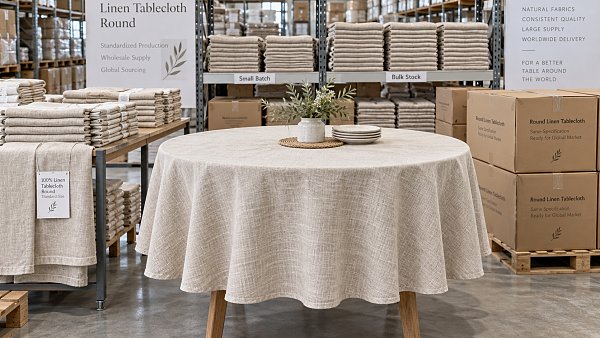
 Home DecorHow order size affects wholesale prices for round linen tableclothsBuying round linen tablecloths wholesale? Discover how order size, freight, and inventory costs affect pricing—and choose the right quantity to maximize real savings.Interior Sourcing LeadOct 14, 2026
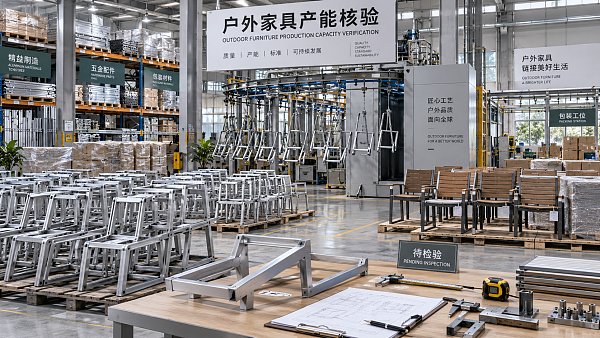
 Outdoor FurnitureHow to verify outdoor furniture manufacturers' production capacityCan outdoor furniture manufacturers deliver on time? Learn how to verify production capacity, uncover bottlenecks, and validate supplier commitments before placing your next order.Interior Sourcing LeadOct 13, 2026
 Commercial DisplaysWhat makes an outdoor digital signage display manufacturer reliable?Discover how to choose a reliable outdoor digital signage display manufacturer with proven weather protection, quality control, smart visibility, and responsive after-sales support.Commercial Tech EditorOct 12, 2026
 Garment MfgWhen do bulk embroidered hoodies offer better value than printed ones?Bulk embroidered hoodies deliver lasting value for uniforms and premium branding. Compare durability, design, comfort, and cost to choose the right decoration.Textile Industry AnalystOct 11, 2026