Industry News
Curation by industry experts
Hot Articles
Popular Tags
Vietnam Mandates QR Code on LED Ring Lights for Wedding Photography
Vietnam’s new regulatory requirement — QCVN 13:2026/BKHCN — takes effect on May 16, 2026, mandating Vietnam Standard QR codes on all imported LED photography lighting equipment, including ring lights and配套 softbox lights used in wedding photography. This development directly affects exporters, manufacturers, distributors, and logistics providers engaged in the photographic lighting supply chain to Vietnam — particularly those sourcing from China. Given its enforcement at major entry points like Ho Chi Minh City Customs, the rule signals a tightening of market access criteria for consumer-facing professional lighting gear.
Event Overview
The Vietnam Standards and Quality Authority (STAMEQ) officially implements QCVN 13:2026/BKHCN on May 16, 2026. Under this standard, all imported LED photography lamps — specifically including ring lights and lights designed for softbox systems — must undergo VILAS certification and carry a unique, traceable Vietnam Standard QR code. The regulation explicitly adds LED equipment for wedding photography to the list of products subject to mandatory conformity assessment. Non-compliant goods without the QR code will be rejected at Ho Chi Minh City Customs.
Industries Affected by Segment
Direct Exporters (especially from China)
Exporters shipping LED ring lights or related photographic lighting to Vietnam must now ensure compliance before shipment. The requirement affects packaging, labeling, and documentation workflows — as each unit must bear a certified, machine-readable QR code linked to VILAS-verified product data. Failure to comply results in customs detention or rejection, increasing lead time and cost risk.
Manufacturers & OEM/ODM Suppliers
Manufacturers producing LED ring lights for export — especially those fulfilling private-label orders for Vietnamese distributors — are now responsible for initiating VILAS certification and integrating QR code printing into final assembly or packaging lines. This introduces new validation steps, potential retooling for label application, and tighter coordination with certification bodies.
Distributors & Retail Channel Operators in Vietnam
Vietnamese importers and local distributors must verify QR code authenticity and traceability before accepting shipments or listing products on shelves. Stockouts may occur if suppliers delay certification, and shelf-ready packaging must include the QR code — affecting in-store display compliance and e-commerce product page requirements.
Labeling & Packaging Service Providers
Third-party packaging and label printers serving export clients must adapt to produce compliant QR codes that meet STAMEQ’s technical specifications (e.g., size, contrast, scannability, metadata structure). This requires updated print workflows and verification protocols — especially for clients transitioning from non-compliant legacy stock.
What Enterprises and Practitioners Should Focus On Now
Confirm VILAS certification eligibility and processing timelines
Companies should contact accredited VILAS laboratories immediately to assess whether their existing LED ring light models qualify for certification under QCVN 13:2026/BKHCN — and obtain realistic estimates for test duration, documentation review, and QR code issuance. Processing times may vary significantly depending on model complexity and lab capacity.
Review and revise packaging artwork and label management systems
Exporters and manufacturers must audit current packaging layouts to allocate space for the official QR code, ensure scannability under retail conditions, and update digital asset management systems to support version-controlled, certification-linked label files. Pre-2026 stock may require relabeling or segregation.
Verify QR code integration with Vietnam’s national traceability platform
Analysis shows the QR code is not merely a static identifier but must link to STAMEQ’s centralized database. Enterprises should confirm whether their chosen certification body supports full metadata registration (e.g., model number, batch, importer ID, test report reference) — as incomplete registration may render the QR code non-compliant despite physical presence.
Align internal compliance handoffs across procurement, QA, and logistics teams
From industry perspective, successful implementation depends on cross-functional alignment: procurement must specify QR-ready components; QA must validate label placement and scan success rate; logistics must retain certification documents for customs submission. A documented internal checklist — aligned with STAMEQ’s published guidance — helps prevent last-minute shipment holds.
Editorial Perspective / Industry Observation
Observably, this requirement reflects Vietnam’s broader shift toward digital traceability in regulated consumer electronics — moving beyond basic safety testing to enforce real-time product accountability. It is not yet a full-scale market ban, but rather an operational gate: compliance is binary (pass/fail at customs), and enforcement begins day one. From industry angle, it functions less as a technical upgrade and more as a procedural checkpoint — signaling that Vietnam is prioritizing supply chain transparency over speed of market entry. Continuous monitoring of STAMEQ’s official notices remains essential, as interpretation of ‘photographic lighting’ scope or QR code technical parameters may evolve post-launch.

This notice serves as a timely reminder that regulatory readiness — especially for mid-tier B2B electronics entering emerging markets — increasingly hinges on traceability infrastructure, not just product performance. For stakeholders in the global wedding photography equipment ecosystem, May 16, 2026, marks the start of a new compliance baseline — one that treats labeling not as a finishing touch, but as a core component of market access.
Source: Vietnam Standards and Quality Authority (STAMEQ), official announcement of QCVN 13:2026/BKHCN.
Note: Implementation details regarding QR code metadata schema, lab accreditation status, and transitional arrangements for pre-May 2026 shipments remain subject to ongoing official clarification.
Recommended News
 Industrial FastenersWhen do zinc drop in anchors need corrosion-resistant coatings?Zinc drop in anchors need corrosion-resistant coatings in damp, outdoor, chloride-rich, or chemical environments. Learn how to select durable, approved protection.Tooling & Hardware LeadSep 29, 2026
 Carton & PlasticsHow to assess seam quality in 250ml aluminum beverage cansLearn how to assess seam quality in 250ml aluminum beverage cans with practical visual checks, precise measurements, teardown methods, and defect-control guidance.Packaging Supply ExpertSep 28, 2026
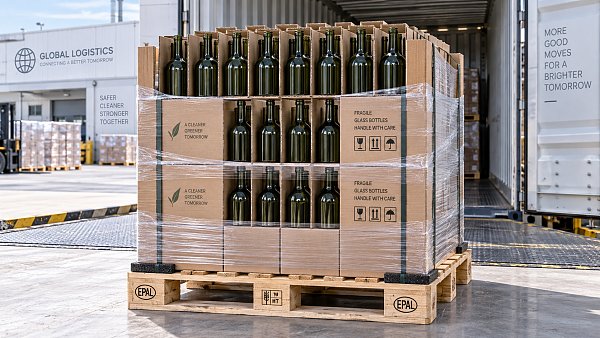
 Carton & PlasticsWhat drives breakage rates in bulk wine bottles wholesale orders?Bulk wine bottles wholesale buyers: discover what drives breakage rates, from glass quality and packaging to pallet loading, and reduce costly claims.Packaging Supply ExpertSep 27, 2026
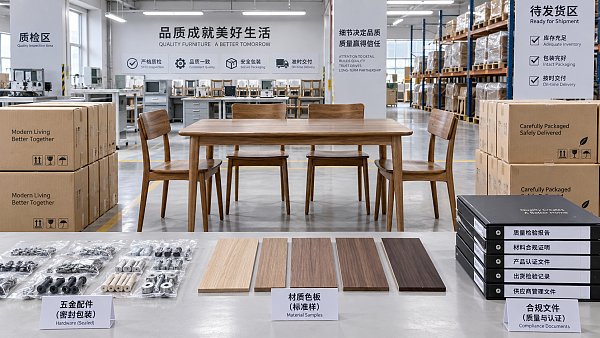
 Office FurnitureHow supplier scorecards reduce risk in furniture procurementFurniture procurement supplier management becomes more resilient with supplier scorecards that track quality, delivery, compliance, and corrective actions. Learn how to reduce sourcing risk.Interior Sourcing LeadSep 26, 2026