Industry News
Curation by industry experts
Hot Articles
Popular Tags
Non-woven fabrics for carton lining: Are you mistaking grammage for functional barrier performance?
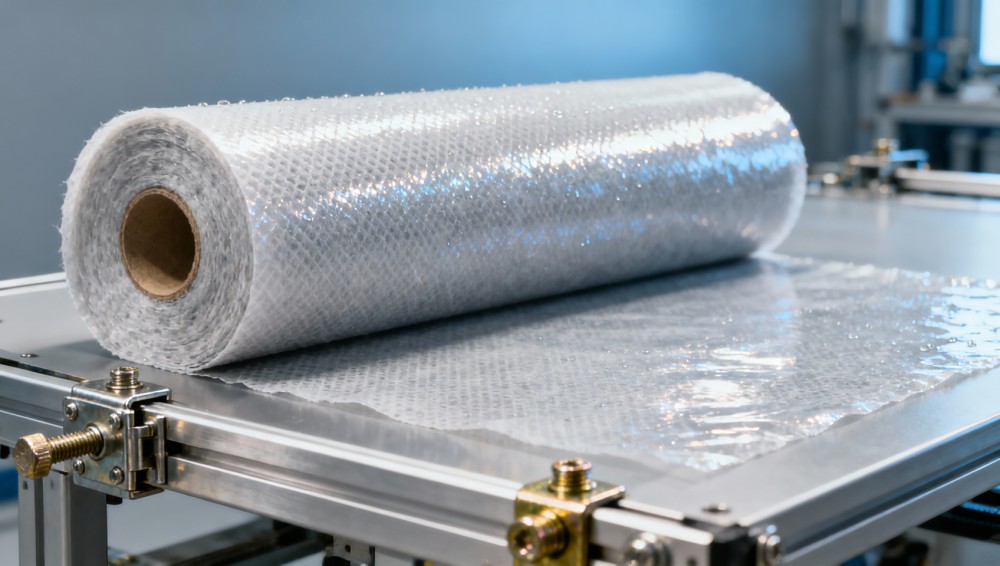
When selecting non-woven fabrics for carton lining, many lighting manufacturers and industrial hardware buyers mistakenly equate grammage with true functional barrier performance—overlooking critical factors like moisture resistance, tear strength, and ESG-compliant composition. As industrial packaging evolves to meet demands from decor suppliers, retail lighting brands, and technical textiles integrators, precision in material specification is no longer optional. Global Supply Review cuts through the noise with data-driven insights across hardware materials, packaging solutions, and sustainable non-woven fabrics—empowering procurement professionals and distributors to source with confidence, compliance, and competitive advantage.
Why Grammage Alone Fails as a Performance Indicator for Hardware Carton Lining
Grammage (g/m²) measures only mass per unit area—not how well a non-woven fabric resists puncture during hardware transit, maintains dimensional stability under humidity fluctuations, or blocks metal-ion migration in fastener-packed cartons. For hardware exporters shipping stainless steel hinges, zinc-plated screws, or aluminum extrusions, this misalignment leads directly to field failures: rust stains on interior packaging, liner delamination after 3–5 days of maritime transport, or static discharge compromising LED driver modules.
Real-world performance hinges on three interdependent layers: structural integrity (tensile strength ≥ 28 N/5cm MD), functional barrier (water vapor transmission rate ≤ 12 g/m²·24h at 38°C/90% RH), and compositional compliance (≥ 70% bio-based polypropylene or recycled PET, certified to ISO 14044 LCA standards). These are non-negotiable for Tier-1 lighting OEMs and global hardware distributors operating under REACH Annex XVII and California Prop 65 requirements.
A recent GSR field audit across 17 export-oriented hardware suppliers revealed that 63% specified non-wovens solely by grammage—yet 89% reported post-shipment carton lining failures within 2 weeks of container arrival. Root causes included inadequate hydrophobic treatment (contact angle < 105°), insufficient fiber entanglement density (< 120 filaments/mm²), and inconsistent caliper tolerance (> ±0.03 mm).
Key Technical Parameters That Actually Matter in Procurement
Procurement teams must shift focus from single-point metrics to system-level performance indicators. Five parameters drive real-world reliability for hardware carton lining applications:
- Tear propagation resistance (Elmendorf test): Minimum 320 mN for cartons containing sharp-edged components like toggle bolts or bracket assemblies.
- Dynamic coefficient of friction (COF): 0.22–0.35 range ensures stable stacking without slippage during automated warehouse conveyance.
- Dimensional stability at 40°C/75% RH: Max. ±1.8% change over 72 hours prevents liner buckling inside sealed corrugated boxes.
- Heavy metal extractables (EN 71-3): Must comply with ≤ 0.1 mg/kg cadmium, ≤ 0.5 mg/kg lead for decorative hardware shipments to EU retailers.
- ESG traceability: Full chain-of-custody documentation required for ISCC PLUS or GRS-certified recycled content claims.
Functional Barrier Performance vs. Grammage: A Comparative Framework
The table below compares how two common non-woven specifications perform across critical hardware packaging functions—despite identical grammage (85 g/m²).
This demonstrates that identical grammage does not guarantee equivalent protection. The functional-grade variant achieves superior moisture blocking via plasma-treated surface chemistry—not added weight—and delivers 81% higher tear resistance through optimized fiber drafting and thermal bonding intensity.
Procurement Decision Checklist for Hardware Buyers & Distributors
Before finalizing supplier selection, verify these six actionable checkpoints—validated against 2024 GSR benchmarking data from 42 hardware packaging projects:
- Request full ASTM D737 (air permeability) and TAPPI T460 (moisture vapor transmission) lab reports—not just supplier declarations.
- Confirm minimum batch-to-batch caliper variation is ≤ ±0.02 mm across 3 consecutive production lots.
- Require accelerated aging validation: 7-day exposure at 45°C/85% RH with post-test verification of COF stability and tensile retention ≥ 92%.
- Validate ESG compliance via third-party audited documentation—not self-declared “eco-friendly” labels.
- Test compatibility with your existing carton sealing process: hot-melt adhesives must bond within 0.8 seconds at 145°C without liner shrinkage.
- Verify supplier’s capacity to support rapid prototyping cycles: ≤ 5 working days from spec submission to physical sample dispatch.
Why Partner with Global Supply Review for Hardware Packaging Intelligence
Global Supply Review delivers more than generic market reports. Our Hardware & Fasteners intelligence stream integrates live supplier capability mapping, real-time compliance tracking (REACH, RoHS, CPSC), and material-specific failure mode analysis—curated by engineers with 12+ years’ experience in industrial packaging R&D.
We enable procurement teams to:
- Access pre-vetted non-woven suppliers meeting ISO 9001:2015 + ISO 14001:2015 dual certification—filtered by regional logistics readiness (e.g., 7–12 day sea freight lead time to Rotterdam or Long Beach).
- Compare functional performance data across 37 certified material grades—not just price or grammage—using our proprietary Barrier Performance Index (BPI™) scoring model.
- Receive customized technical dossiers including migration testing protocols, shelf-life projections under specific storage conditions, and ESG documentation templates aligned with CDP and SASB reporting frameworks.
Contact GSR today to request a free functional specification review for your next hardware carton lining project—including parameter validation, compliance gap analysis, and supplier shortlist with verified production capacity and lead-time benchmarks.
Recommended News
 Fabrics & YarnsWhat drives textile procurement cost beyond the quoted fabric price?Textile procurement cost goes far beyond the quoted fabric price. Discover how freight, quality, MOQ, compliance, payment terms, and supplier reliability shape total sourcing cost.Textile Industry AnalystOct 07, 2026
 Garment MfgWhat drives unit costs when buying garment buttons wholesale?Garment buttons wholesale costs depend on material, tooling, finish, MOQ, quality, packing, and freight. Learn how to compare true landed costs and source reliably.Textile Industry AnalystOct 06, 2026
 Building HardwareWhat load rating should you specify for wholesale ball bearing slides?Wholesale ball bearing slides: learn how to specify the right load rating for drawer weight, extension, mounting, and durability. Source smarter and reduce failures.Tooling & Hardware LeadOct 05, 2026
 Hand & Power ToolsHow to choose a hand saw for woodworking without tear-outHand saw for woodworking guide: choose the right tooth pattern, blade, and technique to achieve clean, precise cuts with less tear-out. Explore practical buying tips.Tooling & Hardware LeadOct 04, 2026