Industry News
Curation by industry experts
Hot Articles
Popular Tags
EU EN 13427:2026 Packaging Compliance Standard Takes Effect April 2026, Impacting Chinese Exporters
Introduction
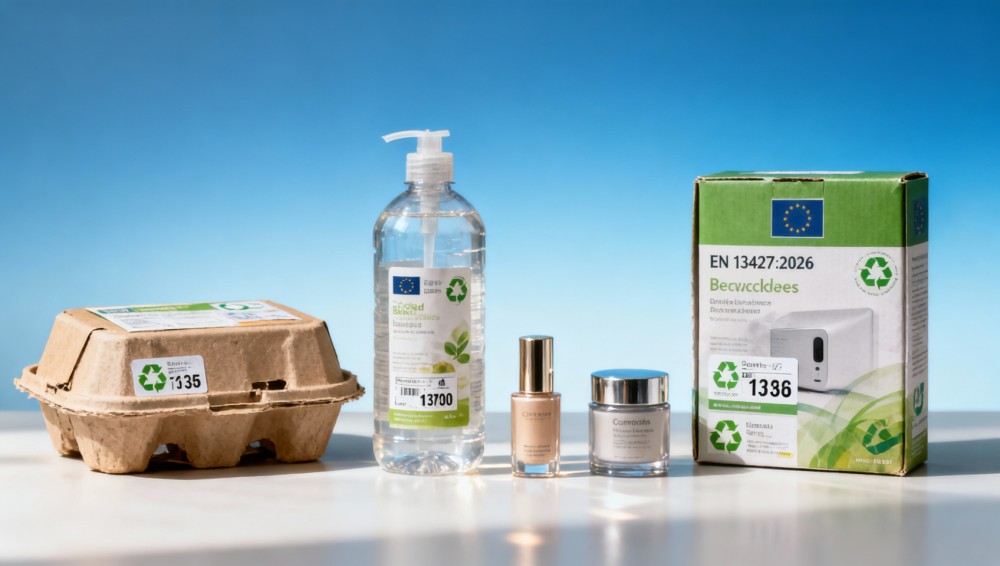
The European Committee for Standardization (CEN) has officially enacted the EN 13427:2026 standard, titled "Packaging—Requirements for Recyclability Evaluation," effective April 1, 2026. This update replaces the 2004 version and introduces new requirements, including bio-based material identification, composite layer separation feasibility verification, and digital label compatibility. Industries such as food, cosmetics, and consumer electronics packaging exporters, particularly those from China, must now update their technical documentation and undergo third-party testing to ensure compliance. Failure to meet these standards may result in customs rejection or market surveillance checks.
Event Overview
The EN 13427:2026 standard, effective April 1, 2026, introduces stricter recyclability assessment criteria for packaging materials entering the EU market. Key updates include mandatory bio-based material identification, technical validation of composite layer separation, and compatibility with digital labeling systems. The standard applies to all packaging materials exported to the EU, with non-compliant products facing potential customs barriers or post-market penalties.
Impact on Specific Industries
Direct Exporters
Companies directly exporting packaged goods to the EU, especially in food, cosmetics, and consumer electronics, will face immediate compliance challenges. The new requirements may delay shipments if technical documentation is not updated promptly.
Raw Material Suppliers
Suppliers of bio-based and composite packaging materials must now provide additional certification to prove recyclability under the new standard. This could increase production costs and lead times.
Manufacturers
Packaging manufacturers need to redesign processes to accommodate the new testing requirements, particularly for composite materials. This may require investment in new separation technologies or partnerships with certified testing labs.
Key Focus Areas and Recommended Actions
Prioritize Documentation Updates
Exporters should immediately review and revise technical files to include bio-based material declarations and separation feasibility reports. Third-party testing should be scheduled well in advance of the April 2026 deadline.
Supply Chain Communication
Manufacturers must coordinate with raw material suppliers to obtain necessary compliance documentation. Early communication can prevent last-minute disruptions.
Digital Labeling Integration
Companies should assess current labeling systems for compatibility with digital requirements. This may involve software updates or new labeling equipment.
Editorial Perspective
From an industry viewpoint, the EN 13427:2026 standard represents more than just a regulatory update—it signals the EU's accelerating shift toward circular economy principles. While the immediate focus is on compliance, the long-term implication is a potential reshaping of global packaging supply chains to meet increasingly stringent sustainability standards. Companies should view this not just as a hurdle, but as an opportunity to align with evolving market expectations.
Conclusion
The implementation of EN 13427:2026 marks a significant step in the EU's packaging sustainability agenda. For exporters, particularly those from China, the immediate priority should be thorough preparation to meet the new technical requirements. Beyond compliance, this development underscores the growing importance of sustainable packaging in international trade. Companies that proactively adapt may gain a competitive advantage in the evolving European market.
Source Information
Primary source: European Committee for Standardization (CEN) official release on EN 13427:2026. Ongoing monitoring of national implementation guidelines across EU member states is recommended as additional clarifications may emerge.
Recommended News
 Garment MfgWhat drives unit costs when buying garment buttons wholesale?Garment buttons wholesale costs depend on material, tooling, finish, MOQ, quality, packing, and freight. Learn how to compare true landed costs and source reliably.Textile Industry AnalystOct 06, 2026
 Building HardwareWhat load rating should you specify for wholesale ball bearing slides?Wholesale ball bearing slides: learn how to specify the right load rating for drawer weight, extension, mounting, and durability. Source smarter and reduce failures.Tooling & Hardware LeadOct 05, 2026
 Hand & Power ToolsHow to choose a hand saw for woodworking without tear-outHand saw for woodworking guide: choose the right tooth pattern, blade, and technique to achieve clean, precise cuts with less tear-out. Explore practical buying tips.Tooling & Hardware LeadOct 04, 2026
 Eco PackagingWhat affects the price of kraft paper rolls bought wholesale?Kraft paper rolls wholesale pricing depends on grade, basis weight, roll size, order volume, freight, and certifications. Learn how to compare landed costs and choose reliable value.Packaging Supply ExpertOct 03, 2026