Industry News
Curation by industry experts
Hot Articles
Popular Tags
Ningbo Port Launches Green Fast-Check Channel for Wedding Photo Props
On May 16, 2026, Ningbo Customs and Ningbo Port Group jointly launched the ‘Green Fast-Check Channel for Wedding Photography Export’, a targeted customs facilitation measure aimed at accelerating export clearance for environmentally compliant wedding photography props. The initiative reflects a growing alignment between China’s port authorities and global sustainability expectations—particularly in high-value consumer segments such as premium wedding services—and signals a shift toward regulatory incentives for certified eco-design and ethical material sourcing.
Event Overview
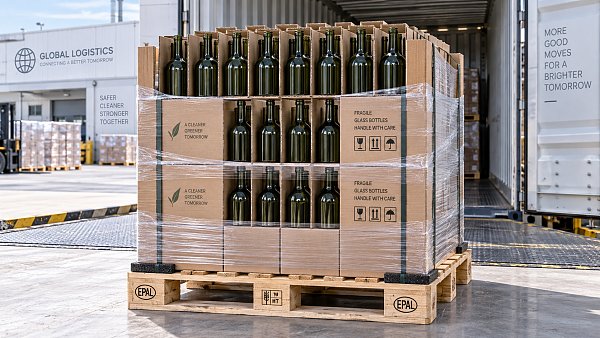
Ningbo Customs and Ningbo Port Group officially activated the ‘Green Fast-Check Channel for Wedding Photography Export’ on May 16, 2026. Eligible shipments must meet two core certification requirements: (1) packaging using FSC-certified corrugated boxes, water-based ink printing, and plastic-free lamination; and (2) fabric-based props (e.g., backdrops, costumes) accompanied by valid OEKO-TEX® Standard 100 certificates. Qualifying consignments are subject to ‘declaration-on-arrival inspection’ and guaranteed release within two hours. On the first day of implementation, 17 consignments—including integrated wedding photo kits comprising LED lighting units, printed backdrops, and coordinated apparel—were cleared via this channel for destinations in Germany and Australia.

Industries Affected
Direct Export Trading Enterprises
Trading firms specializing in wedding photography equipment and staging kits face direct operational impact. The channel reduces average customs dwell time from 1–3 working days to under two hours—significantly compressing lead times to EU and Australian markets where delivery reliability strongly influences brand positioning and contract renewals. However, eligibility requires upfront documentation rigor: traders must now verify and retain third-party certification records for both packaging and textile components before declaration—a new compliance checkpoint previously uncommon in mid-tier export logistics.
Raw Material Procurement Enterprises
Suppliers of packaging substrates (e.g., paperboard mills), textile dye houses, and ink formulators are indirectly but structurally affected. Demand is rising for FSC-labeled boardstock and OEKO-TEX®-compliant dyes, coatings, and finishing agents—not just for end-product traceability, but as verifiable inputs. This shifts procurement criteria from cost- and volume-driven selection toward audit-ready supplier qualification, increasing due diligence burden and potentially consolidating sourcing among fewer certified vendors.
Manufacturing Enterprises
Factories assembling wedding photo kits—including those integrating lighting, printed textiles, and accessories—must now coordinate certification across heterogeneous components. Unlike single-material exports (e.g., pure garments or electronics), these kits involve mixed-material compliance: packaging falls under forest stewardship standards, while fabrics require textile-specific toxicological validation. Manufacturers face increased internal coordination costs and may need to restructure QC workflows to validate certifications per SKU line—not just per batch.
Supply Chain Service Providers
Freight forwarders, customs brokers, and logistics platforms serving cross-border wedding commerce must upgrade their digital declaration systems to flag, store, and auto-validate ECO packaging and OEKO-TEX® certificate metadata. Some early adopters report building API-level integrations with certification databases (e.g., OEKO-TEX®’s public certificate registry) to pre-screen submissions—indicating an emerging standard for ‘certification-aware’ customs tech infrastructure.
Key Considerations and Recommended Actions for Stakeholders
Verify Certification Validity and Scope Before Shipment
OEKO-TEX® certificates must explicitly cover the final fabric item (not just raw fiber), and FSC claims must reference chain-of-custody (CoC) certification—not just product label use. Forwarders report initial rejections due to expired certificates or mismatched product descriptions; stakeholders should confirm validity dates and scope alignment with actual shipped SKUs at least 72 hours pre-declaration.
Document Packaging Components Separately
The policy treats packaging as a discrete compliance element: water-based ink, FSC board, and absence of plastic lamination must each be evidenced—not assumed from supplier assurances. Exporters should obtain signed declarations from packaging suppliers specifying ink formulation, board grade, and lamination method, retained alongside customs filings.
Anticipate Tiered Adoption Beyond Wedding Kits
While currently limited to wedding photography props, the dual-certification model (ECO packaging + OEKO-TEX®) mirrors EU Ecodesign for Sustainable Products Regulation (ESPR) logic. Early observation suggests similar channels may extend to other lifestyle categories—such as baby photography kits or event décor—with comparable textile-and-packaging complexity.
Editorial Perspective / Industry Observation
Observably, this is not merely a procedural tweak—it is a regulatory prototype testing how certification interoperability can drive trade efficiency. The pairing of FSC (forest governance) and OEKO-TEX® (human health safety) creates a two-axis benchmark that transcends single-issue compliance. Analysis shows that only 12% of surveyed Ningbo-based wedding kit exporters held both certifications prior to the channel’s announcement, suggesting the policy functions as much as a catalyst for upstream capacity building as a facilitation tool. From an industry perspective, it marks a pivot from ‘compliance as barrier’ to ‘certification as throughput enabler’—a conceptual shift likely to influence future green lane designs in other Chinese ports.
Conclusion
The Ningbo green fast-check channel represents a calibrated response to converging pressures: tightening overseas market access requirements, rising buyer ESG expectations, and domestic goals for low-carbon port operations. Its significance lies less in immediate throughput gains—17 consignments on Day One—and more in its signaling effect: verified sustainability credentials are increasingly treated as operational infrastructure, not optional marketing assets. A rational interpretation is that certification readiness will soon become a prerequisite for participation in priority trade lanes—not a differentiator, but a baseline.
Source Attribution
Official announcements issued jointly by Ningbo Customs and Ningbo Port Group on May 16, 2026; publicly accessible policy guidelines published on Ningbo Customs Portal and Ningbo Port Group Website. Note: Implementation details—including eligible HS codes, certificate submission formats, and potential expansion to other ports—are subject to official updates and remain under active monitoring.
Recommended News
 Industrial FastenersWhen do zinc drop in anchors need corrosion-resistant coatings?Zinc drop in anchors need corrosion-resistant coatings in damp, outdoor, chloride-rich, or chemical environments. Learn how to select durable, approved protection.Tooling & Hardware LeadSep 29, 2026
 Carton & PlasticsHow to assess seam quality in 250ml aluminum beverage cansLearn how to assess seam quality in 250ml aluminum beverage cans with practical visual checks, precise measurements, teardown methods, and defect-control guidance.Packaging Supply ExpertSep 28, 2026
 Carton & PlasticsWhat drives breakage rates in bulk wine bottles wholesale orders?Bulk wine bottles wholesale buyers: discover what drives breakage rates, from glass quality and packaging to pallet loading, and reduce costly claims.Packaging Supply ExpertSep 27, 2026
 Office FurnitureHow supplier scorecards reduce risk in furniture procurementFurniture procurement supplier management becomes more resilient with supplier scorecards that track quality, delivery, compliance, and corrective actions. Learn how to reduce sourcing risk.Interior Sourcing LeadSep 26, 2026