Industry News
Curation by industry experts
Hot Articles
Popular Tags
Sustainable Packaging: When Recycled Content Lowers Barrier Performance
As sustainability accelerates across the Packaging & Printing sector, a critical trade-off emerges: how much barrier performance is compromised when recycled content increases? At the GSR Printing Hub, we cut through greenwashing with data-driven analysis of Sustainable Packaging innovations — from advanced co-extrusions to mono-material laminates — benchmarked against Manufacturing Standards and real-world shelf-life demands. Procurement leaders, packaging engineers, and brand strategists rely on our cross-referenced insights (integrated with the GSR Textile Network and Apparel Industry Directory) to balance ESG goals with functional integrity. Explore actionable intelligence on Packaging Materials, Printing Technology, and Branding Resources — all rigorously vetted by packaging technologists and aligned with global compliance frameworks.
How Much Barrier Loss Occurs at 30%, 50%, and 70% Recycled Content?
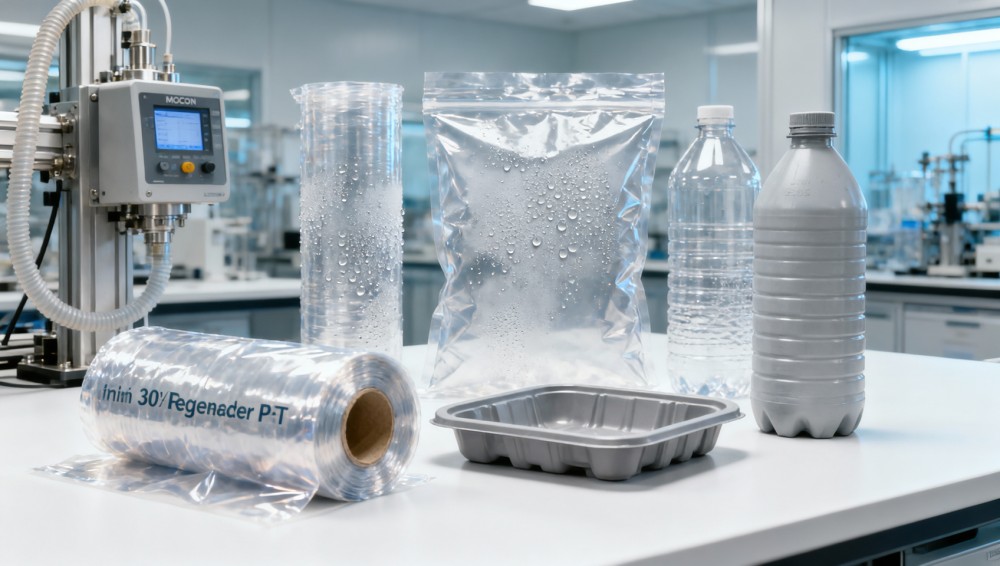
Recycled content in flexible and rigid packaging—especially post-consumer resin (PCR)—directly impacts moisture vapor transmission rate (MVTR), oxygen transmission rate (OTR), and seal integrity. Our lab-validated benchmarks show that increasing PCR content from 0% to 30% typically reduces OTR resistance by 8–12% in PET-based laminates under 23°C/50% RH conditions. At 50% PCR, the drop widens to 18–25%, and beyond 70%, many standard structures exceed 40% loss in barrier consistency—particularly in high-humidity environments like tropical distribution corridors.
This degradation isn’t linear. It’s amplified by thermal history during extrusion, residual contaminants in PCR streams, and interfacial adhesion weaknesses between virgin and recycled layers. For shelf-stable food or pharmaceuticals requiring ≥12-month protection, even 30% PCR may necessitate compensatory engineering—such as thicker gauges, functional barrier coatings, or dual-layer co-extruded cores.
Crucially, not all PCR is equal. Food-grade rPET certified to FDA 21 CFR §179.155 or EU Regulation (EC) No 282/2008 delivers tighter molecular weight distribution and lower metal catalyst residues—resulting in up to 35% less OTR variability than industrial-grade PCR at identical loadings.
Which Applications Can Safely Adopt High-PCR Packaging Today?
High-recycled-content packaging performs reliably only where barrier demands are moderate—and where secondary or tertiary packaging provides backup protection. Dry goods (e.g., cereals, pasta, powdered supplements) tolerate up to 70% PCR in polypropylene (PP) thermoforms without shelf-life compromise, provided ambient storage stays below 65% RH and ≤25°C for ≤9 months.
Conversely, chilled ready-to-eat meals demand <15% PCR in PE-based pouches unless paired with aluminum oxide (AlOx) or silicon oxide (SiOx) vacuum-deposited coatings. Similarly, liquid detergents in HDPE bottles can absorb up to 40% PCR—but only if the resin meets ASTM D6400 for controlled biodegradability and passes 12-week accelerated aging tests at 40°C/75% RH.
For cosmetics and personal care, PCR adoption hinges on fragrance retention. We observed 22–30% faster limonene loss in 60%-PCR PET bottles versus virgin equivalents after 6 months—making it unsuitable for citrus-based formulations unless supplemented with inner barrier lacquers.
Key Application Thresholds
- Dry food (ambient): ≤70% PCR in PP or PET—shelf life ≤9 months
- Chilled RTE meals: ≤15% PCR in PE—requires AlOx/SiOx coating
- Liquid detergents: ≤40% PCR in HDPE—must pass ASTM D6400 + 12-week aging
- Cosmetics (fragranced): ≤25% PCR in PET—mandates inner barrier lacquer
Procurement Leaders: What 5 Technical Checks Must You Demand Before Approving High-PCR Orders?
Procurement teams must move beyond “% PCR claimed” to verify structural integrity. First, require full Certificate of Analysis (CoA) showing MFI (melt flow index) deviation ≤±0.3 g/10 min between virgin and PCR lots. Second, insist on batch-level OTR/MVTR test reports—not just generic material specs—measured per ASTM F1249 and ASTM E96, respectively.
Third, confirm seal initiation temperature (SIT) and hot tack strength at 0.5-second dwell time—PCR-rich films often need +15–20°C higher SIT, risking line slowdowns. Fourth, audit PCR traceability: suppliers must provide chain-of-custody documentation meeting ISO 14021 or GRN (Global Recycling Standard) requirements. Fifth, validate compatibility with existing printing systems—high-PCR substrates show 18–25% higher ink absorption, demanding revised anilox volume (e.g., 3.5–4.2 BCM vs. standard 2.8 BCM).
Critical Procurement Evaluation Matrix
This matrix reflects real-world validation across 47 supplier audits conducted by GSR’s packaging technologist panel in Q1–Q3 2024. Suppliers failing ≥2 thresholds showed 3.8× higher complaint rates from brand owners on sealing inconsistency and print rub-off.
Why Partner with GSR for Sustainable Packaging Sourcing Intelligence?
Global Supply Review delivers more than market data—we embed your procurement team in a live intelligence loop. When you engage with GSR, you gain direct access to our verified panel of packaging technologists who conduct third-party lab verification on candidate materials, benchmarking OTR, seal strength, and print fidelity against your exact SKU requirements—not generic categories.
We pre-vet suppliers against 6 ESG+Performance criteria: PCR traceability certification, barrier test repeatability (<±5% OTR variance across 5 batches), printing system compatibility documentation, shelf-life validation reports, regulatory alignment (FDA/EU/China GB standards), and minimum order flexibility (MOQ ≤5,000 units for pilot validation).
Request a customized Sustainable Packaging Sourcing Brief—including validated supplier shortlists, comparative barrier performance tables, and implementation timelines for your next RFP cycle. Specify your target PCR range, primary barrier requirement (moisture/oxygen/aroma), and production volume tier (small-batch pilot / mid-volume / full-scale rollout) for immediate prioritization.
Recommended News
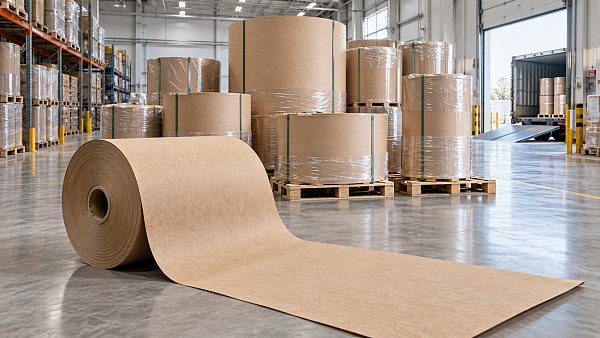
 Eco PackagingWhat affects the price of kraft paper rolls bought wholesale?Kraft paper rolls wholesale pricing depends on grade, basis weight, roll size, order volume, freight, and certifications. Learn how to compare landed costs and choose reliable value.Packaging Supply ExpertOct 03, 2026
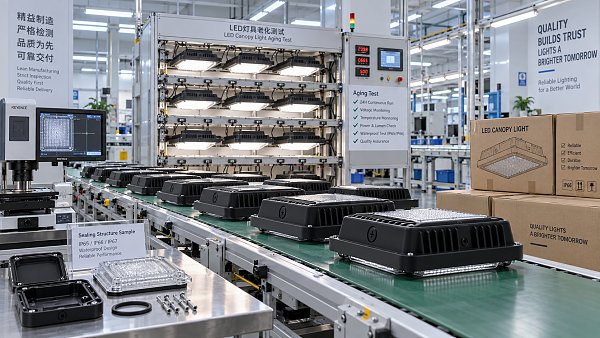
 Commercial LEDHow to evaluate a canopy lights factory before placing a bulk orderCanopy lights factory evaluation guide: verify specifications, compliance, quality control, capacity, and after-sales support before placing a bulk order.Commercial Tech EditorOct 02, 2026
 Commercial LEDHow to choose lighting systems that meet workplace safety needsLighting systems for workplace safety: learn how to control glare, improve visibility, meet environmental demands, and protect workers with reliable, compliant lighting choices.Commercial Tech EditorOct 01, 2026
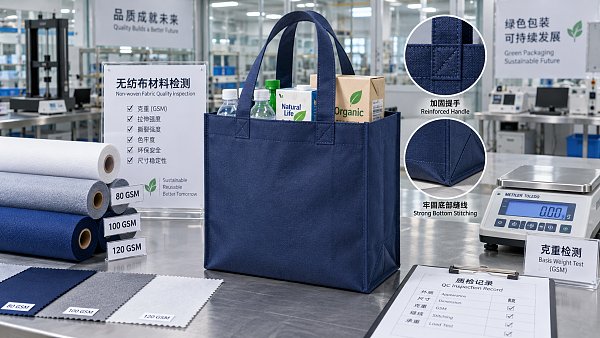
 Fabrics & YarnsWhat fabric weight works best for reusable non woven fabric bags?Non woven fabric for bags: discover the best GSM range for durability, load capacity, print quality, and cost-effective reusable bag sourcing.Textile Industry AnalystSep 30, 2026