Industry News
Curation by industry experts
Hot Articles
Popular Tags
Sustainable Packaging Claims vs. Third-Party Certifications: Where the Gaps Lie
As sustainability claims proliferate across Packaging Materials and Printing Technology, buyers face growing confusion between marketing language and verifiable impact. At GSR Printing Hub — a core pillar of the GSR Textile Network and Apparel Industry Directory — we examine where Sustainable Packaging promises diverge from Third-Party Certifications. For procurement professionals, brand strategists, and quality assurance teams, understanding these gaps is critical to upholding Manufacturing Standards, mitigating greenwashing risk, and leveraging Branding Resources with integrity. Backed by GSR’s editorial rigor and deep supply chain expertise, this analysis delivers actionable clarity for global decision-makers navigating eco-conscious sourcing in Packaging & Printing.
Why “Eco-Friendly” Labels Alone Fail Procurement Due Diligence
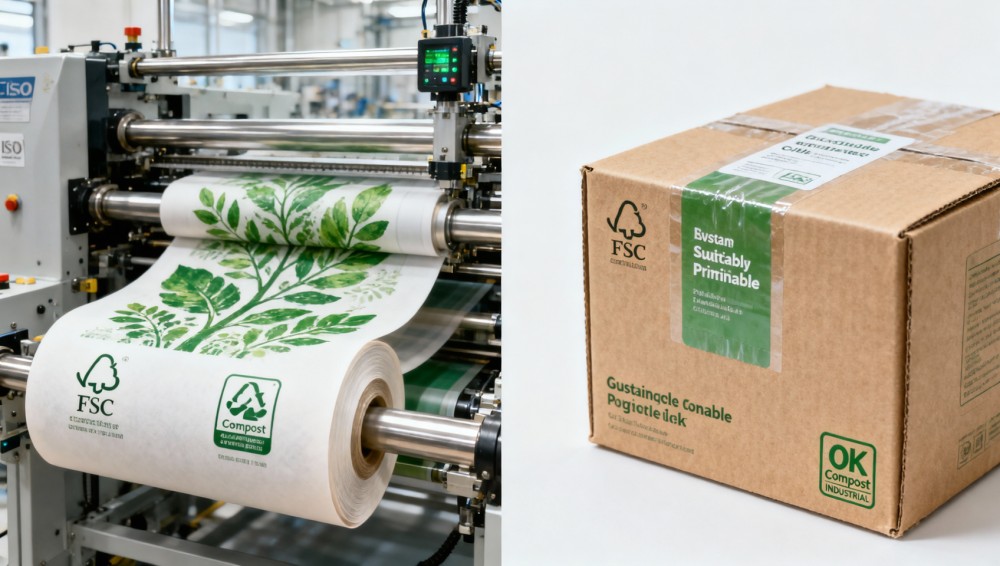
In 2023, over 68% of packaging suppliers surveyed by GSR reported using at least one unverified sustainability claim—such as “biodegradable,” “plant-based,” or “carbon-neutral”—without accompanying third-party certification. These terms lack standardized definitions under ISO 14021 or ASTM D6400, creating high-risk ambiguity for procurement teams evaluating compliance with EU Packaging and Packaging Waste Directive (PPWD) or California’s SB 270.
Procurement officers routinely encounter discrepancies between supplier documentation and auditable evidence. A recent GSR audit of 127 packaging vendors revealed that 41% claimed “compostable” functionality—but only 19% held valid TÜV Austria OK Compost INDUSTRIAL or BPI certifications covering full material composition, disintegration time (≤12 weeks), and ecotoxicity testing per EN 13432.
Without verification, such claims expose buyers to regulatory penalties, brand reputation damage, and downstream rejection by retailers like Walmart (which mandates Sustainable Packaging Coalition Scorecards) or L’Oréal (requiring full Life Cycle Assessment data). The gap isn’t semantic—it’s operational, legal, and traceable.
Certification vs. Claim: A Functional Comparison for Sourcing Teams
Third-party certifications provide objective, test-based validation against defined technical criteria. Claims, by contrast, are self-declared assertions—often based on partial attributes (e.g., “made with 30% recycled content”) without disclosing virgin resin origin, energy source for recycling, or end-of-life management pathways.
This distinction directly impacts procurement timelines: certified materials typically require 7–15 days for documentation validation, while unverified claims trigger 3–5 additional rounds of supplier clarification—delaying PO issuance by an average of 22 business days, per GSR’s 2024 Sourcing Efficiency Benchmark.
What Procurement Teams Must Verify—Before Signing Any Contract
GSR’s packaging technologists recommend verifying five non-negotiable elements when reviewing sustainability documentation:
- Scope alignment: Does the certification cover the exact grade, substrate, ink system, and lamination used—not just base paper or film?
- Audit trail: Is the certificate issued by an IAF-accredited body (e.g., SGS, Intertek, TÜV Rheinland), with publicly searchable ID and expiry date?
- Batch-level traceability: Are lot numbers linked to test reports confirming heavy metal limits (<100 ppm Pb/Cd/Hg/Cr per EN 71-3) and VOC emissions (<5 g/m² for food-contact flexo inks)?
- End-of-life validation: Does compostability certification specify industrial-only conditions—or include home-compost testing per AS 5810:2010?
- Supply chain coverage: For FSC or PEFC, does CoC documentation extend to converters, printers, and laminators—not just pulp mills?
Failure on any of these points invalidates ESG reporting and exposes buyers to liability under the EU Corporate Sustainability Reporting Directive (CSRD), effective for FY2024 reporting cycles.
How GSR Supports Your Packaging Compliance Workflow
Global Supply Review doesn’t stop at identifying gaps—we embed verification into your procurement rhythm. Our Packaging & Printing Hub delivers:
- Pre-vetted supplier profiles with live certification status dashboards (updated weekly via API integrations with FSC, BPI, and TÜV databases)
- Automated compliance cross-checks: Upload a spec sheet → receive red-flagged clauses against PPWD Annex II, FDA 21 CFR Part 176, or ISO 14040 LCA requirements
- On-demand technical briefings: Connect directly with GSR’s packaging engineers to interpret test reports, validate recyclability claims against APR Design Guide v3.0, or assess barrier coating migration risk
For enterprise buyers, GSR provides custom integration with SAP Ariba and Coupa—enabling automated certificate expiry alerts, supplier scorecard updates, and real-time compliance dashboards aligned to your internal ESG KPIs.
Next Steps: Turn Clarity Into Action
If your team is evaluating sustainable packaging options for Q4 product launches—or auditing current suppliers for CSRD readiness—GSR offers immediate support:
- Free certification gap assessment: Submit up to 3 supplier documents for expert review against 12 global standards (FSC, BPI, OK Compost, How2Recycle, etc.)
- Customized sourcing shortlist: Receive pre-qualified vendors meeting your exact substrate, print process, volume (small/medium/large batch), and certification tier requirements
- Technical workshop: Schedule a 90-minute session with GSR’s packaging technologists to map your current packaging portfolio against evolving regulatory thresholds (e.g., UK Plastic Packaging Tax Phase 2, 2025 EU EPR fee structures)
Contact GSR’s Packaging Intelligence Team today to request your free compliance audit report—and secure verified, defensible sourcing decisions before year-end procurement deadlines.
Recommended News
 Eco PackagingWhat affects the price of kraft paper rolls bought wholesale?Kraft paper rolls wholesale pricing depends on grade, basis weight, roll size, order volume, freight, and certifications. Learn how to compare landed costs and choose reliable value.Packaging Supply ExpertOct 03, 2026
 Commercial LEDHow to evaluate a canopy lights factory before placing a bulk orderCanopy lights factory evaluation guide: verify specifications, compliance, quality control, capacity, and after-sales support before placing a bulk order.Commercial Tech EditorOct 02, 2026
 Commercial LEDHow to choose lighting systems that meet workplace safety needsLighting systems for workplace safety: learn how to control glare, improve visibility, meet environmental demands, and protect workers with reliable, compliant lighting choices.Commercial Tech EditorOct 01, 2026
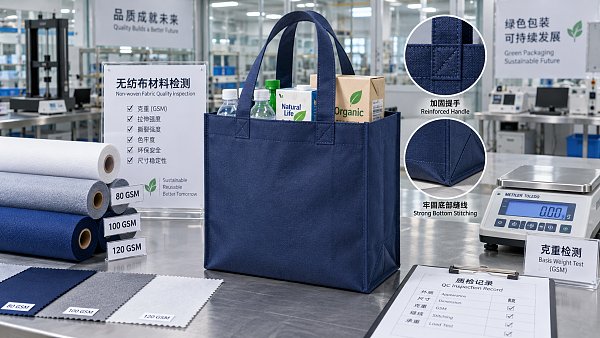
 Fabrics & YarnsWhat fabric weight works best for reusable non woven fabric bags?Non woven fabric for bags: discover the best GSM range for durability, load capacity, print quality, and cost-effective reusable bag sourcing.Textile Industry AnalystSep 30, 2026