Industry News
Curation by industry experts
Hot Articles
Popular Tags
Non-woven fabrics in textile machinery filters: When filtration efficiency drops before visible wear
Non-woven fabrics are critical yet often overlooked hardware materials in textile machinery filters—especially for industrial hardware, lighting manufacturers, and industrial packaging systems. When filtration efficiency drops before visible wear, it signals hidden degradation in technical textiles, risking product quality in retail lighting, decor suppliers, and packaging solutions. This silent failure mode undermines ESG-compliant industrial lighting and sustainable packaging performance. For procurement professionals and sourcing decision-makers, understanding the material science behind non-woven fabrics isn’t optional—it’s essential to maintaining supply chain resilience across textiles, hardware, and industrial applications.
Why Filtration Efficiency Declines Before Visual Wear — A Hardware-Specific Failure Mode
In industrial hardware applications—particularly within textile machinery used for lighting component finishing, metal surface pretreatment, or packaging line air handling—non-woven filter media operate under continuous mechanical stress, thermal cycling (typically 35–85°C), and particulate loading from metal shavings, polymer dust, or pigment residues. Unlike consumer-grade filters, these components are engineered for functional longevity—not aesthetic durability.
Degradation begins at the fiber-bonding interface: thermal oxidation of polypropylene or polyester binders reduces tensile strength by up to 40% after 2,000 hours of operation at 70°C. Yet surface fibers remain intact, masking internal delamination. As a result, pressure drop across the filter may increase by 15–25% while filtration efficiency against sub-10μm particles falls from ≥99.5% to ≤92%—well before any visible fraying or discoloration appears.
This discrepancy is especially critical for hardware suppliers serving lighting OEMs requiring ISO 14644-1 Class 5 cleanroom environments—or packaging integrators validating ASTM F2101 bacterial filtration efficiency (BFE) for sterile medical device packaging lines. Unmonitored, this “invisible aging” leads to batch rework, ESG audit nonconformities, and unplanned downtime averaging 7–12 hours per incident.
Key Indicators of Pre-Failure Degradation
- Pressure differential rise >18% above baseline (measured at fixed airflow of 1.2 m³/min)
- Consistent particle count increase ≥3× in 0.3–1.0 μm range during real-time laser particle counter monitoring
- Reduced hydrophobicity: water contact angle drops from ≥110° to ≤85°, indicating binder migration or oxidation
- Loss of dimensional stability: ±0.8 mm tolerance shift in pleated filter frame fitment after 4–6 weeks of continuous use
How Non-Woven Filters Function in Industrial Hardware Systems

Non-woven filter elements in textile machinery aren’t passive barriers—they’re precision-engineered fluid dynamics components. In hardware-integrated textile finishing lines (e.g., anodized aluminum trim coating, LED diffuser film laminating), they serve three concurrent roles: airborne particulate capture, oil mist coalescence, and static charge dissipation for electrostatic-sensitive components.
Filtration occurs via depth loading rather than surface straining. Fibers are thermally bonded into 3D matrices with pore size distributions ranging from 5–50 μm—optimized for target contaminants: metal fines (10–30 μm), silicone lubricant aerosols (0.5–5 μm), and textile lint (20–100 μm). The absence of woven structure eliminates seam-related leakage paths common in traditional mesh filters—a key reliability factor for hardware OEMs certifying to IEC 61508 SIL-2 functional safety requirements.
Critical performance thresholds include: minimum burst strength ≥250 kPa, maximum airflow resistance ≤120 Pa at 1.5 m/s face velocity, and flame retardancy meeting UL 94 V-0 for lighting fixture assembly lines. These parameters directly impact equipment MTBF (mean time between failures)—with compliant filters extending service intervals from biweekly to quarterly in validated deployments.
Procurement Decision Matrix: Selecting Non-Woven Filters for Hardware Applications
Procurement teams evaluating non-woven filter media must move beyond supplier datasheets and verify conformance against application-specific operational baselines. GSR’s engineering panel has validated five non-negotiable assessment dimensions for hardware buyers:
Procurement managers should require third-party test reports—not just declarations—for all three criteria. Suppliers offering rapid-turnaround validation (≤5 business days for custom parameter verification) demonstrate embedded quality control infrastructure aligned with hardware industry delivery expectations.
Why Global Supply Review Is Your Technical Sourcing Partner for Non-Woven Hardware Filters
GSR bridges the gap between material science and procurement reality. Our verified panel includes textile engineers with 12+ years’ experience in industrial filtration system design—and supply chain strategists who’ve managed $280M+ in hardware component sourcing across 17 countries.
We don’t provide generic supplier lists. Instead, we deliver actionable intelligence: pre-vetted filter manufacturers with ISO 9001/14001 certification, validated ESG compliance (including REACH Annex XIV substance screening), and documented capability to meet your exact specifications—including custom pleat geometry, edge sealing methods, and traceable lot-level performance data.
Contact us today to request: (1) a comparative analysis of 3 shortlisted non-woven filter suppliers against your hardware application parameters; (2) full documentation package for ESG audit readiness; or (3) accelerated sample coordination with lead times as low as 7 business days. Let’s eliminate invisible filter failure—before it impacts your next production run.
Recommended News
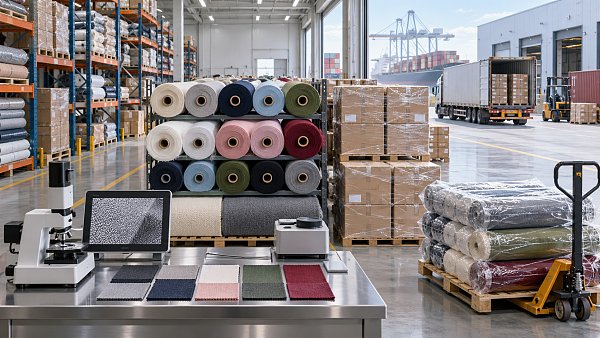
 Fabrics & YarnsWhat drives textile procurement cost beyond the quoted fabric price?Textile procurement cost goes far beyond the quoted fabric price. Discover how freight, quality, MOQ, compliance, payment terms, and supplier reliability shape total sourcing cost.Textile Industry AnalystOct 07, 2026
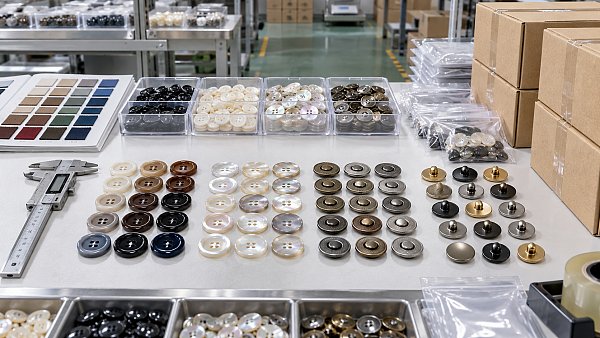
 Garment MfgWhat drives unit costs when buying garment buttons wholesale?Garment buttons wholesale costs depend on material, tooling, finish, MOQ, quality, packing, and freight. Learn how to compare true landed costs and source reliably.Textile Industry AnalystOct 06, 2026
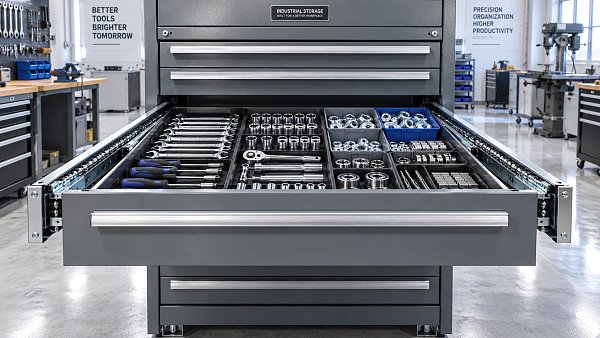
 Building HardwareWhat load rating should you specify for wholesale ball bearing slides?Wholesale ball bearing slides: learn how to specify the right load rating for drawer weight, extension, mounting, and durability. Source smarter and reduce failures.Tooling & Hardware LeadOct 05, 2026
 Hand & Power ToolsHow to choose a hand saw for woodworking without tear-outHand saw for woodworking guide: choose the right tooth pattern, blade, and technique to achieve clean, precise cuts with less tear-out. Explore practical buying tips.Tooling & Hardware LeadOct 04, 2026