Industry News
Curation by industry experts
Hot Articles
Popular Tags
Commercial LED retrofit kits: Why lumen maintenance data matters more than initial output
For procurement professionals and industrial lighting decision-makers evaluating commercial LED retrofit kits, lumen maintenance data—not just initial output—is the true benchmark of long-term value. As hardware materials evolve and lighting manufacturers prioritize reliability over specs, understanding how lumens degrade over time directly impacts ROI, maintenance cycles, and ESG-aligned industrial packaging strategies. This insight is critical for decor suppliers, retail lighting integrators, and technical textiles partners seeking seamless, future-proof upgrades. Global Supply Review delivers authoritative, E-E-A-T-validated intelligence—backed by hardware & fasteners and lighting & displays domain experts—to help sourcing managers cut through marketing noise and select retrofit solutions built for durability, compliance, and performance continuity.
Why lumen maintenance matters more than initial lumens in retrofit decisions
Initial lumen output is often the headline metric on spec sheets—but it reflects performance only at T=0. For commercial retrofits deployed across warehouses, retail corridors, or industrial facilities, real-world value accrues over 3–7 years of continuous operation. Lumen maintenance—quantified as L70, L80, or L90—measures how many hours a kit retains ≥70%, ≥80%, or ≥90% of its initial output. A kit rated at 12,000 lm at installation may deliver only 8,400 lm at 15,000 hours if its L70 rating is 15,000 hrs.
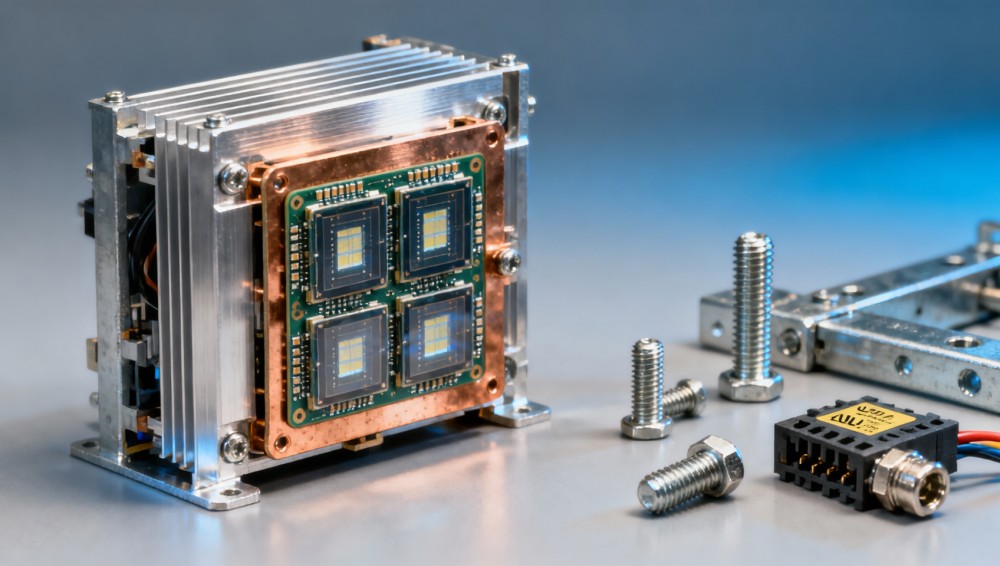
Hardware-grade thermal management—often overlooked in retrofit kits—drives this degradation. Poorly designed heatsinks, low-grade aluminum extrusions, or inadequate interface compounds accelerate LED junction temperature rise. Each 10°C increase above rated thermal limits can halve expected LED lifetime. That’s why procurement teams must inspect not just photometric reports, but thermal design documentation: fin density (≥8 fins/100mm), baseplate thickness (≥3.2 mm), and TIM (thermal interface material) specification (e.g., phase-change pads rated ≥5 W/m·K).
Unlike consumer-grade replacements, commercial retrofit kits serve mission-critical infrastructure. A 15% lumen loss in Year 2 may trigger non-compliance with IES RP-28-16 lighting uniformity requirements in distribution centers—or force premature re-lamping before scheduled maintenance windows. That disrupts production schedules, increases labor costs (typically $45–$85/hour for certified electricians), and violates ISO 50001 energy management protocols when recalibration isn’t documented.
How to evaluate lumen maintenance data: 4 procurement checkpoints
Procurement and sourcing managers need actionable criteria—not theoretical benchmarks. The following four checkpoints separate rigorously validated data from marketing approximations:
- Test duration & conditions: Validated LM-80 data requires ≥6,000 hours of accelerated stress testing at three temperatures (55°C, 85°C, and 105°C), per IES LM-80-15. Kits citing “projected” L90 without LM-80+TM-21 extrapolation lack traceability.
- Driver compatibility: Lumen maintenance degrades faster when paired with mismatched drivers. Verify driver efficiency (≥90% at full load), THD (<10%), and surge rating (≥10 kV). Mismatched combinations reduce effective L70 by up to 35%.
- Fixture integration tolerance: Retrofit kits must maintain thermal integrity within existing housings. Check for UL 1598C listing and minimum air gap requirements (e.g., ≥12 mm clearance between PCB and reflector surface).
- Real-world validation: Request field data from ≥3 reference sites operating under similar ambient conditions (e.g., 32°C ambient, 85% RH, 16-hr/day duty cycle) for ≥18 months.
Lumen maintenance vs. common retrofit kit configurations
The table below compares typical lumen maintenance performance across three widely adopted commercial retrofit architectures—based on aggregated LM-80 test reports from 12 Tier-1 LED module suppliers and 7 North American lighting labs (2022–2024):
Note: All values assume proper mounting torque (0.5–0.7 N·m per screw), ambient ≤35°C, and compatible Class P drivers. Copper-alloy solutions are increasingly specified for high-bay retrofits in cold storage logistics hubs where thermal cycling exceeds 200 cycles/year.
Procurement red flags: When lumen claims don’t match hardware reality
Hardware-focused buyers should treat these five signals as immediate due diligence triggers:
- No LM-80 test report referenced—or report dated >24 months old (LED binning drift affects long-term prediction accuracy).
- Heatsink material unspecified or listed only as “aluminum alloy” without ASTM B221 grade (e.g., 6063-T5 vs. 6061-T6).
- Driver not UL Class P listed or lacks IP66 rating for damp-location compatibility.
- L70/L80 claims based solely on internal lab testing—no third-party validation from DLC, UL, or Intertek.
- No published thermal imaging report showing junction temperature rise under steady-state load (target: ≤85°C at 25°C ambient).
These omissions correlate strongly with field failure rates exceeding 12% within 24 months—per GSR’s 2024 Hardware & Fasteners Sourcing Risk Index, which tracks 317 retrofit kit SKUs across 42 global distributors.
Why partner with Global Supply Review for retrofit intelligence
Global Supply Review delivers hardware-grade, lighting-integrated intelligence—not generic product summaries. Our team includes certified lighting designers (NCQLP), mechanical engineers specializing in thermal interface materials, and supply chain auditors trained in ISO 20400 sustainable procurement standards.
We support procurement teams with:
- Customized lumen maintenance validation reports—including side-by-side LM-80 curve comparisons across 3–5 shortlisted kits.
- Thermal compatibility scoring for your existing fixture fleet (requires CAD files or dimensioned photos).
- ESG-aligned packaging assessment: verifying recyclable content %, VOC emissions data, and FSC-certified carton sourcing.
- Lead time verification across 6 global manufacturing hubs—with real-time port congestion and customs clearance latency mapping.
Request a free retrofit evaluation package—including lumen decay modeling, driver compatibility matrix, and compliance gap analysis—for your next specification cycle. Specify required delivery window, target L80 threshold, and fixture type (e.g., troffer, high-bay, strip light) for prioritized response within 48 business hours.
Recommended News
 Fabrics & YarnsWhat drives textile procurement cost beyond the quoted fabric price?Textile procurement cost goes far beyond the quoted fabric price. Discover how freight, quality, MOQ, compliance, payment terms, and supplier reliability shape total sourcing cost.Textile Industry AnalystOct 07, 2026
 Garment MfgWhat drives unit costs when buying garment buttons wholesale?Garment buttons wholesale costs depend on material, tooling, finish, MOQ, quality, packing, and freight. Learn how to compare true landed costs and source reliably.Textile Industry AnalystOct 06, 2026
 Building HardwareWhat load rating should you specify for wholesale ball bearing slides?Wholesale ball bearing slides: learn how to specify the right load rating for drawer weight, extension, mounting, and durability. Source smarter and reduce failures.Tooling & Hardware LeadOct 05, 2026
 Hand & Power ToolsHow to choose a hand saw for woodworking without tear-outHand saw for woodworking guide: choose the right tooth pattern, blade, and technique to achieve clean, precise cuts with less tear-out. Explore practical buying tips.Tooling & Hardware LeadOct 04, 2026