Industry News
Curation by industry experts
Hot Articles
Popular Tags
Textile Stenter Frame Settings That Affect Fabric Quality
For operators on the production floor, the textile stenter frame is where many fabric quality decisions become visible in real time. Temperature, overfeed, chain speed, width setting, airflow, and tension can determine whether fabric leaves the line stable, smooth, and dimensionally accurate—or with skew, shrinkage, shade variation, and uneven hand feel. Understanding how each setting affects performance helps operators reduce defects, improve consistency, and support more efficient finishing operations across woven and knitted textiles.
Why Textile Stenter Frame Settings Matter on the Finishing Floor
A textile stenter frame is not simply a drying machine. It is a controlled finishing zone where fabric width, moisture, heat history, and mechanical tension interact.
For operators, the challenge is practical: the fabric is moving, production targets are urgent, and quality defects may appear several meters after the wrong adjustment.
In woven fabric finishing, the textile stenter frame often controls dimensional stability, skew correction, and resin curing. In knitted fabrics, it strongly affects spirality, GSM, recovery, and hand feel.
- If temperature is too low, drying may be incomplete and chemical finishing may not cure correctly.
- If overfeed is poorly set, the fabric may lose GSM control or develop unstable shrinkage behavior.
- If width is forced beyond safe limits, edge marks, bowing, and excessive residual stress can appear.
- If chain speed changes without adjusting temperature and airflow, fabric moisture may vary across batches.
This is why experienced operators treat the textile stenter frame as a process system, not as a single-speed production asset.
Core Settings That Operators Should Check First
When fabric defects appear, it is useful to trace the problem through the main control points of the textile stenter frame. The table below links common settings with visible fabric effects.
The best adjustment sequence is rarely random. Start with fabric specification, then moisture condition, then temperature, speed, width, and overfeed balance.
Global Supply Review highlights this process-based view because buyers and mills increasingly need repeatable finishing data, not only machine capacity claims.
Temperature: The Setting That Can Hide or Reveal Defects
Temperature affects more than drying. In a textile stenter frame, it may trigger curing reactions, soften fibers, release stresses, or intensify shade differences.
Operators should watch for hot spots, uneven chamber balance, and delayed color change. A stable display does not always mean stable fabric surface temperature.
Overfeed and Tension: The Balance Between Softness and Stability
Overfeed allows fabric to enter the textile stenter frame with controlled relaxation. Too little overfeed can produce harsh touch and high lengthwise shrinkage.
Too much overfeed may create creases, uneven loops, or unstable GSM. Operators should adjust gradually and confirm the result after cooling.
How Settings Differ for Woven and Knitted Fabrics
The same textile stenter frame may process cotton shirting, polyester blends, denim, single jersey, interlock, and technical fabrics. Each fabric responds differently.
A setting that improves productivity on a stable woven fabric may cause distortion on a relaxed knit. Operators should avoid copying recipes without verification.
This comparison shows why one textile stenter frame recipe cannot be universal. Fabric construction, fiber content, chemical treatment, and customer tolerance all matter.
Common Defects and the Settings Most Likely Behind Them
When quality problems appear, operators often face pressure to act quickly. A structured troubleshooting method reduces unnecessary trial-and-error adjustment.
- Skew or bow: check fabric entry alignment, pinning accuracy, width tension, and chain synchronization before raising temperature.
- Uneven shade: inspect moisture content, chamber temperature balance, airflow distribution, and chemical pickup consistency.
- Excessive shrinkage: review overfeed, width extension, dwell time, and whether the textile stenter frame is creating residual stress.
- Harsh hand feel: examine tension, drying severity, softener application, and whether fabric is being pulled too flat.
- Edge marks: check clip condition, pin density, selvedge moisture, and whether the width setting is too aggressive.
A Useful Rule for Troubleshooting
Change one variable at a time where possible. If chain speed, temperature, and overfeed are changed together, the root cause becomes difficult to prove.
Record the textile stenter frame setting, fabric lot, moisture level, width before entry, and inspection result. This creates usable production intelligence.
Operational Checklist Before Starting a New Fabric Lot
Before a new fabric lot enters the textile stenter frame, operators should confirm both machine readiness and fabric condition. Small checks prevent expensive reprocessing.
- Confirm the finishing specification, including target width, GSM, residual shrinkage, shade tolerance, and required finishing effect.
- Check fabric moisture and chemical pickup before entry, because uneven input often becomes a visible output defect.
- Inspect pins, clips, chains, overfeed rollers, selvedge guides, and weft straightening equipment for mechanical issues.
- Run a short trial length and measure width, moisture, hand feel, and visual appearance before releasing full production.
- Document the approved textile stenter frame recipe so the next shift can reproduce the same conditions.
In integrated sourcing environments, this checklist supports traceability. Procurement teams increasingly ask whether suppliers can maintain stable finishing parameters across repeat orders.
Procurement and Machine Selection: What Operators Should Tell Buyers
Operators may not sign purchase contracts, but their feedback is essential when a mill evaluates a new textile stenter frame or upgrades an existing line.
A buyer may focus on price, delivery time, and supplier reputation. The production team should add practical questions about control accuracy, maintenance, and usability.
This type of procurement discussion protects the mill from buying a textile stenter frame that looks attractive on paper but is difficult to operate consistently.
Compliance, Documentation, and Global Buyer Expectations
Textile finishing is increasingly connected to buyer audits, restricted substance requirements, product safety expectations, and responsible energy use.
The textile stenter frame influences these issues because curing, drying, exhaust, chemical fixation, and reprocessing rates all affect compliance evidence.
- Maintain process records for critical lots, including temperature, speed, width, overfeed, and finishing chemical references.
- Check whether customer requirements mention common textile standards, restricted chemicals, dimensional stability, or flammability performance.
- Use documented sampling and inspection points instead of relying only on end-of-line visual judgment.
- Coordinate with maintenance teams to ensure sensors, fans, chains, and exhaust systems are not treated as secondary issues.
Global Supply Review connects operational details with sourcing intelligence, helping factories and buyers discuss practical capability rather than vague production promises.
FAQ: Practical Questions About Textile Stenter Frame Operation
How often should textile stenter frame settings be adjusted during production?
Settings should not be changed continuously without evidence. Adjust when fabric moisture, width, shade, GSM, or surface appearance moves outside the accepted range.
For long runs, operators should check output at defined intervals. For mixed lots, the textile stenter frame recipe may need confirmation at every fabric change.
Can higher chain speed improve efficiency without hurting quality?
Higher speed can increase throughput, but it reduces dwell time. If drying, curing, or heat setting becomes incomplete, rework may cost more than the saved time.
Operators should increase speed only after confirming outlet moisture, dimensional stability, and visual quality under actual textile stenter frame conditions.
Why does fabric pass inspection at the machine but fail after washing?
The fabric may leave the textile stenter frame under residual stress. Forced width, low overfeed, or incorrect heat treatment can hide shrinkage until washing.
For sensitive orders, quick relaxation checks or washing tests help confirm whether the finishing recipe is truly stable.
What information should operators report when a defect appears?
Report fabric type, lot number, entry moisture, chamber temperature, chain speed, width, overfeed, airflow condition, and the exact defect location.
This data allows supervisors, technicians, and sourcing teams to compare textile stenter frame performance across shifts and production batches.
Why Choose Global Supply Review for Finishing and Sourcing Intelligence
Global Supply Review supports textile and light manufacturing decision-makers with practical intelligence across production, sourcing, compliance, and supplier evaluation.
For operators and factory teams, our content helps translate textile stenter frame settings into quality control actions and clearer communication with buyers.
For sourcing managers, we help frame the right questions before selecting equipment, auditing suppliers, or comparing finishing capabilities across regions.
- Consult us on parameter confirmation for woven, knitted, coated, or functional fabrics.
- Request support in comparing textile stenter frame specifications, production capacity, and operator usability.
- Discuss delivery cycle concerns, documentation needs, sample validation, and buyer compliance expectations.
- Use GSR insights to prepare supplier questions before quotation, machine upgrade, or finishing line assessment.
If your team is reviewing textile stenter frame performance, selecting a new finishing solution, or preparing for international buyer evaluation, contact Global Supply Review for focused, practical guidance.
Recommended News
 Home DecorHow order size affects wholesale prices for round linen tableclothsBuying round linen tablecloths wholesale? Discover how order size, freight, and inventory costs affect pricing—and choose the right quantity to maximize real savings.Interior Sourcing LeadOct 14, 2026
 Outdoor FurnitureHow to verify outdoor furniture manufacturers' production capacityCan outdoor furniture manufacturers deliver on time? Learn how to verify production capacity, uncover bottlenecks, and validate supplier commitments before placing your next order.Interior Sourcing LeadOct 13, 2026
 Commercial DisplaysWhat makes an outdoor digital signage display manufacturer reliable?Discover how to choose a reliable outdoor digital signage display manufacturer with proven weather protection, quality control, smart visibility, and responsive after-sales support.Commercial Tech EditorOct 12, 2026
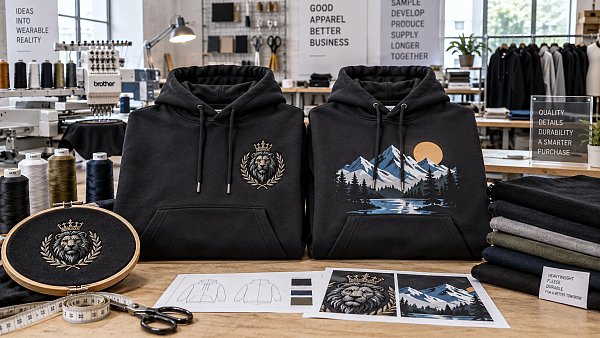
 Garment MfgWhen do bulk embroidered hoodies offer better value than printed ones?Bulk embroidered hoodies deliver lasting value for uniforms and premium branding. Compare durability, design, comfort, and cost to choose the right decoration.Textile Industry AnalystOct 11, 2026