Industry News
Curation by industry experts
Hot Articles
Popular Tags
Turkey Launches Anti-Circumvention Probe on Chinese Aluminum Photo Backdrops
On May 6, 2026, Turkey’s Ministry of Trade initiated an anti-circumvention investigation concerning aluminum photography background stands originally produced in China and subsequently assembled in Malaysia before export to Turkey — a development with direct implications for cross-border trade in photographic equipment accessories, aluminum fabrication, and Southeast Asia-based logistics and assembly service providers.
Event Overview
On May 6, 2026, the Turkish Ministry of Trade officially announced an anti-circumvention investigation targeting aluminum photography background stands (HS code 7610.90) originating in China and exported to Turkey via assembly in Malaysia. The investigation alleges that minimal assembly operations conducted in Malaysia are insufficient to confer origin status, thereby circumventing the 32.5% anti-dumping duty imposed on the same product from China in 2023.
Industries Affected by Segment
Direct Exporters & Trading Firms
Companies exporting aluminum photo backdrops from China to Turkey — especially those using Malaysia as a transshipment or light-assembly hub — face heightened customs scrutiny and potential retroactive duties. Impact manifests as delayed clearance, increased documentation burden, and possible reclassification of shipments under the original Chinese origin.
Aluminum Component Suppliers & Fabricators
Chinese manufacturers supplying semi-finished aluminum extrusions or sub-assemblies to Malaysian contract assemblers may see demand volatility. If Malaysian assembly is deemed non-origin-conferring, upstream suppliers could be drawn into the scope of the investigation as ‘origin contributors’, affecting their export declarations and compliance workflows.
Contract Assembly & Light-Manufacturing Service Providers in Malaysia
Firms offering low-complexity assembly (e.g., bolt-together framing, surface finishing, packaging) for photography props may need to reassess whether their value-add meets Turkey’s threshold for substantial transformation. Current practice may no longer shield clients from anti-dumping liability.
Supply Chain & Logistics Intermediaries
Third-party logistics providers managing inventory, labeling, kitting, or last-mile coordination across China–Malaysia–Turkey routes must verify origin documentation integrity. Inconsistent or incomplete traceability (e.g., missing bills of materials, unverified assembly records) increases exposure for all parties in the chain.
What Relevant Enterprises Should Monitor & Do Now
Track official procedural milestones from Turkish authorities
The investigation is at an early stage; key upcoming steps include the publication of questionnaires to exporters and importers, deadlines for submissions (typically within 37 days of initiation), and potential on-site verification visits. Stakeholders should monitor announcements via Turkey’s Ministry of Trade website and the Official Gazette (Resmi Gazete).
Review origin documentation for Malaysia-assembled consignments
Verify whether existing shipment records clearly document material sourcing, assembly processes, labor time, and value addition in Malaysia. Documentation must substantiate claims of origin change — not merely cite ‘assembled in Malaysia’ without technical or financial detail.
Distinguish between policy signal and enforceable outcome
This probe signals growing Turkish enforcement focus on indirect supply chains, but does not yet constitute a finding of circumvention. No duties have been reimposed; provisional measures require separate determination. Businesses should avoid operational disruption based solely on the initiation notice.
Prepare contingency options for procurement and routing
Consider short-term alternatives such as direct shipments (with full origin disclosure), pre-clearance consultations with Turkish customs brokers, or pilot testing of higher-value-added assembly models in Malaysia — if technically and commercially viable — to strengthen origin arguments.
Editorial Perspective / Industry Observation
Observably, this investigation reflects a broader trend among importing countries to scrutinize low-complexity regional assembly as a potential conduit for tariff avoidance — particularly in mid-value metal goods where processing thresholds remain ambiguous. Analysis shows it functions primarily as a regulatory signal rather than an immediate enforcement action: no preliminary duties have been applied, and the burden of proof rests with Turkish authorities to demonstrate insufficiency of Malaysian transformation. From an industry standpoint, it underscores that ‘Made in Malaysia’ labels alone no longer guarantee origin neutrality in sensitive trade corridors — especially where prior anti-dumping measures exist. Sustained attention is warranted not only for apparel-adjacent photography sectors, but also for other aluminum-based consumer hardware categories routed through ASEAN intermediaries.

In summary, this development does not alter current tariff treatment on a de facto basis, but recalibrates compliance expectations for firms engaged in China–ASEAN–Turkey triangular trade of aluminum photo equipment. It is better understood as an early-warning indicator of tightening origin enforcement — not a concluded trade barrier. Prudent response centers on documentation rigor, process transparency, and measured operational adjustment — not wholesale route abandonment or speculative restructuring.
Source: Official announcement published by the Turkish Ministry of Trade on May 6, 2026 (Reference No. 2026/1284); HS code classification confirmed per Turkey’s Customs Tariff Schedule. Ongoing developments — including questionnaire issuance, deadline extensions, or final determination — remain subject to official updates and require continuous monitoring.
Recommended News
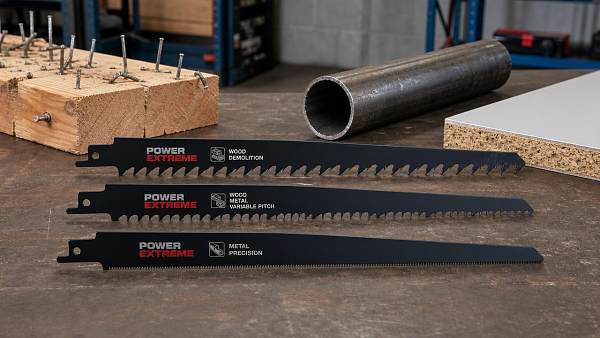
 Hand & Power ToolsReciprocating Saw Blades: Faster Demolition Starts With the Right Tooth DesignReciprocating saw blades work best when tooth design matches the job. Learn how to cut wood, metal, and mixed materials faster with better control, longer blade life, and fewer interruptions.Tooling & Hardware LeadMay 07, 2026
![]() Building HardwareStainless Steel Handrail Brackets for Coastal Projects: What to CheckStainless steel handrail brackets for coastal projects: learn what to check on grade, finish, fixings, and corrosion risk to avoid failures, ensure compliance, and choose with confidence.Tooling & Hardware LeadMay 07, 2026
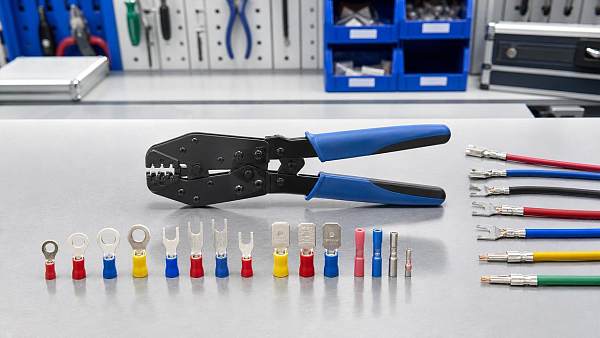
Building HardwareStainless Steel Handrail Brackets for Coastal Projects: What to CheckStainless steel handrail brackets for coastal projects: learn what to check on grade, finish, fixings, and corrosion risk to avoid failures, ensure compliance, and choose with confidence.Tooling & Hardware LeadMay 07, 2026 Hand & Power ToolsCrimping Tools Wholesale: How to Avoid Fit Issues Across TerminalsCrimping tools wholesale buyers: learn how to avoid terminal fit issues, compare key specs, and choose reliable suppliers to reduce rework, prevent failures, and improve repair consistency.Tooling & Hardware LeadMay 07, 2026
 Industrial FastenersBlind Rivets Wholesale: Material Matching Mistakes to AvoidBlind rivets wholesale buyers: avoid costly material matching mistakes. Learn how aluminum, steel, and stainless choices affect strength, corrosion, and long-term reliability.Tooling & Hardware LeadMay 07, 2026