Industry News
Curation by industry experts
Hot Articles
Popular Tags
How to Choose Wholesale Stud Finders for Reliable Wall Scanning
Choosing wholesale stud finders is more than comparing prices—it requires evaluating scanning accuracy, detection depth, build quality, certifications, and supplier reliability. For procurement professionals, the right sourcing decision can reduce returns, improve end-user satisfaction, and strengthen product competitiveness. This guide outlines the key factors to assess when selecting reliable wall-scanning tools for wholesale purchase.
What are wholesale stud finders, and why do buyers pay close attention to them?
Wholesale stud finders are wall-scanning devices purchased in bulk for retail, distribution, contractor supply, private labeling, or project-based procurement. Their basic purpose is simple: help users locate studs, live AC wires, metal pipes, or other hidden objects behind drywall and similar surfaces. Yet from a sourcing perspective, the category is more complex than it first appears.
Procurement teams focus on wholesale stud finders because these tools sit at the intersection of safety, user trust, and product consistency. A low-performing scanner may generate false positives, miss framing members, or fail to detect energized wires. That quickly leads to customer complaints, return costs, reputation damage, and possible liability concerns. By contrast, reliable wall-scanning tools improve installation efficiency for end users such as contractors, maintenance teams, home improvement retailers, and DIY consumers.
For B2B buyers, the demand signal is also broad. Stud finders can be sold through hardware chains, e-commerce platforms, industrial supply catalogs, or building material distributors. This means sourcing decisions should not be based only on unit cost. They should consider target market expectations, local compliance needs, packaging quality, after-sales support, and the credibility of the manufacturer behind the product.
Which types of buyers and use cases should shape your selection criteria?
Not all wholesale stud finders are intended for the same customer. Before comparing models, procurement managers should define the primary sales channel and user profile. This avoids buying a feature set that is either too weak for professionals or unnecessarily expensive for entry-level retail demand.
For mass retail and online marketplaces, the most important factors are ease of use, intuitive display, low training requirement, stable performance on standard drywall, and packaging that clearly explains functions. For contractor supply or professional tool distribution, buyers usually need better scan depth, multi-material detection, stronger casing, and higher consistency across production lots. For promotional or private-label programs, appearance, logo customization, quick lead times, and compliance documentation may carry greater weight.
Geography also matters. In some markets, buyers expect the tool to detect wood studs, ferrous metal, non-ferrous metal, and live wires in one unit. In others, a simpler center-find model may be acceptable if the price point is highly competitive. Understanding whether the end user is a homeowner, installer, electrician, or facilities team helps determine which technical specifications truly affect purchasing behavior.
What specifications matter most when evaluating wholesale stud finders?
This is the core sourcing question. While product pages often highlight many features, a procurement team should concentrate on measurable performance and quality indicators that influence real-world use.
First, scanning accuracy is essential. Ask how reliably the device identifies the stud center or stud edge across common wall types. A supplier should be able to explain test conditions rather than provide vague claims. Accuracy should be verified on painted drywall, layered wallboard, and surfaces with minor texture variation, because consumer complaints often arise outside ideal lab conditions.
Second, detection depth is a practical differentiator. Some models are designed for shallow residential walls, while others can scan deeper for professional applications. Procurement specialists should confirm the depth for wood, ferrous metal, non-ferrous metal, and live wire detection separately. A single “maximum depth” statement is often not enough, since each material category may perform differently.
Third, consider sensor stability and calibration behavior. Many end users judge product quality by whether the device starts quickly and calibrates consistently. If a stud finder requires overly sensitive positioning or produces frequent error signals, return rates may rise even if the technical design looks acceptable on paper.
Fourth, review the interface. Clear LCD or LED indication, audible alerts, ergonomic grip, anti-slip housing, and simple mode switching all contribute to customer satisfaction. In wholesale stud finders aimed at broad consumer markets, user experience can be as important as pure technical performance.
Fifth, battery type and power efficiency should not be overlooked. Standard batteries may simplify replacement for end users, while rechargeable options may suit premium product lines. Procurement teams should compare expected runtime, battery compartment durability, and shipping implications.
Quick evaluation table for procurement teams
Use the following checklist when screening wholesale stud finders from multiple suppliers.
How can you compare product quality beyond sample appearance?
One of the biggest sourcing mistakes is approving wholesale stud finders based on a visually attractive sample alone. A good-looking device does not always deliver stable performance in volume production. Procurement teams should move from cosmetic review to structured validation.
Start with multi-scenario testing. Compare at least two or three suppliers using the same wall conditions and repeat scans across different operators. This helps reveal whether performance depends too heavily on user technique. It is also useful to test fresh batteries and partially drained batteries to identify sensitivity changes over time.
Next, inspect component quality. Button feedback, battery contact strength, screen readability, plastic seam alignment, and sensor window finish can all indicate manufacturing discipline. A procurement professional should ask whether the factory controls incoming electronic components, PCB inspection, firmware validation, and final functional testing at the line.
Packaging and manuals deserve equal attention. Many returns happen not because the scanner fails, but because users misunderstand calibration or scanning motion. Clear multilingual instructions, safety reminders, and realistic claims reduce misuse. If you are sourcing wholesale stud finders for private label, ask whether the supplier can support localized documentation that matches your target market.
What supplier qualifications and compliance documents should you verify first?
Reliable products require reliable suppliers. For procurement teams, evaluating the factory or trading partner is just as important as evaluating the stud finder itself. The first area to confirm is manufacturing capability. Does the supplier have dedicated testing procedures for electronic detection tools, or is the category only a small sideline product? Specialist experience often leads to better firmware refinement and more stable quality control.
Then review compliance. Depending on destination market, wholesale stud finders may need CE, FCC, RoHS, UKCA, battery transport documentation, or other market-specific records. Buyers should request current documents tied to the actual model number, not generic certificates from unrelated products. If a supplier hesitates to share test reports, that is an early warning sign.
Quality management systems also matter. A factory operating under a recognized quality framework is generally better prepared to maintain consistency. Ask about final inspection rates, traceability by batch, defect handling workflow, and warranty claim analysis. For larger orders, pre-shipment inspection and random sample validation by a third party can provide additional protection.
Finally, review business reliability. Lead time stability, responsiveness, packaging accuracy, and willingness to support post-sale issues often matter more in long-term trade than a small unit price difference. In global sourcing, dependable execution is a competitive asset.
What are the most common mistakes when sourcing wholesale stud finders?
A common mistake is buying purely on price. Low-cost products may look attractive during quotation review, but hidden costs often appear later through returns, replacement shipments, negative reviews, or customer service burden. Procurement decisions should consider landed value, not just ex-factory price.
Another mistake is overestimating feature value. More modes and display elements do not automatically create a better product. If the interface becomes confusing, novice users may struggle. For some markets, a simpler and more stable scanner will outperform a feature-heavy model.
Buyers also sometimes accept marketing claims without structured verification. Statements such as “professional grade” or “high precision” should be backed by test data, user trials, and repeatability checks. For wholesale stud finders, field consistency matters more than promotional language.
Another risk is ignoring packaging integrity and instruction quality. Electronic tools can suffer from transit damage if inner protection is weak, and unclear user manuals can trigger avoidable complaints. Finally, some buyers overlook service readiness. If the supplier cannot provide spare support, updated manuals, barcode labeling, or replacement policies, scaling the product line may become difficult.
How should procurement teams balance price, MOQ, lead time, and long-term value?
The right deal is rarely the cheapest quote. Procurement teams should compare wholesale stud finders through a total-value lens. Start by separating one-time costs from recurring costs. Tooling for private label packaging, compliance testing, and artwork setup may affect the first order, while defect rates, freight efficiency, and reorder speed shape long-term profitability.
MOQ should match channel demand. If the model is new to your assortment, negotiate a reasonable pilot quantity with clear quality benchmarks. This allows market validation before committing to larger volume. Lead time should also be discussed in detail: sample preparation, packaging approval, production queue, inspection window, and shipping method all influence launch timing.
Warranty terms are another important cost factor. A supplier offering slightly higher pricing but lower defect rates and faster issue resolution may generate stronger margins over time. For private-label programs, ask whether the factory can maintain component consistency across future production lots. A sudden design change can create support issues and disrupt customer reviews.
Practical FAQ summary for final decision-making
What should you confirm before placing an order for wholesale stud finders?
Before issuing a purchase order, confirm the exact model configuration, certified functions, packaging version, accessory list, battery specification, logo method, inspection standard, and warranty policy. Make sure the approved sample truly matches mass production. If possible, request a golden sample and retain it for future comparison.
It is also wise to align on acceptable defect levels, replacement handling, and documentation delivery timing. For buyers entering a new market segment, small-batch testing with real users can reveal whether the selected wholesale stud finders match customer expectations. This is especially useful when comparing edge-finding versus center-finding models, or basic scanners versus multi-material detectors.
In the end, successful sourcing depends on matching product capability to channel demand while controlling compliance, quality, and supplier risk. If you need to further confirm a specific solution, parameters, lead time, quotation structure, or cooperation model, it is best to first discuss target users, required detection functions, compliance destination, packaging expectations, and after-sales support scope with the supplier before moving into final negotiation.
Recommended News
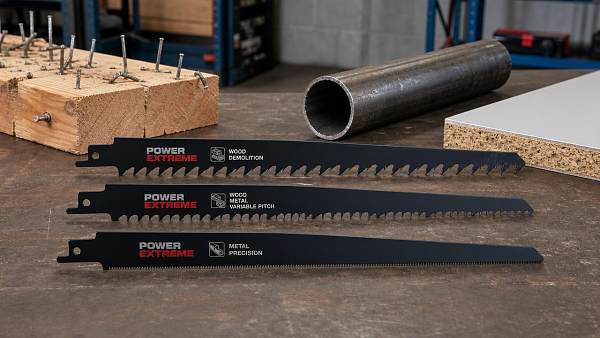
 Hand & Power ToolsReciprocating Saw Blades: Faster Demolition Starts With the Right Tooth DesignReciprocating saw blades work best when tooth design matches the job. Learn how to cut wood, metal, and mixed materials faster with better control, longer blade life, and fewer interruptions.Tooling & Hardware LeadMay 07, 2026
![]() Building HardwareStainless Steel Handrail Brackets for Coastal Projects: What to CheckStainless steel handrail brackets for coastal projects: learn what to check on grade, finish, fixings, and corrosion risk to avoid failures, ensure compliance, and choose with confidence.Tooling & Hardware LeadMay 07, 2026
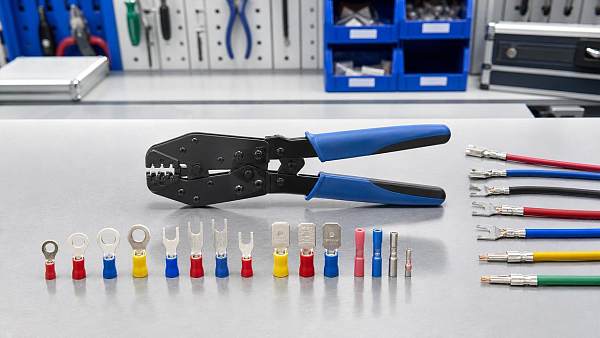
Building HardwareStainless Steel Handrail Brackets for Coastal Projects: What to CheckStainless steel handrail brackets for coastal projects: learn what to check on grade, finish, fixings, and corrosion risk to avoid failures, ensure compliance, and choose with confidence.Tooling & Hardware LeadMay 07, 2026 Hand & Power ToolsCrimping Tools Wholesale: How to Avoid Fit Issues Across TerminalsCrimping tools wholesale buyers: learn how to avoid terminal fit issues, compare key specs, and choose reliable suppliers to reduce rework, prevent failures, and improve repair consistency.Tooling & Hardware LeadMay 07, 2026
 Industrial FastenersBlind Rivets Wholesale: Material Matching Mistakes to AvoidBlind rivets wholesale buyers: avoid costly material matching mistakes. Learn how aluminum, steel, and stainless choices affect strength, corrosion, and long-term reliability.Tooling & Hardware LeadMay 07, 2026