Industry News
Curation by industry experts
Hot Articles
Popular Tags
Brazil INMETRO Adds UV-C Disinfection Lamps for Wedding Photography to Mandatory 62471 Certification
On May 6, 2026, Brazil’s National Institute of Metrology, Standardization and Industrial Quality (INMETRO) announced the inclusion of UV-C disinfection lamps used in bridal photography studios — specifically for disinfecting linens, props, and surfaces — into its mandatory INMETRO 62471 certification scheme. Enforcement begins October 1, 2026, requiring all imported units to hold valid certificates. This development directly affects importers, manufacturers, and distributors operating in the professional photography equipment, disinfection device, and wedding service supply chains.
Event Overview
INMETRO issued a formal notice on May 6, 2026, adding UV-C lamps intended for surface disinfection in bridal photo studios to the scope of compulsory certification under regulation INMETRO 62471. The requirement applies to all imported products entering the Brazilian market on or after October 1, 2026. No transitional grace period beyond that date is indicated in the publicly available announcement. Certification must be issued by an INMETRO-accredited body, and the standard referenced — NBR IEC 62471 — addresses photobiological safety of lamps and lamp systems.
Industries Affected
Direct Importers and Distributors (South America-based)
These entities face immediate compliance risk: products arriving in Brazil without valid INMETRO 62471 certification after October 1, 2026, may be detained at customs or rejected. Since Chinese UV lamp manufacturers typically require over 90 days to complete certification, importers must now verify supplier readiness and align documentation timelines with shipment schedules.
UV Lamp Manufacturers (China and other exporting countries)
Manufacturers supplying to the Brazilian bridal photography segment must initiate or accelerate certification processes. Unlike general-purpose UV devices, these lamps are now explicitly scoped to a defined application (studio fabric/prop disinfection), meaning test reports and technical files must reflect actual usage conditions — including irradiance measurements, exposure duration claims, and safety interlocks.
Wedding Service Suppliers and Studio Equipment Integrators
While not directly certifying, these downstream actors may face procurement delays or cost increases as certified models become the only legally marketable options. Inventory planning must now account for lead-time extensions tied to certification validation — especially where private-label or OEM-branded lamps are sourced.
What Relevant Enterprises Should Monitor and Do Now
Track official INMETRO implementation guidance
INMETRO has not yet published detailed technical annexes specifying exact product definitions, labeling requirements, or conformity assessment pathways for this newly added use case. Stakeholders should monitor the INMETRO website and official gazettes for updates — particularly any clarification on whether existing 62471 certificates cover this specific application or require new submissions.
Pre-validate supplier certification capacity and timeline
Importers should request documented evidence from suppliers — such as engagement letters from accredited labs, preliminary test plans, or proof of prior 62471 certifications for similar UV-C devices — to assess realistic certification completion dates. Given the >90-day average cycle, initiation before mid-July 2026 is advisable to meet the October 1 deadline.
Review product labeling and technical documentation
Certification under NBR IEC 62471 requires accurate photobiological risk group classification (e.g., Exempt, Risk Group 1–3), clear user instructions for safe operation, and appropriate warning labels. Products marketed for bridal studio use must explicitly state intended application and associated safety precautions — deviations may trigger re-evaluation during certification.
Prepare for potential supply chain adjustments
Companies relying on uncertified inventory should evaluate buffer stock levels and explore short-term alternatives — e.g., temporarily shifting to certified models already on the Brazilian market — while longer-term certification efforts proceed. Contractual terms with suppliers should also be reviewed to allocate responsibility for certification-related delays or rework costs.
Editorial Observation / Industry Perspective
Observably, this regulatory move signals a targeted expansion of INMETRO’s photobiological safety oversight into niche professional service environments — not just healthcare or industrial settings. It does not represent a broad ban on UV-C devices, but rather a formalization of safety accountability for a specific high-touch application where consumer exposure risk is elevated due to proximity and repeated use. Analysis shows the timing suggests alignment with broader Latin American regulatory convergence efforts around UV device safety, though no regional harmonization document has been cited. From an industry standpoint, this is currently best understood as a compliance signal — one that activates only upon enforcement, but whose preparation window is narrow and non-negotiable.
This is not yet a market access barrier, but it is a defined deadline-driven procedural requirement. Its significance lies less in novelty and more in enforceability: unlike voluntary standards, failure to comply post-October 1 carries tangible operational consequences.
Conclusion
The inclusion of UV-C disinfection lamps for bridal photography into INMETRO’s mandatory 62471 certification regime marks a precise, application-specific regulatory step — not a sweeping policy shift. Its primary impact is procedural and time-bound: it introduces a hard compliance checkpoint for imports entering Brazil after October 1, 2026. For affected stakeholders, the event is best interpreted as a defined operational milestone requiring coordinated action across supply chain tiers — rather than a strategic inflection point for the broader UV disinfection sector.
Source Attribution
Main source: Official INMETRO notice published May 6, 2026 (reference number and full text not provided in input; ongoing monitoring advised for annexes, FAQs, or enforcement clarifications). No third-party or secondary sources were used. Areas requiring continued observation include: (1) publication of technical implementation guidelines; (2) confirmation of whether pre-certified general UV-C lamps qualify retroactively; (3) any announced pilot or phased rollout beyond the stated October 1, 2026, effective date.
Recommended News
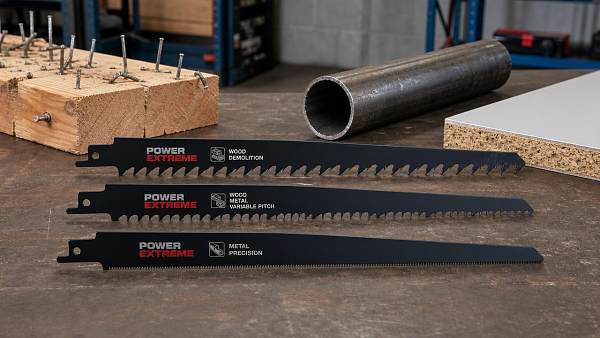
 Hand & Power ToolsReciprocating Saw Blades: Faster Demolition Starts With the Right Tooth DesignReciprocating saw blades work best when tooth design matches the job. Learn how to cut wood, metal, and mixed materials faster with better control, longer blade life, and fewer interruptions.Tooling & Hardware LeadMay 07, 2026
![]() Building HardwareStainless Steel Handrail Brackets for Coastal Projects: What to CheckStainless steel handrail brackets for coastal projects: learn what to check on grade, finish, fixings, and corrosion risk to avoid failures, ensure compliance, and choose with confidence.Tooling & Hardware LeadMay 07, 2026
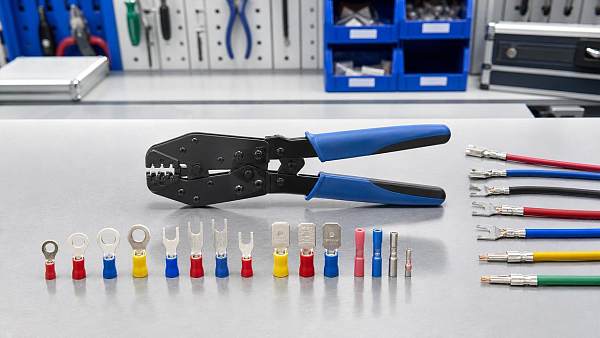
Building HardwareStainless Steel Handrail Brackets for Coastal Projects: What to CheckStainless steel handrail brackets for coastal projects: learn what to check on grade, finish, fixings, and corrosion risk to avoid failures, ensure compliance, and choose with confidence.Tooling & Hardware LeadMay 07, 2026 Hand & Power ToolsCrimping Tools Wholesale: How to Avoid Fit Issues Across TerminalsCrimping tools wholesale buyers: learn how to avoid terminal fit issues, compare key specs, and choose reliable suppliers to reduce rework, prevent failures, and improve repair consistency.Tooling & Hardware LeadMay 07, 2026
 Industrial FastenersBlind Rivets Wholesale: Material Matching Mistakes to AvoidBlind rivets wholesale buyers: avoid costly material matching mistakes. Learn how aluminum, steel, and stainless choices affect strength, corrosion, and long-term reliability.Tooling & Hardware LeadMay 07, 2026