Industry News
Curation by industry experts
Hot Articles
Popular Tags
Custom Printed Coffee Bags: What Impacts Cost Beyond Bag Size
When evaluating custom printed coffee bags, finance approvers need to look beyond unit size to understand the true cost structure. Factors such as material selection, barrier performance, printing method, order volume, special finishes, and compliance requirements can significantly influence total spend. This guide explains where costs really come from, helping procurement and budget decision-makers assess value, control risk, and make smarter packaging investments.
Understanding the Real Cost of Custom Printed Coffee Bags
For many buyers, the first pricing question around custom printed coffee bags is simple: how much does a larger bag cost compared with a smaller one? That matters, but it is rarely the main driver of total packaging spend. In practice, bag dimensions are only one visible part of a much broader cost equation that includes substrate engineering, print complexity, production setup, regulatory requirements, logistics, and waste risk.
This matters especially in coffee packaging, where product freshness, shelf appeal, and operational efficiency are tightly connected. A low headline price on custom printed coffee bags can become expensive if the structure causes sealing issues, poor oxygen protection, reprint delays, or excess inventory. For finance approvers, cost analysis therefore needs to move from piece price to total value delivered over the packaging lifecycle.
Within global supply chains, this topic has become more relevant as brands diversify origin sourcing, face volatile material costs, and respond to sustainability targets. Companies that treat coffee packaging as a strategic spend category rather than a commodity often make better long-term decisions on cash flow, risk exposure, and brand consistency.
Why the Industry Pays Close Attention to Packaging Cost Structure
Coffee is unusually sensitive to packaging performance. Roasted coffee releases gases, loses aroma over time, and can be damaged by oxygen, moisture, light, and poor handling. As a result, custom printed coffee bags must do more than carry graphics. They must preserve quality, support filling operations, travel safely through distribution, and communicate brand positioning at retail or in e-commerce channels.
For financial reviewers, the challenge is that many cost variables are hidden in specifications that sit outside standard price comparisons. A supplier may quote a similar-looking bag, but the underlying film layers, valve quality, zipper durability, print registration, and compliance testing can vary substantially. That is why packaging decisions often require cross-functional review between sourcing, operations, quality, and finance.
In B2B environments, this is also tied to broader sourcing goals. Companies increasingly need packaging that aligns with ESG policies, supports market entry requirements, and reduces disruption risk. Global Supply Review regularly sees packaging decisions evaluated not only on immediate cost, but also on supplier reliability, technical transparency, and strategic fit.
The Main Cost Drivers Beyond Bag Size
Material composition and barrier level
Material selection is often the biggest cost driver in custom printed coffee bags. A basic laminated structure may be suitable for short shelf life or fast-turn products, while premium coffee often requires stronger oxygen and moisture barriers. Foil, metallized films, high-barrier mono-materials, and specialty recyclable structures all carry different price points. Thicker films can improve puncture resistance, but they also increase raw material cost and shipping weight.
Valve, zipper, and functional features
Many custom printed coffee bags include degassing valves, resealable zippers, tear notches, tin ties, or shaped windows. These features improve usability and product protection, but each one adds material, assembly, and quality-control cost. The one-way valve is especially important for roasted coffee, and its performance consistency can affect both freshness and customer satisfaction.
Printing process and artwork complexity
Flexographic, rotogravure, and digital printing each have different economics. Gravure may deliver premium graphic quality at scale but requires expensive cylinder setup. Flexographic printing can be cost-efficient for repeat orders with moderate complexity. Digital printing reduces setup costs and enables short runs, but unit costs may remain higher at large volumes. Metallic inks, matte varnish, spot gloss, embossing, and multiple color changes can all increase the final cost of custom printed coffee bags.
Order volume and inventory strategy
Large runs usually reduce unit price, but lower unit cost does not always equal lower total cost. Finance teams should weigh carrying cost, design obsolescence, warehouse space, and the risk of regulatory or branding updates that make inventory unusable. A shorter run of custom printed coffee bags may be financially smarter if demand is uncertain or product launches are still evolving.
Manufacturing efficiency and rejection rates
Complex structures can increase machine downtime, sealing inconsistency, or print defects. If a bag is difficult to run on filling lines, labor costs and waste can rise quickly. Finance approvers should ask not only what the bag costs to buy, but what it costs to run. Bags with better dimensional consistency or seal reliability may justify a higher purchase price through lower operational losses.
A Practical Cost Overview for Finance Decision-Makers
The table below shows how common specification choices typically affect the cost profile of custom printed coffee bags.
Where Value Differs by Business Type
Not every company should optimize custom printed coffee bags in the same way. Cost priorities change depending on channel, brand strategy, and volume pattern.
Hidden Cost Areas That Often Escape Initial Review
Several cost items do not always appear clearly in first-round quotations for custom printed coffee bags. Tooling charges, plate or cylinder costs, color matching revisions, and prepress proofing are common examples. International projects may also include certification fees, export packaging requirements, freight volatility, customs duties, and local warehousing charges.
Another overlooked area is change management. If the artwork includes frequent seasonal updates, language variations, or market-specific labeling changes, short-run flexibility can become more valuable than the lowest nominal piece price. For finance teams, this means evaluating the total cost of version control and not only the cost of the physical bag.
Supplier capability also matters. A technically strong supplier may cost more initially but can reduce commercial risk through clearer documentation, faster issue resolution, and more stable quality. In contrast, repeated packaging claims, missed delivery windows, or inconsistent print output can create hidden expense far beyond invoice value.
How Finance Approvers Can Evaluate Custom Printed Coffee Bags More Effectively
A practical review framework should combine commercial, operational, and risk-based criteria. Start by asking what shelf life the coffee truly needs, what channels it will serve, and whether the product is premium, promotional, or high-volume. Those answers should shape the packaging specification before price comparison begins.
Next, compare quotes on a like-for-like basis. Confirm material structure, valve type, film thickness, print method, finish details, MOQ, lead time, freight terms, and compliance scope. Many apparent savings disappear when these details are standardized. For custom printed coffee bags, the cheapest quote is often based on a different specification set.
It is also wise to connect packaging cost to commercial outcome. Better bags may support premium pricing, reduce returns, extend freshness windows, or improve retail conversion. Finance leaders do not need to approve every premium feature, but they should distinguish between cosmetic upgrades and features that protect margin.
- Request total landed cost, not only ex-works unit cost.
- Model waste, obsolescence, and inventory carrying cost.
- Validate food-contact and market compliance before approval.
- Review supplier quality history and technical responsiveness.
- Assess whether sustainability claims create future cost or future advantage.
The Role of Strategic Sourcing Intelligence
In a global procurement environment, the evaluation of custom printed coffee bags benefits from reliable market intelligence. Buyers and finance approvers need visibility into material trends, converting capabilities, supplier specialization, and regulatory developments. This is where a data-driven B2B intelligence approach becomes useful. Rather than comparing prices in isolation, decision-makers can benchmark suppliers against performance, technology, and regional sourcing risk.
For organizations managing packaging across multiple categories, the same discipline used in textiles, hardware, lighting, and furniture sourcing also applies here: define the technical need clearly, align the specification with business outcomes, and validate supplier fit before scaling volume. That approach improves budget discipline without undermining product performance.
A Balanced Way to Approve Packaging Spend
The most effective approval decisions on custom printed coffee bags do not focus only on bag size or headline unit price. They consider freshness protection, operational compatibility, print requirements, compliance exposure, and inventory strategy together. That broader view helps finance teams avoid false savings and support packaging choices that are commercially sustainable.
If your business is reviewing custom printed coffee bags for new launches, private label programs, or international expansion, use a total-cost lens. Clarify the technical specification, compare suppliers on equivalent terms, and weigh long-term value against short-term savings. In today’s market, the smartest packaging investment is usually the one that protects both product integrity and financial control.
Recommended News
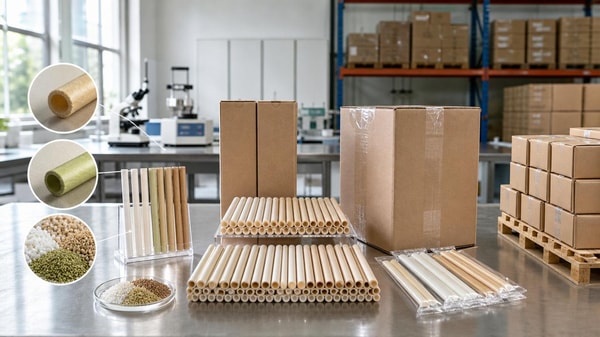
 Eco PackagingBiodegradable Straws Wholesale: What to Verify Before Switching SuppliersBiodegradable straws wholesale: verify certifications, drink performance, packaging, and export reliability before switching suppliers to cut risk, protect compliance, and improve sourcing results.Packaging Supply ExpertMay 04, 2026
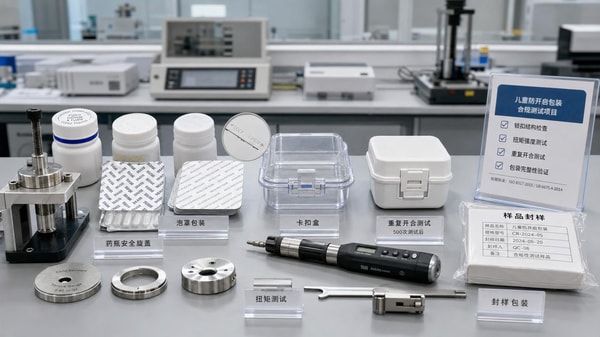
 Policy & RegulationsChild Resistant Packaging: Common Testing Failures and How to Prevent ThemChild resistant packaging failures often stem from weak locks, tolerance drift, or poor reclosure. Learn how to prevent test issues, reduce recall risk, and improve compliance readiness.May 04, 2026
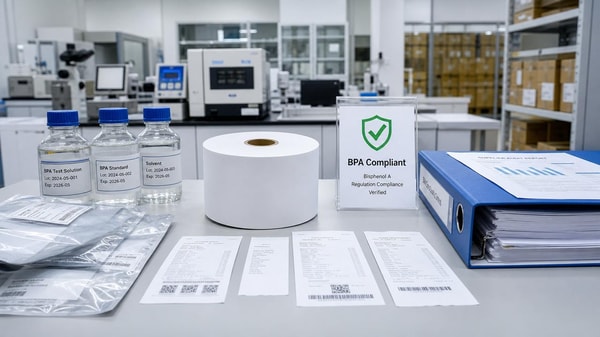
 Policy & RegulationsThermal Paper Receipts: BPA Rules and Compliance Questions in 2026Thermal paper receipts face tougher BPA scrutiny in 2026. Learn the key compliance questions, supplier checks, and risk-reduction steps buyers and safety teams should act on now.May 04, 2026
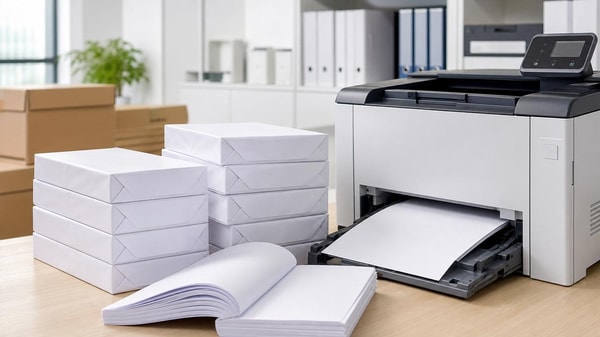
 Office FurnitureWholesale A4 Copy Paper: GSM, Brightness, and Jam Rate ExplainedWholesale A4 copy paper buying made simple: learn how GSM, brightness, and jam rate affect print quality, machine uptime, and sourcing costs across offices, schools, and print shops.Interior Sourcing LeadMay 04, 2026