Industry News
Curation by industry experts
Hot Articles
Popular Tags
Hot Foil Stamping Machine Buying Guide for Short-Run Packaging Jobs
Choosing the right hot foil stamping machine for short-run packaging jobs can directly affect lead times, finish quality, and unit economics. For procurement teams balancing customization, flexibility, and supplier performance, understanding key machine types, setup demands, and material compatibility is essential. This guide outlines what buyers should evaluate to make faster, lower-risk sourcing decisions in a competitive packaging market.
Why a checklist-based approach works better for short-run packaging sourcing
For procurement professionals, a hot foil stamping machine is not just a finishing asset. It is a production decision that affects sampling speed, SKU flexibility, labor planning, waste rates, and the ability to deliver premium packaging on small volumes without destroying margins. Short-run work is especially sensitive because setup time, die change frequency, and substrate variation often matter more than peak hourly output.
That is why a checklist is more useful than a generic product overview. Instead of asking which hot foil stamping machine is “best,” buyers should ask which machine is best aligned with short-run carton work, boutique label programs, seasonal packaging, promotional sleeves, or pilot launches. The correct decision usually comes from matching technical capability to the job mix, not from choosing the largest or fastest system.
Start here: the first five questions procurement should confirm
Before comparing suppliers, machines, or quotations, confirm these five points internally. They will narrow the field quickly and reduce RFQ confusion.
- What is the typical run length per SKU? A machine suited to 500–3,000 impressions may be a poor fit for repeated 20,000-unit work.
- Which packaging substrates are used most often? Paperboard, coated paper, rigid box wrap, synthetic labels, laminated stock, and specialty films behave differently under heat and pressure.
- How often will jobs change? Frequent artwork changes favor easier make-ready, fast die mounting, and stable registration systems.
- What finish quality is non-negotiable? Cosmetic packaging, gifting cartons, and premium sleeves usually require cleaner edge definition than standard trade packs.
- Will the machine operate in-house or through a contract finishing partner? This changes how you assess training needs, maintenance expectations, and required automation.
Core hot foil stamping machine selection checklist
1) Match machine type to the real production pattern
The first decision is not brand. It is machine format. For short-run packaging jobs, the most common options are manual, semi-automatic, and automatic hot foil stamping machine configurations. Flat-flat systems are common for cartons, paperboard, and rigid packaging components, while roll-fed or specialty systems may better suit labels and narrow web applications.
Manual or entry-level machines can be attractive on price, but buyers should check whether labor intensity and slower setup erase the savings. Semi-automatic equipment often offers the best balance for short runs because it reduces operator fatigue while keeping investment manageable. Automatic machines deliver consistency and speed, but for buyers with highly fragmented orders, the ROI depends on how much setup reduction and throughput improvement can be captured.
2) Prioritize make-ready time over headline speed
For short-run work, quoted impressions per hour can be misleading. A hot foil stamping machine that runs fast but takes too long to change dies, reset pressure, align foil feed, and stabilize registration may underperform across a full shift of mixed jobs. Buyers should ask for average make-ready time by job type, not just top-speed output data.
Useful checks include die mounting convenience, digital control presets, foil advance control, quick-change tooling, and whether operators can store repeat job settings. Machines that shorten setup often provide stronger economics than faster machines in short-run environments.
3) Verify substrate and finish compatibility
Not every hot foil stamping machine handles every packaging material equally well. Buyers should confirm the temperature range, pressure control precision, dwell time adjustment, and feeding stability for the exact substrates used in production. This matters when switching between coated board, uncoated stocks, textured materials, laminated surfaces, and recycled content packaging.
If the supplier cannot provide tested samples on your target materials, that is a risk signal. Ask for sample output using your artwork, your foil grade if possible, and your actual board thickness range. For ESG-focused packaging programs, also check performance on lower-virgin-fiber substrates, because heat response and surface uniformity may differ from standard board.
4) Check registration accuracy and pressure consistency
Premium packaging is unforgiving. Uneven pressure, foil skip, halo effects, weak adhesion, or poor registration can quickly turn a decorative finish into a rejection cost. For short-run jobs, consistency is even more important because there is limited volume to absorb startup waste.
A capable hot foil stamping machine should offer stable platen pressure, fine registration adjustment, and repeatable foil transfer across the full image area. Procurement should ask to review tolerance claims, accepted defect rates, and sample jobs with fine lines, small text, and large solid foil areas. Machines that perform only on simple logos may not support broader packaging development needs.
5) Evaluate tooling, consumables, and operating cost
The machine price is only part of the cost picture. Short-run operations usually consume more setup labor and may use more foil per finished unit if layouts are not optimized. Buyers should review die cost, die lead time, foil compatibility, foil waste control, spare parts availability, and preventive maintenance requirements.
A lower-cost hot foil stamping machine can become expensive if it requires proprietary consumables, frequent heater replacement, or hard-to-source electronics. Ask suppliers for a one-year ownership model covering consumables, common wear parts, maintenance intervals, and operator training support.
Decision table: what to compare when reviewing supplier proposals
Use a side-by-side matrix to avoid being influenced by one standout feature while missing a critical weakness.
Additional checks by packaging scenario
For folding cartons and luxury sleeves
Focus on sheet feeding stability, platen size, pressure uniformity, and clean transfer on coated and uncoated board. If carton graphics involve embossing combinations or larger decorative areas, confirm whether the hot foil stamping machine can support those processes without slowing setup excessively.
For rigid box and gift packaging suppliers
Check pressure strength, fixture handling, and the machine’s ability to work with wrapped surfaces or assembled components if required. Short-run premium gifting often includes many SKU changes, so die alignment speed and repeat-job consistency should be treated as top-priority decision points.
For labels and promotional packs
Registration precision becomes especially important on smaller formats. Buyers should ask about fine detail reproduction, narrow spacing performance, and foil feeding efficiency on compact layouts. Waste percentage can become a disproportionate cost factor when label runs are short and designs change frequently.
Commonly overlooked risks that can hurt ROI
- Buying based on speed alone: this often ignores downtime between jobs, which is where short-run economics are won or lost.
- Skipping sample validation: supplier demo samples may use ideal materials that do not reflect your actual packaging stock.
- Underestimating operator skill needs: some hot foil stamping machine models require more manual tuning than procurement expects.
- Ignoring spare-part logistics: imported components with long lead times can stop output during peak seasonal demand.
- Missing ESG and substrate shifts: if your packaging strategy is moving toward recycled or lower-coating materials, current machine settings may not remain optimal.
Practical execution steps for a lower-risk buying process
- Build a 12-month job profile showing run lengths, substrate types, foil coverage, SKU count, and peak demand windows.
- Issue a structured RFQ that asks each hot foil stamping machine supplier for the same technical and commercial responses.
- Request sample testing on real production materials and compare setup time, foil quality, waste, and repeatability.
- Review total cost of ownership, not just machine price, including training, tooling, consumables, maintenance, and expected uptime.
- Confirm after-sales support terms in writing, including parts availability, response commitments, and remote troubleshooting capability.
FAQ for procurement teams evaluating a hot foil stamping machine
Is a semi-automatic hot foil stamping machine usually the best choice for short runs?
Often, yes. Semi-automatic systems frequently offer the strongest balance of capital cost, setup flexibility, and production consistency for short-run packaging jobs. However, the best fit depends on changeover frequency, labor availability, and quality requirements.
What matters more: speed or setup time?
For short-run work, setup time usually has a greater effect on delivered cost and lead time. A machine with moderate output but fast, repeatable make-ready can outperform a faster model across multiple small orders.
Should buyers test recycled packaging substrates before purchase?
Yes. Recycled and sustainability-driven packaging grades can react differently to heat, pressure, and foil transfer. Testing helps avoid quality surprises after installation or supplier onboarding.
What to prepare before speaking with suppliers
To move from research to a confident sourcing decision, procurement teams should prepare a concise requirement pack. Include target run lengths, packaging formats, board weights, finish expectations, artwork complexity, quality tolerances, delivery goals, and budget range. If possible, share sample substrates and priority SKUs. This enables a hot foil stamping machine supplier to recommend the right configuration instead of offering a generic catalog model.
For organizations expanding supplier networks through strategic sourcing platforms and B2B intelligence channels, it is also wise to compare machine capability with supplier execution strength. Technical fit, service responsiveness, and packaging application knowledge should be reviewed together. If you need to confirm specifications, solution suitability, lead times, operating costs, or partnership terms, start by asking for real-job sample validation, a full setup-time breakdown, tooling assumptions, and a transparent after-sales support plan.
Recommended News
 Eco PackagingBiodegradable Straws Wholesale: What to Verify Before Switching SuppliersBiodegradable straws wholesale: verify certifications, drink performance, packaging, and export reliability before switching suppliers to cut risk, protect compliance, and improve sourcing results.Packaging Supply ExpertMay 04, 2026
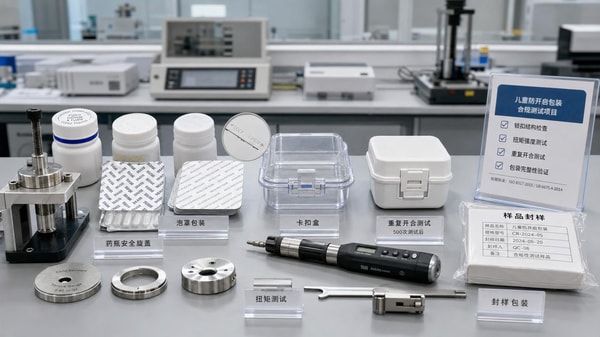
 Policy & RegulationsChild Resistant Packaging: Common Testing Failures and How to Prevent ThemChild resistant packaging failures often stem from weak locks, tolerance drift, or poor reclosure. Learn how to prevent test issues, reduce recall risk, and improve compliance readiness.May 04, 2026
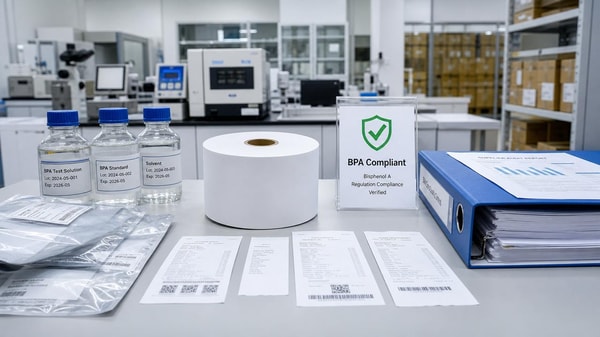
 Policy & RegulationsThermal Paper Receipts: BPA Rules and Compliance Questions in 2026Thermal paper receipts face tougher BPA scrutiny in 2026. Learn the key compliance questions, supplier checks, and risk-reduction steps buyers and safety teams should act on now.May 04, 2026
 Office FurnitureWholesale A4 Copy Paper: GSM, Brightness, and Jam Rate ExplainedWholesale A4 copy paper buying made simple: learn how GSM, brightness, and jam rate affect print quality, machine uptime, and sourcing costs across offices, schools, and print shops.Interior Sourcing LeadMay 04, 2026