Industry News
Curation by industry experts
Hot Articles
Popular Tags
RCEP ASEAN Green Channel Expands for Wedding Photo Props
On May 17, 2026, China’s General Administration of Customs (GACC) and the ASEAN Secretariat jointly announced the inclusion of ‘cultural goods and photographic props’ (HS code 9006.59) under the China–ASEAN ‘intelligent customs clearance + automatic release’ pilot program under the Regional Comprehensive Economic Partnership (RCEP). The measure applies immediately to exports to Vietnam, Thailand, and Malaysia — but introduces a new mandatory requirement: GS1-128 global traceability codes must be physically embedded on packaging or labels, with corresponding data uploaded in real time to China’s Single Window ‘RCEP Origin Certification Traceability Platform’. Non-compliant shipments will be returned for remediation.

Event Overview
Effective May 17, 2026, the GACC and ASEAN Secretariat expanded RCEP’s smart customs facilitation framework to HS 9006.59 — covering wedding photography backdrops, lighting accessories, mannequins, decorative props, and related non-electronic studio equipment. The ‘instant declaration and instant release’ treatment now applies to eligible exports destined for Vietnam, Thailand, and Malaysia. However, all consignments must carry a GS1-128 barcode containing globally unique product identification, batch/lot number, and country-of-origin information. Upload to the designated RCEP traceability platform via China’s Single Window is mandatory prior to customs declaration. Shipments lacking valid GS1 encoding or incomplete platform synchronization will be rejected at the declaration stage.
Industries Affected
Direct Exporting Enterprises: Companies exporting wedding photo props directly to Vietnam, Thailand, or Malaysia face immediate operational adjustments. The GS1-128 embedding requirement adds pre-shipment labeling complexity, while platform synchronization introduces new data-entry responsibilities and potential delays if integration with ERP or WMS systems is not yet in place. ‘Instant release’ benefits are conditional — not automatic — and hinge entirely on compliance accuracy.
Raw Material Procurement Enterprises: Suppliers of fabrics, wood composites, synthetic resins, and printed substrates used in prop manufacturing may see revised purchase agreements. Downstream exporters are increasingly requiring material-level traceability documentation (e.g., supplier-assigned batch IDs compatible with GS1 structures), pushing procurement teams to verify and standardize upstream data flows — especially where sub-contracted printing or finishing occurs.
Manufacturing Enterprises: Factories producing photo backdrops, portable studios, or themed decor must adapt production line labeling processes. GS1-128 encoding cannot be applied retroactively; it must be integrated into packaging design, label printing workflows, and quality control checkpoints. This affects both OEM/ODM facilities and domestic brands managing private-label exports.
Supply Chain Service Providers: Freight forwarders, customs brokers, and digital trade platforms now bear heightened verification duties. Brokers must confirm GS1 data integrity and platform upload status before submission; logistics providers may need to support on-site label audits or provide traceability-ready warehouse management modules. Third-party certification bodies report rising inquiries about GS1-128 validation services for export-oriented SMEs.
Key Considerations and Recommended Actions
Verify GS1 Membership and Encoding Capacity
Enterprises must hold active GS1 China membership and obtain company-specific GS1 Company Prefixes. Internal systems — including label printers, ERP, and e-commerce platforms — require configuration to generate compliant GS1-128 barcodes (including Application Identifiers AI (01), (10), (11), and (422)). Testing with GACC’s sandbox environment is strongly advised before live deployment.
Align Packaging and Labeling Timelines
New packaging artwork must integrate GS1-128 barcodes with minimum print resolution (≥300 dpi), quiet zones, and contrast ratios compliant with ISO/IEC 15416. Lead times for plate/tooling revisions and label inventory turnover should be factored into Q3 2026 production planning — particularly for seasonal peak orders (e.g., Q4 wedding season).
Update Internal Data Governance Protocols
GS1 compliance requires consistent assignment of batch/lot numbers tied to production runs — not just shipping manifests. Enterprises must formalize internal traceability SOPs, assign accountability across departments (production → QA → logistics → IT), and conduct staff training on data entry rules for the RCEP Origin Certification Traceability Platform.
Assess Impact on Cost Structure and Lead Time
Preliminary industry feedback indicates marginal per-unit cost increases (USD 0.03–0.08) due to label redesign, barcode verification, and platform integration. More consequential is the risk of shipment rejection: rework cycles average 3–5 working days. Firms should treat GS1 readiness as a prerequisite for order acceptance — not a post-booking administrative step.
Editorial Perspective / Industry Observation
Observably, this policy shift marks a strategic pivot from tariff reduction toward *digital regulatory harmonization* within RCEP’s cultural goods corridor. Unlike earlier RCEP implementations focused on duty cuts, this initiative embeds traceability as a conditionality for speed — signaling that ‘green channel’ access is increasingly tied to verifiable data infrastructure, not just preferential origin criteria. Analysis shows that less than 12% of surveyed Chinese photo prop exporters currently maintain GS1-compliant labeling systems, suggesting a steep adoption curve ahead. From an industry perspective, the move better reflects ASEAN’s growing emphasis on consumer safety and circular economy reporting — particularly relevant for PVC-based backdrops or coated textiles entering Thailand’s new Eco-Labeling Scheme (effective Q1 2027).
Conclusion
This expansion does not represent a simple procedural update — it signals the institutionalization of end-to-end digital traceability as a baseline expectation for cross-border trade in creative industry goods. For the wedding photography supply chain, the immediate challenge lies in operationalizing GS1 standards without disrupting delivery reliability. Longer term, firms that treat traceability as a value driver — rather than a compliance burden — may gain competitive advantage in tender processes, sustainability reporting, and multi-market scalability.
Source Attribution
Official announcement issued by China’s General Administration of Customs and the ASEAN Secretariat, dated May 17, 2026. HS classification guidance published in GACC Notice No. 2026-41. GS1-128 technical specifications referenced from GS1 China Implementation Guidelines v3.2 (April 2026). Platform integration requirements confirmed via China Single Window API documentation (v2.8.1, updated May 15, 2026). Continued observation is warranted on: (1) extension to Indonesia and Philippines; (2) alignment with ASEAN Common Tariff (ACT) updates for HS 9006.59 scheduled for October 2026; (3) potential linkage to upcoming ASEAN Digital Product Passport framework.
Recommended News
 Eco PackagingWhat affects the price of kraft paper rolls bought wholesale?Kraft paper rolls wholesale pricing depends on grade, basis weight, roll size, order volume, freight, and certifications. Learn how to compare landed costs and choose reliable value.Packaging Supply ExpertOct 03, 2026
 Commercial LEDHow to evaluate a canopy lights factory before placing a bulk orderCanopy lights factory evaluation guide: verify specifications, compliance, quality control, capacity, and after-sales support before placing a bulk order.Commercial Tech EditorOct 02, 2026
 Commercial LEDHow to choose lighting systems that meet workplace safety needsLighting systems for workplace safety: learn how to control glare, improve visibility, meet environmental demands, and protect workers with reliable, compliant lighting choices.Commercial Tech EditorOct 01, 2026
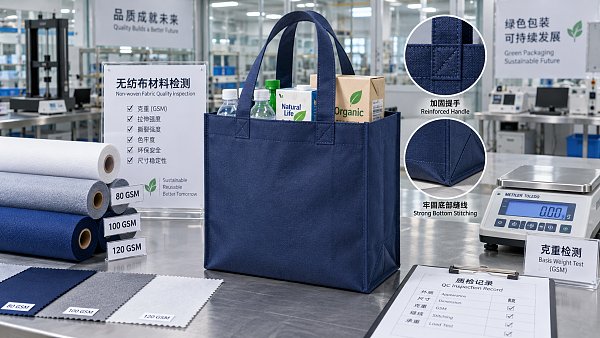
 Fabrics & YarnsWhat fabric weight works best for reusable non woven fabric bags?Non woven fabric for bags: discover the best GSM range for durability, load capacity, print quality, and cost-effective reusable bag sourcing.Textile Industry AnalystSep 30, 2026