Industry News
Curation by industry experts
Hot Articles
Popular Tags
Japan JETRO Report: China’s Wedding Photo Props Imports Up 37% in 2026
On May 16, 2026, the Japan External Trade Organization (JETRO) released its Spring 2026 Wedding Supplies Import Dynamics Brief, reporting a 37% year-on-year increase in imports of Chinese wedding photography props into Japan during January–April 2026. This development signals notable shifts for export-oriented manufacturers, lighting and textile suppliers, and cross-border B2B service providers serving the Japanese wedding photography market.
Event Overview
On May 16, 2026, JETRO published its Spring 2026 Wedding Supplies Import Dynamics Brief. The report states that imports of Chinese-made wedding photography props into Japan totaled USD 210 million from January to April 2026 — a 37% increase compared to the same period in 2025. Within this category, LED ring lights rose by 52% year-on-year, and water-based coated cotton-linen backdrop fabrics increased by 48%. The report notes that small- and medium-sized Japanese photography studios are accelerating the phase-out of traditional halogen lighting, adopting a procurement model combining ‘Chinese-made products’ with ‘locally delivered dimming support services’.

Industries Affected
Direct Exporters (China-based)
Exporters of wedding photography props face heightened demand for two specific product categories: LED ring lights and eco-friendly backdrop fabrics. The 37% overall growth reflects not just volume expansion but also a structural shift toward energy-efficient and chemically safer items — suggesting stronger alignment with Japanese regulatory expectations and studio operational preferences.
Raw Material Suppliers (e.g., LED component, textile coating providers)
Suppliers of key inputs — such as high-CRI LED modules or water-based textile coatings — are indirectly affected through upstream demand pull. The reported +52% and +48% growth rates indicate tightening supply chain responsiveness requirements, especially for certifications (e.g., JIS, PSE, or REACH-compliant coatings) required for Japanese market access.
Contract Manufacturers & ODMs
Manufacturers offering OEM/ODM services for lighting or fabric backdrops may see rising requests for localized technical integration — particularly for dimmable LED control interfaces compatible with Japanese studio equipment standards. The JETRO report’s reference to ‘local dimming support services’ implies growing client expectations beyond hardware supply.
Distribution & Cross-Border Service Providers
Logistics firms, customs brokers, and after-sales service platforms handling China–Japan trade in photography gear must adapt to faster inventory turnover cycles and more frequent small-batch shipments — especially for modular lighting kits and roll-packed fabrics. Demand for bundled logistics + technical handover support is likely increasing alongside the ‘China-made + local tuning’ procurement trend.
What Relevant Businesses or Practitioners Should Focus On
Monitor JETRO’s upcoming policy briefs and METI-related guidance on green procurement criteria
JETRO’s emphasis on water-based coatings and LED efficiency suggests potential alignment with broader Japanese government sustainability initiatives. Future updates may clarify labeling, chemical disclosure, or energy performance thresholds relevant to photo studio equipment.
Prioritize compliance verification for top-growth categories
LED ring lights and coated cotton-linen fabrics should be prioritized for conformity assessment — including electrical safety (PSE), chemical content (e.g., formaldehyde, AZO dyes), and packaging standards (JIS Z 1500). Delays in certification may constrain near-term shipment capacity despite strong demand.
Distinguish between procurement signals and actual deployment timelines
The +37% import growth covers only Jan–Apr 2026; it does not reflect full-year trends or inventory absorption rates. Studios may still be in pilot phases with new lighting systems or fabric lines. Exporters should avoid overextending production capacity based solely on first-quarter data.
Prepare for hybrid delivery models — not just product shipment
Given JETRO’s note on ‘China solution + local dimming service’, exporters and their Japanese partners should jointly develop lightweight technical documentation, remote troubleshooting protocols, and localized training materials — even if full on-site service remains outsourced.
Editorial Perspective / Industry Observation
Observably, this JETRO report functions less as a standalone market snapshot and more as an early indicator of structural recalibration in the Japan-facing wedding photography supply chain. Analysis shows the growth is concentrated in two technically differentiated subcategories — not broad-based commodity expansion — pointing to a shift in functional requirements rather than simple volume rebound. From an industry perspective, the rise of ‘integrated procurement’ (hardware + localized tuning) suggests that competitive advantage is increasingly tied to interoperability readiness and post-purchase support coordination — not just cost or lead time. It is currently more accurate to interpret this as a signal of evolving buyer expectations than as evidence of fully matured market adoption.
This development underscores how regional regulatory sensitivities — particularly around energy use and chemical safety — can reshape sourcing behavior even in niche B2B segments. For stakeholders, sustained attention is warranted not only to import statistics but also to how Japanese studios define ‘technical compatibility’ and ‘service proximity’ in practice.
It remains to be seen whether similar procurement patterns emerge in other East Asian markets where halogen-to-LED transitions are underway. That evolution would be worth tracking separately.
In summary, the 37% import growth reflects real momentum in two high-potential categories, but its implications extend beyond trade volume: it highlights a quiet reconfiguration of value delivery in cross-border B2B photography equipment trade. Current interpretation should emphasize capability adaptation — not just output scaling.
Source: Japan External Trade Organization (JETRO), Spring 2026 Wedding Supplies Import Dynamics Brief, published May 16, 2026.
Note: Growth figures cover January–April 2026 only. Full-year trends, inventory absorption rates, and downstream studio adoption depth remain under observation.
Recommended News
 Eco PackagingWhat affects the price of kraft paper rolls bought wholesale?Kraft paper rolls wholesale pricing depends on grade, basis weight, roll size, order volume, freight, and certifications. Learn how to compare landed costs and choose reliable value.Packaging Supply ExpertOct 03, 2026
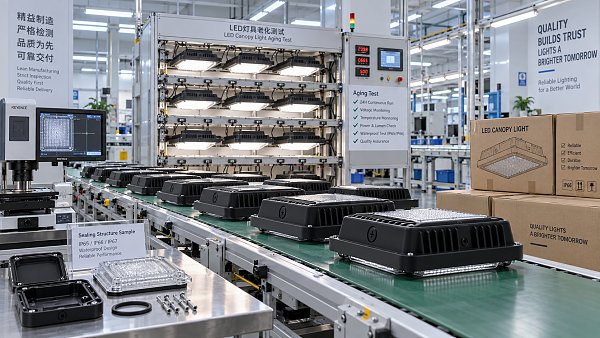
 Commercial LEDHow to evaluate a canopy lights factory before placing a bulk orderCanopy lights factory evaluation guide: verify specifications, compliance, quality control, capacity, and after-sales support before placing a bulk order.Commercial Tech EditorOct 02, 2026
 Commercial LEDHow to choose lighting systems that meet workplace safety needsLighting systems for workplace safety: learn how to control glare, improve visibility, meet environmental demands, and protect workers with reliable, compliant lighting choices.Commercial Tech EditorOct 01, 2026
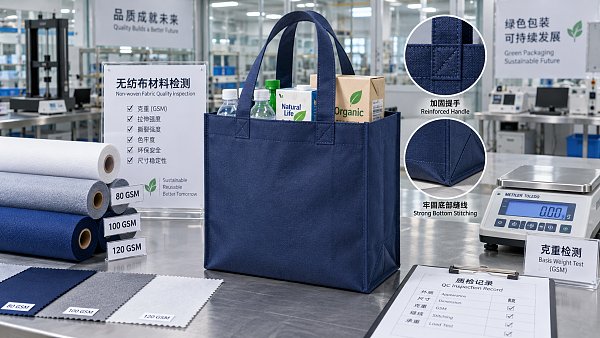
 Fabrics & YarnsWhat fabric weight works best for reusable non woven fabric bags?Non woven fabric for bags: discover the best GSM range for durability, load capacity, print quality, and cost-effective reusable bag sourcing.Textile Industry AnalystSep 30, 2026