Industry News
Curation by industry experts
Hot Articles
Popular Tags
Decor Supply Trends in 2026: Materials, Pricing, and Lead Times
Decor supply in 2026 is no longer moving on yesterday’s assumptions
The decor supply market in 2026 feels tighter, slower, and more selective than many expected a year ago.
Material choices are shifting at the same time that pricing discipline is getting tougher.
Lead times are also stretching in uneven ways, which makes planning harder than simple cost inflation alone.
That combination matters because decor supply sits at the intersection of design demand, manufacturing capacity, freight volatility, and compliance pressure.
What looks like a product trend on the surface often starts much deeper in sourcing, conversion, finishing, and delivery reliability.
From a market intelligence perspective, the more useful question is not whether decor supply is changing.
It is which changes are becoming structural, and which are still short-cycle reactions.
That distinction is central to the editorial approach used by Global Supply Review, where furniture and decor trends are read alongside packaging, hardware, lighting, and broader light manufacturing signals.
In practical terms, 2026 rewards those who read decor supply as a connected system rather than a standalone catalog category.
The most visible shift starts with materials, but the real story is specification
Recent demand shows a clear move toward materials that balance appearance, durability, and documentation.
Natural textures remain attractive, yet buyers are asking harder questions about consistency, replacement cycles, and environmental claims.
This is why engineered wood surfaces, recycled-content composites, coated metals, performance fabrics, and low-emission finishes are seeing stronger attention.
The preference is not purely aesthetic.
It reflects the need for decor supply that can support repeat orders, meet regional compliance expectations, and reduce quality disputes after installation.
More noticeably, the market is separating decorative value from material risk.
Products that once sold on visual appeal alone now need stronger technical backing.
- Surface materials are being assessed for scratch resistance, cleanability, and color stability.
- Textile-based decor supply is under closer review for flame performance, recyclability, and fiber traceability.
- Metal and hardware-linked decor items are expected to offer better finishing consistency and corrosion performance.
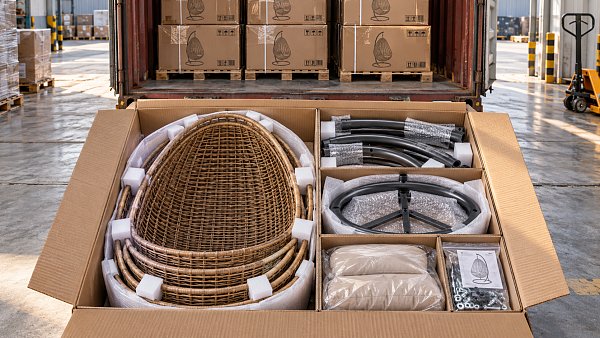
- Packaging for fragile decor supply is becoming part of the product decision, not an afterthought.
This is where a cross-sector lens becomes useful.
A change in coating chemistry can affect sourcing, packaging needs, transit damage rates, and claims handling at once.
So the material conversation in decor supply is really a specification conversation.
Pricing pressure is tighter because cost drivers are no longer moving together
One reason pricing feels difficult in 2026 is that the old pattern of broad, market-wide adjustment is fading.
Instead, decor supply costs are moving by component, source country, finish type, and shipment profile.
That makes quick benchmark comparisons less reliable.
A decor item may appear stable at unit level while hidden costs rise in packaging redesign, energy-intensive finishing, smaller batch production, or compliance documentation.
The market is also seeing a wider spread between entry-level and specification-heavy lines.
Mid-range decor supply is under the most pressure because it has to defend both price and perceived quality.
This means pricing conversations around decor supply should focus less on headline unit cost and more on cost behavior across the order lifecycle.
Lead times are longer, but unpredictability is the more serious issue
Longer lead times are not new.
What stands out in 2026 is how inconsistent lead times have become between similar-looking decor supply categories.
A simple wood-framed item may move quickly, while a fabric-wrapped piece with imported trim can slip without warning.
Decor supply with multi-material construction is especially exposed.
Any delay in a minor component can slow final assembly, packing, and container loading.
More importantly, shorter production visibility makes promised ship dates less dependable.
That creates downstream problems in promotion timing, inventory balancing, and customer expectation management.
Several underlying factors explain the pattern:
- Factories are prioritizing lines with cleaner margins or simpler scheduling.
- Order fragmentation is increasing as buyers avoid large stock commitments.
- Accessory and trim inputs often come from different supply networks than core materials.
- Port and inland transport performance is better than crisis periods, but still uneven by route.
In other words, lead time risk in decor supply is now a coordination issue as much as a capacity issue.
The impact is spreading beyond sourcing into assortment, margin, and market positioning
The direct effect of these shifts is obvious: more pressure on availability and price stability.
The less obvious effect is how they reshape product mix decisions.
Decor supply portfolios built around broad style variety are becoming harder to manage when each finish, size, or trim adds risk.
That is pushing many market players toward fewer, better-supported lines with clearer replenishment logic.
There is also a growing split between impulse decor and project-linked decor supply.
Impulse categories need faster turns and lower commitment.
Project categories can tolerate more planning, but only if specifications stay stable and substitutions are controlled.
The result is a more disciplined approach to assortment.
Decor supply that offers dependable documentation, repeatability, and packaging performance often wins over products with only visual novelty.
This is one reason GSR’s broader light manufacturing coverage matters.
Signals from packaging, hardware, and display components increasingly explain which decor supply lines are truly scalable.
The smarter response is not more inventory, but better visibility
A common reaction to decor supply volatility is to carry more stock.
That can help in selective categories, but it is rarely a complete answer.
Inventory without visibility simply moves risk from late delivery to slow-moving capital.
The stronger approach in 2026 is to improve line-by-line visibility across materials, supplier concentration, packaging needs, and transit sensitivity.
For decor supply, several checkpoints are becoming more valuable:
- Separate core replenishment lines from experimental or seasonal lines.
- Track which SKUs rely on specialized finishes, trims, or imported subcomponents.
- Review whether packaging design still matches current breakage and freight conditions.
- Build pricing models that include compliance, sampling, and delay-related costs.
- Use alternate material mapping before disruptions force rushed substitutions.
These steps do not remove uncertainty, but they make decor supply decisions more intentional.
They also improve conversations with supply partners because trade-offs become easier to quantify.
What to watch next as decor supply moves through the rest of 2026
The next phase of decor supply will likely be shaped by convergence rather than one dramatic swing.
Material innovation, cost scrutiny, and service reliability are starting to matter together.
That changes how strong market positions are built.
Short-term opportunities still exist in trend-led categories, but the more durable advantage comes from knowing which lines can scale without hidden friction.
For anyone tracking decor supply closely, the next useful moves are practical.
Compare material specifications, not just samples.
Recheck lead-time assumptions by component, not just by finished SKU.
Test margin exposure under different freight and delay scenarios.
And keep watching adjacent sectors, because decor supply increasingly reflects a wider manufacturing ecosystem.
That broader view is often where the earliest useful signals appear.
In a market where style moves fast but operational weaknesses surface slowly, disciplined visibility becomes a more reliable advantage than optimism.
Recommended News
 Outdoor FurnitureHow packaging affects freight costs for wholesale wicker egg chairsExplore wicker egg chair wholesale packaging strategies to cut freight costs, improve container loading, and protect profits. Compare packing options for lower landed costs.Interior Sourcing LeadOct 19, 2026
 Supply Chain InsightsHow to use supply chain resilience metrics to assess recovery riskUse supply chain resilience metrics to compare recovery time, survival buffers, and financial exposure. Learn how to assess disruption risk and prioritize mitigation that protects service.Oct 18, 2026
 Commercial LEDHow to assess an LED street light exporter’s warranty coverageAssess an led street lights exporter beyond warranty length. Learn how to verify coverage, uncover hidden costs, and negotiate stronger terms before you buy.Commercial Tech EditorOct 17, 2026
 Carton & PlasticsWhen should you heat seal aluminum foil zipper bags for food storage?When should you heat seal aluminum foil zipper bags? Learn when stronger closures matter, how to protect dry foods, and which sealing checks help ensure reliable storage.Packaging Supply ExpertOct 16, 2026