Industry News
Curation by industry experts
Hot Articles
Popular Tags
US CPSC Tightens Flammability Standards for Furniture Imports
US CPSC Tightens Flammability Standards for Furniture Imports
Introduction
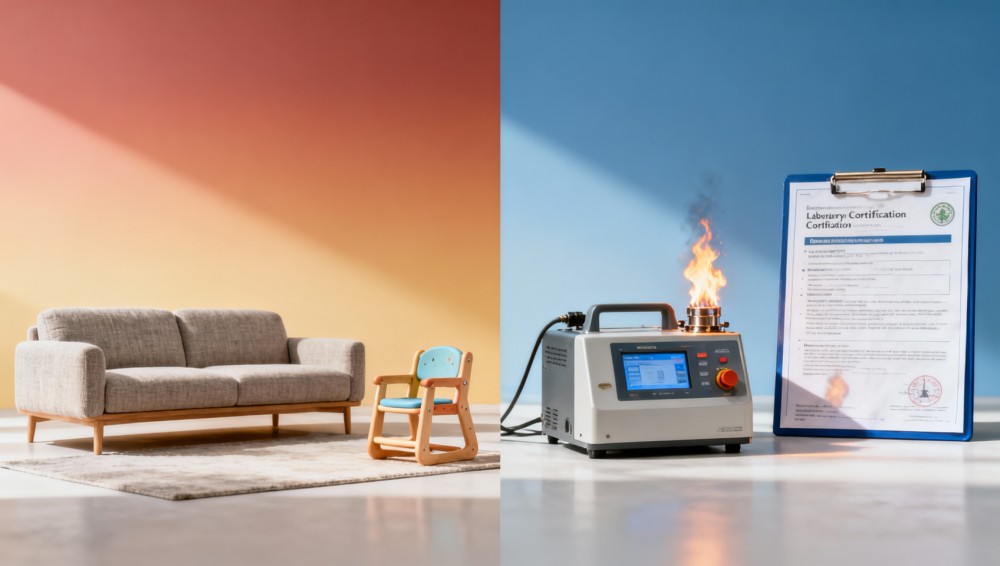
On March 28, 2026, the U.S. Consumer Product Safety Commission (CPSC) issued an urgent compliance notice requiring all imported upholstered furniture (including fabric sofas, padded bed frames, and children's seating) to meet the updated California Technical Bulletin TB 117-2025 standards. The new regulations introduce dual smoldering + open flame testing and PFAS prohibition verification. Products without authorized laboratory reports face port detention and hefty fines. This development significantly impacts furniture exporters, manufacturers, and supply chain stakeholders, necessitating immediate attention to compliance adjustments.
Event Overview
The CPSC's emergency notification mandates that all soft furniture exported to the U.S. must comply with TB 117-2025 starting March 28, 2026. Key updates include:
- Dual testing mode: smoldering and open flame resistance
- PFAS (per- and polyfluoroalkyl substances) prohibition verification
- Requirement for authorized laboratory certification
Non-compliant products will be subject to customs holds and penalties up to $100,000 per violation.
Impacted Sub-Sectors
Direct Exporters
Manufacturers shipping finished products to U.S. retailers face immediate certification challenges. Existing inventory without updated testing may become unsellable, requiring potential product recalls or modifications.
Material Suppliers
Fabric, foam, and chemical suppliers must reformulate products to meet PFAS-free requirements while maintaining fire resistance. This may increase material costs by 15-20% according to preliminary industry estimates.
Testing Laboratories
CPSC-approved labs will experience increased demand for certification services. Current turnaround times may extend from 4 weeks to 8-10 weeks during peak periods.
Key Action Points
Prioritize Compliance Verification
Immediately audit all products against TB 117-2025 requirements. Focus on children's furniture and high-volume items first.
Streamline Certification Process
Establish relationships with CPSC-recognized laboratories. Consider batch testing to reduce per-unit costs.
Review Supply Chain Contracts
Update supplier agreements to include PFAS prohibition clauses and flammability warranties.
Industry Perspective
From an industry standpoint, this regulation represents more than incremental updates - it signals a fundamental shift toward comprehensive chemical safety in furniture manufacturing. While challenging in the short term, the move aligns with global trends toward safer consumer products. Companies that adapt quickly may gain competitive advantage in environmentally conscious markets.
Conclusion
The CPSC's updated standards present both compliance challenges and opportunities for market differentiation. Furniture exporters should treat this as a catalyst for product innovation rather than merely a regulatory hurdle. Proactive adaptation to these requirements can position companies favorably in the evolving U.S. furniture market.
Source Information
Primary source: U.S. Consumer Product Safety Commission (CPSC) official notice dated March 28, 2026. Ongoing monitoring required for potential updates to enforcement timelines or testing protocols.
Recommended News
 Eco PackagingWhat affects the price of kraft paper rolls bought wholesale?Kraft paper rolls wholesale pricing depends on grade, basis weight, roll size, order volume, freight, and certifications. Learn how to compare landed costs and choose reliable value.Packaging Supply ExpertOct 03, 2026
 Commercial LEDHow to evaluate a canopy lights factory before placing a bulk orderCanopy lights factory evaluation guide: verify specifications, compliance, quality control, capacity, and after-sales support before placing a bulk order.Commercial Tech EditorOct 02, 2026
 Commercial LEDHow to choose lighting systems that meet workplace safety needsLighting systems for workplace safety: learn how to control glare, improve visibility, meet environmental demands, and protect workers with reliable, compliant lighting choices.Commercial Tech EditorOct 01, 2026
 Fabrics & YarnsWhat fabric weight works best for reusable non woven fabric bags?Non woven fabric for bags: discover the best GSM range for durability, load capacity, print quality, and cost-effective reusable bag sourcing.Textile Industry AnalystSep 30, 2026