Industry News
Curation by industry experts
Hot Articles
Popular Tags
How to compare wholesale commercial carpet tiles by installed cost
Start with a scope that can actually be compared
A wholesale quote for commercial carpet tiles is only useful when every supplier is pricing the same installed outcome. A low tile price can disappear quickly if the specification requires more site preparation, a higher adhesive consumption rate, additional perimeter cuts, or a larger waste allowance. For procurement teams, the workable comparison unit is usually cost per installed square foot or square metre, documented against a defined area, performance requirement, installation method, and project schedule.
This does not mean the least expensive installed option is always the right award decision. A tile that costs slightly more to install may reduce replacement disruption, spare-stock requirements, or cleaning expense over the life of a busy office, education, hospitality, retail, or public-facing site. But those benefits should be tied to the operating conditions of the facility, not assumed from a brand name, fibre description, or sustainability claim.
Before inviting quotations, issue a brief bid sheet that fixes the variables suppliers otherwise interpret differently. It should identify the net floor area, room layout, subfloor condition, required tile format, installation pattern, access restrictions, working hours, handover date, expected traffic level, and any requirements for indoor air quality, fire performance, static control, acoustics, or environmental documentation. A quote that excludes an unknown condition is not necessarily weak; it is often more credible than one that quietly prices an optimistic assumption.
Build the installed-cost calculation from the floor up
The product price is visible, while installation costs are often scattered between a flooring contractor, a general contractor, a logistics provider, and the supplier. Bringing them into one calculation makes quote differences easier to explain internally and harder to obscure during negotiation.
A practical calculation can be expressed as:
Installed cost = material + freight and handling + waste + subfloor preparation + adhesive/fixation + installation labor + accessories + contingency for defined site risks.
The formula is simple. The discipline comes from identifying whether each figure is fixed, estimated, excluded, or dependent on a site condition. Procurement should ask bidders to label every exclusion and qualification beside the cost line, rather than burying them in commercial terms.
Do not compare tile prices before checking the specification
Two carpet tiles may appear similar in a sample board yet produce different installed costs and service outcomes. The relevant question is whether each proposed product meets the performance needs of the specific floor area. A reception zone, call centre, meeting suite, hotel corridor, and low-traffic executive office should not automatically receive the same specification.
For a like-for-like comparison, record the construction details that affect durability, handling, fitting, and replacement. These commonly include fibre type, pile construction, pile weight where specified, backing type, total thickness, tile stability, edge appearance, moisture tolerance within the approved installation system, and the manufacturer’s documented maintenance requirements. The goal is not to create a long technical checklist for its own sake. It is to prevent a supplier from winning on price by offering a tile designed for a less demanding use case.
Backing construction deserves particular attention. It can influence dimensional stability, comfort underfoot, acoustic performance, handling weight, and the ability of tiles to lie flat under expected site conditions. A heavier or more robust backing may increase freight and material cost but reduce movement or edge issues in an appropriate application. That trade-off must be assessed against the actual installation environment, including temperature control, direct sunlight, raised-floor systems, rolling loads, and the condition of the substrate.
Pattern and format also influence the installed number. A standard modular tile laid in a straightforward quarter-turn or monolithic pattern is usually easier to estimate than a directional design requiring consistent alignment across corridors, open-plan zones, and doorways. Patterned products can create more cuts and more visible consequences from inconsistent installation. When a design intent is important, obtain a layout drawing or installation plan before treating waste and labor assumptions as comparable.
Waste is not a procurement failure when it is visible
Buyers often focus on reducing the waste percentage because it is easy to see in a quote. The better question is whether the allowance reflects the project. Ordering too little can lead to a more expensive outcome than ordering a sensible overage, particularly when a replacement order carries minimum quantities, a different dye lot, expedited freight, or a programme delay.
Separate three requirements that are often combined under one waste figure:
- Installation cutting allowance: material consumed around walls, columns, penetrations, irregular rooms, and transitions.
- Pattern and layout allowance: additional quantity required to maintain direction, match a design, or manage complex geometry.
- Operational spare stock: retained tiles for future spot replacement after stains, damage, or access works.
These quantities serve different purposes and should be approved differently. Installation waste is part of completing the current project. Spare stock is an asset retained by the occupier or facilities team. It should be labeled, stored in suitable conditions, and linked to room records or floor plans. Treating spare stock as hidden waste makes future maintenance less controlled and encourages teams to discard useful matching inventory after handover.
For commercial carpet tiles wholesale purchases, packaging quantities matter as well. Suppliers may sell in cartons that cover a fixed area. Rounding up to full cartons can create a small but unavoidable variance from the calculated area. Ask suppliers to state carton coverage and whether mixed cartons, partial-carton orders, or a separate attic-stock order are available. This is especially relevant for phased projects where late additions may be needed after the primary order has shipped.
Subfloor and adhesive assumptions can overturn the initial ranking
Commercial carpet tile systems are often presented as fast and straightforward to install. That can be true on a clean, dry, level, properly prepared substrate. It is not a substitute for understanding the floor beneath the tile.
Subfloor moisture, surface contamination, unevenness, residual adhesive, cracks, raised access panels, and failed existing finishes can change the scope materially. A supplier’s product recommendation should be aligned with the selected adhesive or fixation system and the substrate preparation required by that system. Avoid accepting a broad statement that a tile is “suitable for concrete” or “easy to install” without confirming the preparatory conditions and approved materials.
Assign responsibility for substrate assessment early. If a flooring contractor is expected to price preparation, require a site survey or clear assumptions about the condition being priced. If the general contractor controls the slab, define the acceptance criteria and timing for handover. Without this division, a seemingly complete installed quote may become a dispute once installation begins.
Adhesive choices also affect the future. Some systems support easier tile removal and replacement, while others may provide a different level of fixation or require longer cure periods. Neither is inherently better. In a high-churn office where access to underfloor services and local tile replacement are expected, removability may have real operational value. In other spaces, the relevant concern may be resistance to movement under rolling traffic or high pedestrian use. The product, adhesive, substrate, and use condition must be treated as one system.
Make labor quotes reflect the way the building will be occupied
Labor is rarely a flat percentage of material cost. It depends heavily on access and programme. An empty floor plate with clear delivery access and normal working hours can be installed far more efficiently than an occupied building requiring night work, phased handover, furniture relocation, security clearance, dust control, and daily reinstatement.
Request that installation quotes state the assumed productivity basis and list allowances for site restrictions. Areas that commonly need separate treatment include stairs, small rooms, curved perimeters, server rooms, elevator lobbies, door thresholds, floor boxes, raised access panels, and interface details with other flooring. A contractor may reasonably price these at a higher labor rate than open areas, but the distinction should be visible.
Programme risk belongs in the commercial evaluation too. A supplier offering a lower material price with a longer or uncertain lead time may create costs elsewhere if the project requires expedited transport, temporary flooring, delayed furniture installation, or extended contractor attendance. Compare promised delivery dates with the date material must be available on site, allowing for customs clearance, inspection, storage, and the sequence of preceding trades. The relevant date is installation readiness, not factory dispatch.
Use lifecycle cost selectively, not as a vague premium justification
Lifecycle arguments are useful when they can be connected to foreseeable operating conditions. Carpet tile has an advantage in many commercial environments because damaged sections can often be replaced locally instead of removing a broad expanse of flooring. That advantage depends on the availability of matching tiles, the compatibility of the replacement with the original installation system, and the facilities team’s ability to identify the correct product and location.
Maintenance requirements should be requested with the quote, particularly for spaces exposed to soil, moisture at entrances, food and beverage use, or dense traffic. Consider whether the specified finish and colorway will show soil quickly, whether entrance matting is included in the wider flooring strategy, and whether cleaning equipment and procedures match the product’s requirements. A tile selected solely for its low purchase price can impose a higher appearance-maintenance burden on the occupier.
Warranty language should be read alongside the installation requirements. Coverage may depend on approved adhesives, moisture limits, maintenance practices, or installation by qualified personnel. A warranty is most valuable when the procurement record proves that the approved system was used and that responsibility for any site-condition failure is understood before work starts.
A practical award method for procurement teams
After normalizing the quotations, create an evaluation sheet with three columns: compliant installed cost, commercial risk, and operating fit. Compliant installed cost should include every cost required to hand over the stated floor area. Commercial risk should capture exclusions, lead-time uncertainty, unclear freight terms, untested site assumptions, and dependency on a sole-source adhesive or accessory. Operating fit should assess the product against the planned traffic, maintenance capability, replacement strategy, appearance expectation, and documented project requirements.
Suppliers should then be asked to revise their bids against the same scope rather than being pushed immediately for a lower unit price. This often reveals whether a price difference comes from genuine supply efficiency or from omitted work. It also produces a cleaner basis for negotiation: freight may be consolidated, storage may be adjusted, spare stock may be separated from installation waste, or a costly design feature may be reconsidered with the project team.
The best comparison of commercial carpet tiles wholesale options is therefore not a spreadsheet ranked by price per tile. It is a documented view of what each bidder will deliver, what conditions must exist for that price to hold, and what the organization will carry after installation. When those points are explicit, procurement can choose a lower-cost option with confidence or justify a higher-cost specification where the installed and operating case genuinely supports it.
Recommended News
 Home DecorCIFF Guangzhou Sets March 2027 Dates, Focusing on Quality, Innovation and Industry ValueCIFF Guangzhou 2027 runs March 18–21 and 28–31, spotlighting furniture quality and innovation. Explore key sourcing insights to plan visits, compare suppliers and prepare smarter purchasing decisions.Interior Sourcing LeadOct 27, 2026
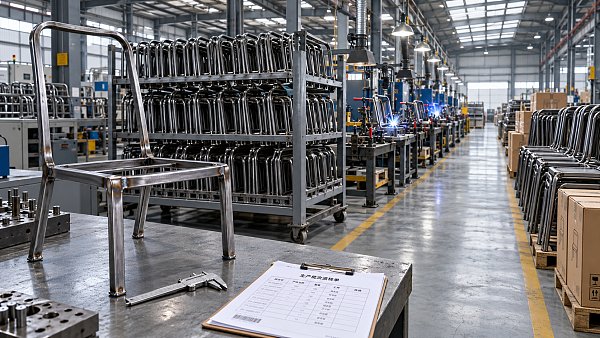
 Supply Chain InsightsHow to verify a metal furniture factory's production capacityVerify a metal furniture factory's production capacity with proven output records, bottleneck checks, and realistic schedules. Learn how to reduce sourcing risks and protect delivery deadlines.Oct 27, 2026
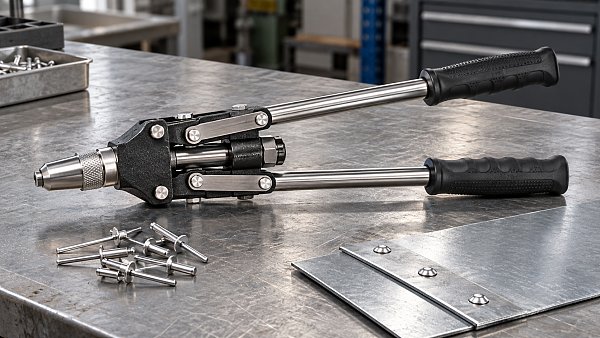
 Hand & Power ToolsDo you need a long handle rivet gun for stainless steel rivets?Need a long handle rivet gun for stainless steel rivets? Discover when extra leverage helps, which tool ratings matter, and how to choose the right riveter for your job.Tooling & Hardware LeadOct 26, 2026
 Textile MachineryItalian Textile Machinery Orders Rise 7% in Q3 2026 as Overseas Demand LeadsItalian textile machinery orders rose 7% in Q3 2026 as overseas demand climbed 8% and domestic orders fell 4%. Explore ACIMIT's figures and what they mean for manufacturers.Textile Industry AnalystOct 25, 2026