Industry News
Curation by industry experts
Hot Articles
Popular Tags
Milaner's Booth Crowded at Guangzhou Customization Fair, 'Trust Economics' Emerges as New Selection Logic for Overseas Buyers
Milaner's Booth Crowded at Guangzhou Customization Fair, 'Trust Economics' Emerges as New Selection Logic for Overseas Buyers
Introduction
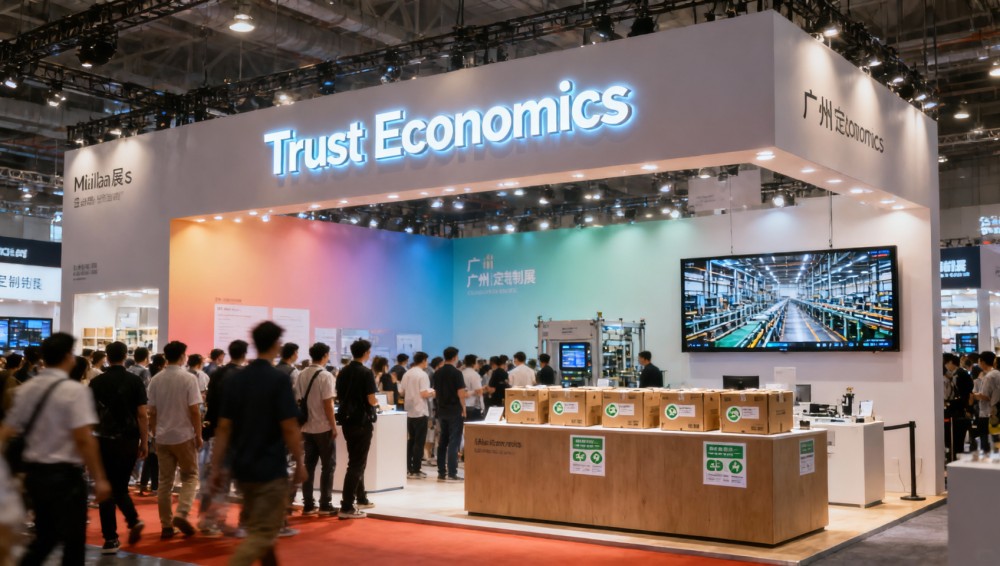
On March 27, 2026, the Guangzhou Customization Fair witnessed an overwhelming response at Milaner's exhibition booth, highlighting a shift in overseas buyers' selection criteria. The event underscored the growing importance of 'trust economics,' driven by tools like factory livestreams, BIM delivery packages, and carbon footprint labels. This development is particularly relevant for manufacturing, export-oriented businesses, and supply chain service providers, as 72% of overseas B2B clients now prioritize verifiable digital delivery capabilities as a prerequisite for supplier selection.
Event Overview
The 2026 Guangzhou Customization Fair, held on March 27, showcased Milaner and other brands leveraging transparency tools to enhance buyer confidence. Key demonstrations included real-time factory production monitoring via livestreams, BIM-integrated order tracking systems, and product-level carbon emission disclosures. Verified data indicates these innovations directly contributed to a measurable increase in procurement intent among European and North American buyers during the event.
Impact on Specific Industries
Export Manufacturing Enterprises
The requirement for digital verification capabilities necessitates immediate upgrades in production monitoring systems and data integration platforms. Manufacturers without IoT-enabled production lines may face exclusion from premium procurement channels.
Supply Chain Service Providers
Logistics partners must develop API interfaces for real-time shipment data sharing, as buyers now demand embedded tracking within BIM delivery packages. This affects freight forwarders and warehouse operators alike.
Raw Material Suppliers
Upstream suppliers face pressure to provide digitized material certificates and carbon accounting data, as these factors now directly influence downstream buyers' selection algorithms.
Key Focus Areas and Recommended Actions
Prioritize Digital Verification Infrastructure
Invest in blockchain-based documentation systems or third-party audit integrations to meet the 72% procurement requirement threshold identified in buyer surveys.
Develop Transparent Production Narratives
Implement visual documentation systems (e.g., 360° factory tours) that align with the 'trust economics' paradigm demonstrated as effective at the Guangzhou event.
Prepare for Carbon Disclosure Requirements
Initiate product-level LCA (Life Cycle Assessment) studies, as carbon footprint labeling proved to be a decisive factor for European buyers at the exhibition.
Editorial Perspective
From an industry standpoint, this event signals more than a temporary trend. The convergence of digital verification demands and sustainability expectations appears to be crystallizing into a new operational standard for cross-border trade. While the Guangzhou exhibition provided concrete examples of implementation, the broader adoption curve across global supply chains remains to be observed. What's clear is that transparency tools are transitioning from competitive advantages to baseline requirements in international procurement.
Conclusion
The 2026 Guangzhou Customization Fair has demonstrated a measurable shift in global procurement priorities, with verifiable transparency emerging as a critical success factor. For industry participants, this development represents both a challenge in operational adaptation and an opportunity to differentiate through credible digital integration. The current phase should be understood as a transitional period where early adopters of trust-building technologies may gain disproportionate access to premium procurement channels.
Source Information
Primary source: On-site reporting from Guangzhou Customization Fair (March 27, 2026)
Supplementary data: Exhibitor-provided buyer survey results (sample size: 320 international procurement professionals)
Pending verification: Long-term impact assessment of transparency tools on order conversion rates requires follow-up data collection.
Recommended News
 Eco PackagingWhat affects the price of kraft paper rolls bought wholesale?Kraft paper rolls wholesale pricing depends on grade, basis weight, roll size, order volume, freight, and certifications. Learn how to compare landed costs and choose reliable value.Packaging Supply ExpertOct 03, 2026
 Commercial LEDHow to evaluate a canopy lights factory before placing a bulk orderCanopy lights factory evaluation guide: verify specifications, compliance, quality control, capacity, and after-sales support before placing a bulk order.Commercial Tech EditorOct 02, 2026
 Commercial LEDHow to choose lighting systems that meet workplace safety needsLighting systems for workplace safety: learn how to control glare, improve visibility, meet environmental demands, and protect workers with reliable, compliant lighting choices.Commercial Tech EditorOct 01, 2026
 Fabrics & YarnsWhat fabric weight works best for reusable non woven fabric bags?Non woven fabric for bags: discover the best GSM range for durability, load capacity, print quality, and cost-effective reusable bag sourcing.Textile Industry AnalystSep 30, 2026