Industry News
Curation by industry experts
Hot Articles
Popular Tags
How to Choose Patio Umbrellas for Restaurants Based on Wind Rating and Coverage
Choosing patio umbrellas for restaurants sounds simple until the first windy service knocks one over, a base cracks, or guests spend half the afternoon chasing shade that never lands where the tables are. In practice, this is less a décor decision and more a risk-and-coverage calculation. The right specification affects seat usability, staff setup time, replacement cycles, and, in some locations, basic safety compliance.
For buyers comparing patio umbrellas for restaurants across multiple sites, wind rating and coverage are the two numbers that deserve the most scrutiny. Color, branding, and fabric finish still matter, but they should come after the structural questions. A good-looking umbrella that cannot stay open in normal operating conditions is just an expensive maintenance issue.
Start with the site, not the catalog
The biggest procurement mistake is choosing by canopy size alone. A 3m square model may look ideal on paper, but that says very little about how it performs on an exposed rooftop, a sidewalk café between buildings, or a poolside terrace with open fetch. Wind behavior changes dramatically by setting. Even two restaurant locations in the same city can require different umbrella specs.
Before comparing suppliers, it helps to document a few operational facts:
- Is the site open, corner-exposed, elevated, or partially shielded?
- Will umbrellas stay installed daily, or be opened and closed every service?
- Are tables fixed, frequently reconfigured, or pushed together for larger parties?
- Is the goal full-table shade at peak lunch, ambient coverage, or light rain protection?
- Can the deck or slab accept anchor mounts, or must everything be freestanding?
Those answers shape almost every downstream decision: mast diameter, rib construction, base weight, tilt function, and even whether center-post umbrellas are practical at all. In sourcing terms, this is where furniture, hardware, and outdoor-use performance intersect. It is also why B2B buyers increasingly rely on cross-category intelligence rather than treating outdoor umbrellas as a standalone décor purchase. That broader evaluation model is one reason platforms like Global Supply Review have become useful to procurement teams managing mixed material categories and performance-driven commercial selections.
What a wind rating really tells you—and what it does not
Wind rating is often presented as a headline spec, but buyers should read it carefully. Manufacturers may state that an umbrella is “rated” to a certain wind speed, yet the fine print matters: was it tested open or closed, with which base, under what mounting condition, and in what configuration? A canopy mounted permanently into concrete is not equivalent to the same canopy sitting in a movable base on pavers.
A wind rating is most useful when it is tied to a complete assembly. That means frame, ribs, hub, mast, base or anchor method, and sometimes the fabric tension system. If a supplier quotes a number without clarifying the setup, treat it as incomplete. Commercial buyers should ask for test context or technical documentation, especially for exposed sites.
It is also worth remembering that “survival” in wind is different from “operational use” in wind. An umbrella may remain structurally intact under a certain condition but still flap, distort, or become uncomfortable for guests well before that point. In restaurant use, the practical question is not just whether the product avoids failure. It is whether it can stay open during real service hours without constant staff intervention.
Details that usually matter more than the headline number
- Frame material and wall thickness, not just “aluminum” or “steel” as broad labels
- Rib design and joint strength, which often determine fatigue performance over time
- Vent configuration, since vented canopies can reduce uplift but do not eliminate risk
- Base engineering or anchoring method
- Whether replacement parts are available for ribs, hubs, and canopies
That last point gets overlooked. In commercial hospitality, repairability can matter more than the initial unit cost. If one rib fails and the only remedy is replacing the entire umbrella, the lifecycle economics change quickly.
Coverage is about usable shade, not maximum diameter
Restaurant buyers sometimes focus on how many square meters an umbrella canopy covers in theory. In operation, usable shade is affected by sun angle, table shape, mast placement, and circulation paths. A large round umbrella can still leave two guests in direct sun at 4 p.m. if the table is offset or the seating layout is tight.
Square and rectangular canopies often make space planning easier for dining layouts because tables are usually arranged in grids, not circles. They can also reduce overlap gaps between adjacent umbrellas. Round models may work well for small clusters or lounge seating, but they are not always the most efficient option for maximizing revenue-generating seats.
There is a trade-off, though. Larger canopies increase sail area. That usually means higher wind load and heavier base requirements. Buyers who push for fewer, larger umbrellas to simplify the look of a terrace may end up with a system that is harder for staff to manage and more vulnerable in gusty conditions.
A practical way to evaluate coverage is to map the actual table footprint plus chair pull-out zone, not just the tabletop. If guests are shaded but servers constantly bump into oversized bases or protruding ribs, the layout is still underperforming.
Center-post, cantilever, or anchored system?
Each format solves a different problem. Center-post umbrellas are usually the most straightforward for standard dining tables with center holes. They tend to be easier to source, easier to service, and often more predictable in wind when properly based. For many restaurant patios, they remain the default commercial choice for good reason.
Cantilever umbrellas free up space underneath and can create a cleaner guest experience, especially for lounge or banquette seating. But they place more engineering demand on the support structure and base. Buyers should be cautious about using cantilever formats in very exposed conditions unless the system is clearly designed for commercial wind performance and the installation method is robust.
Anchored systems, including bolt-down bases or integrated ground mounts, usually make the most sense for permanent outdoor dining zones where layout will not change often. They reduce trip hazards from oversized portable bases and can support higher-performance configurations. The drawback is reduced flexibility and a more involved installation process that may require landlord approval or local review.
Fabric matters, but not in the way many buyers expect
In procurement discussions, fabric conversations often drift immediately to colorfastness and brand appearance. Those are valid concerns, especially for hospitality groups with image standards. Still, from an operational standpoint, fabric tension, seam quality, and replacement lead time can be just as important.
A premium canopy fabric will not compensate for a weak frame. On the other hand, a strong frame paired with fabric that fades quickly or is hard to replace can create avoidable mid-season problems. For restaurant use, ask whether replacement canopies are stocked, made to order, or tied to long lead times. In global sourcing, that distinction matters. A small component delay can sideline a whole patio section during peak months.
This is where broader supply chain visibility becomes useful. Buyers are no longer just comparing unit prices; they are evaluating continuity of parts, material consistency, and vendor responsiveness across furniture and décor categories. That sourcing reality sits squarely within the type of market coverage GSR focuses on: not just what a product is, but how reliably it can be specified, supplied, and supported.
Questions worth asking suppliers before you approve a PO
Good commercial umbrella sourcing usually comes down to asking a few unglamorous questions early.
- What base weight or anchor system is required for the exact canopy size quoted?
- Is the wind rating tied to a freestanding base, in-table support, or permanent mounting?
- Are spare ribs, hubs, lift mechanisms, and canopies available separately?
- What is the recommended operating protocol for windy days?
- Do opening and closing mechanisms hold up to repeated daily use?
- Can the supplier provide assembly drawings or dimensional data for spacing plans?
If those answers are vague, the risk usually shifts to the buyer. A restaurant umbrella is a commercial-use item with moving parts and environmental exposure. It should be specified like equipment, not just selected like seasonal décor.
Common buying errors that show up later
One common error is underestimating the total footprint. Buyers approve a canopy size, then discover the base conflicts with chair legs, host circulation, or ADA-sensitive pathways. Another is assuming all vented umbrellas are suitable for windy sites. Venting helps, but it is not a free pass for poor structural design.
There is also a tendency to mix residential-grade and commercial-grade products within the same project because they look similar in photos. That usually becomes obvious only after a season of opening, closing, cleaning, and weather exposure. Procurement teams managing multiple locations are generally better served by standardizing around fewer, supportable SKUs than by chasing cosmetic variety.
And then there is lead time. Outdoor programs are often approved too late, especially when branding, custom fabric, or imported components are involved. If replacement parts are not available domestically, even small failures can take longer to fix than operators expect.
A sensible decision framework
If the goal is to reduce sourcing risk, work in this order: site exposure, mounting method, coverage layout, frame specification, then fabric and finish. That sequence keeps the decision grounded in performance. It also makes supplier comparisons cleaner, because you are evaluating complete systems rather than isolated visual features.
For most restaurant patios, the best choice is not the umbrella with the largest canopy or the highest advertised wind claim. It is the model whose real operating limits match the site, whose shade pattern matches the seating plan, and whose parts can be supported after installation. That sounds obvious, but many purchasing problems begin when those three factors are reviewed separately instead of together.
If you are comparing patio umbrellas for restaurants across several vendors, ask each one to quote the same use case: same exposure assumption, same mounting method, same table layout, same service pattern. Once those variables are aligned, the right option usually becomes much easier to spot—and a lot harder to regret halfway through the season.
Recommended News
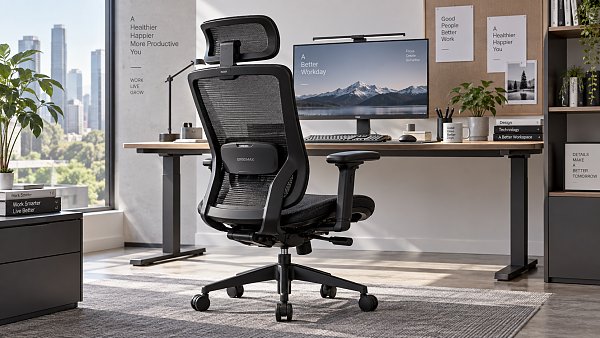
 Office FurnitureWhich high back ergonomic office chairs fit all-day desk work?High back ergonomic office chairs for all-day desk work: compare lumbar support, seat depth, armrests, recline, and materials to find a better fit.Interior Sourcing LeadSep 21, 2026
 Commercial LEDWhen does a 200W linear high bay provide enough light for a warehouse?Discover when a 200W linear high bay delivers sufficient warehouse lighting, with practical guidance on lumens, mounting height, aisle layout, and uniformity.Commercial Tech EditorSep 20, 2026
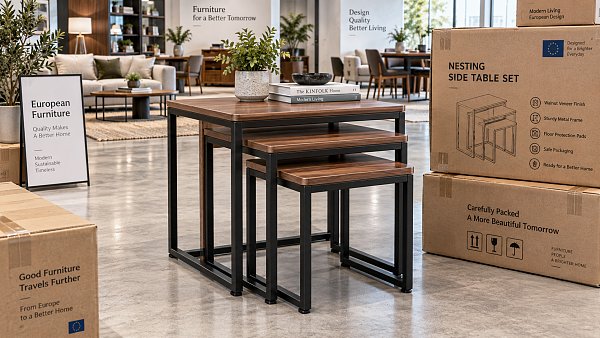
 Home DecorWhat to check before ordering wholesale nesting side tables in EuropeWholesale nesting side tables Europe: assess materials, stability, compliance, packaging, landed cost, and supplier reliability before ordering with confidence.Interior Sourcing LeadSep 19, 2026
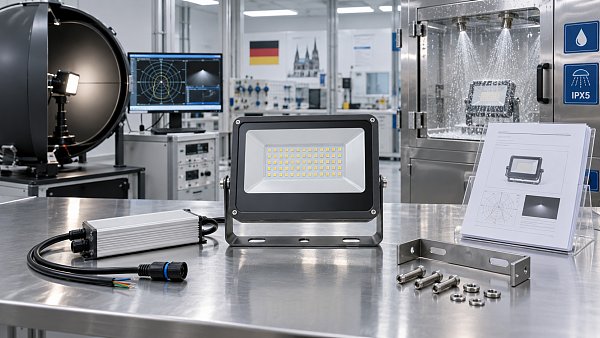
 Commercial LEDHow to verify product compliance when sourcing lighting suppliers in GermanyLighting suppliers Germany: learn how to verify CE evidence, test reports, labels, environmental declarations, and production controls before approving orders.Commercial Tech EditorSep 18, 2026