Industry News
Curation by industry experts
Hot Articles
Popular Tags
Wuxi Expo Signals New Export Demand for Bridal Retail Tech
On June 24, 2026, the 12th Yangtze River Delta International Cross-Border Industry Expo opened in Wuxi and introduced a dedicated zone for smart bridal experience equipment, highlighting a practical shift in procurement rules for export-facing bridal retail. For device makers, bridal suppliers, buyers, channel operators, and after-sales service providers, the key issue is not only product visibility but the growing need to treat smart display hardware as a core purchasing category with clearer expectations around compliance documentation, delivery coordination, technical specifications, and cross-border service readiness.
A New Procurement Signal from the Wuxi Exhibition Floor
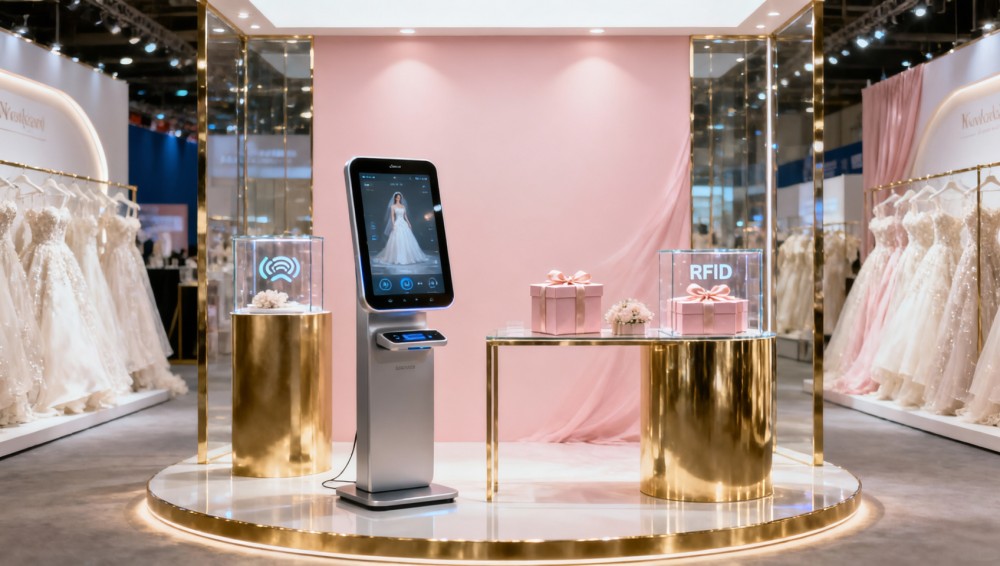
The expo opened on June 24, 2026 as the 12th Yangtze River Delta International Cross-Border Industry Expo in Wuxi. According to the provided event summary, the show set up a dedicated section for smart bridal experience equipment for the first time. The products presented included domestic AR virtual try-on mirrors, AI size-matching terminals, and RFID-enabled smart gift box display systems. The same summary states that more than 120 overseas bridal chains, buyer stores, and exhibition organizers signed agreements on site. It also states that the event sent a clear signal that smart hardware is moving from an auxiliary tool to a core procurement category in bridal retail.
Why This Matters Across the Trading Chain
For equipment manufacturers, product approval may become part of the sales gate
From an industry perspective, once smart display equipment is treated as a core procurement item rather than a store accessory, manufacturers may face closer review of technical files, product specifications, operating safety, and consistency of delivered units. The impact is likely to appear first in bid documents, buyer qualification checks, shipment preparation, and after-sales commitments. What deserves closer attention is whether purchasers begin to request more standardized certification records, test materials, user documentation, or traceability files before placing repeat orders.
For bridal retailers and overseas buyers, sourcing criteria may become more structured
Analysis shows that buyers signing at a cross-border expo are not only selecting products but also testing whether suppliers can support installation, operation, maintenance, and replacement in a retail setting. For bridal chains, buyer stores, and exhibition organizers, the practical effect may be a shift from visual selection to specification-based procurement. That can influence purchasing plans, delivery schedules, acceptance standards, and service terms, especially where smart mirrors, AI sizing terminals, or RFID systems need to work reliably in customer-facing environments.
For export and supply chain service providers, delivery responsibility becomes broader
Observably, if smart bridal hardware is increasingly purchased as a main retail asset, export service providers may need to pay closer attention to packing lists, technical descriptions, installation support materials, warranty records, and product identity management across shipments. The effect is not limited to customs movement; it can extend to handover standards, replacement part coordination, and service response expectations after delivery. This is particularly relevant where hardware, software functions, and display systems are delivered together.
What Companies Should Watch Next
Check whether compliance materials match the new purchasing role
It is more appropriate to understand the expo signal as a prompt for companies to review whether their current compliance and technical documentation are sufficient for a core procurement category. Firms involved in AR fitting devices, AI sizing terminals, and RFID display systems should pay attention to whether buyers begin asking for clearer product descriptions, operating instructions, quality records, testing materials, or certification-related documents during inquiry and contracting stages.
Track how procurement language changes in buyer requests
Analysis shows that the most immediate market change may appear in RFQs, procurement checklists, technical annexes, and event supply requirements rather than in a formal policy text. Companies should therefore monitor whether future buyer requests place greater emphasis on system stability, compatibility, maintenance terms, delivery timing, or traceability support. The current information does not confirm a unified execution standard, so this remains an area to watch rather than a settled rule.
Prepare for tighter coordination between shipment and after-sales service
Where smart equipment becomes part of the main retail setup, delivery may no longer end with export dispatch. Companies should watch for rising expectations around installation guidance, user training materials, fault response procedures, and replacement workflows. This is especially relevant for suppliers whose products combine physical hardware with digital functions, because procurement decisions may increasingly assess service capability alongside the device itself.
Review supplier qualification and delivery reliability
Observably, buyers treating smart devices as a central purchasing item may look beyond product demos and examine whether a supplier can maintain stable output, document consistency, and post-sale support. Businesses should therefore assess whether their current supplier qualification files, product version controls, and order fulfillment processes are ready for more formal cross-border purchasing reviews.
How the Market Signal Should Be Read
Analysis shows that this development is better read as an execution signal from the market than as proof of a fully defined new rule set. The first-time creation of a dedicated smart bridal equipment zone, together with on-site signing activity, suggests that procurement behavior is evolving and that commercial expectations may be moving faster than formalized guidance. What deserves closer attention is whether this signal is later reflected in certification practices, buyer documentation, tender language, service clauses, and follow-up industry feedback.
A Shift in Category Status, Not Yet a Final Rulebook
In practical terms, the Wuxi event points to a category upgrade: smart bridal display and experience equipment is being treated more seriously in export-oriented retail purchasing. That does not by itself establish a new regulation, but it does indicate a stronger market basis for tighter compliance review, more detailed procurement requirements, and broader delivery obligations. At this stage, it is more appropriate to understand the news as a credible market-facing signal that businesses should prepare for, while continuing to watch how execution standards and buyer expectations develop.
Basis of This Article and What Still Needs Verification
This article is generated from the user-provided news title, event date, and event summary. For events of this kind, relevant source types typically include official expo announcements, regulator releases, customs or trade authority information, industry association updates, standards organization documents, and reporting by established trade media. No specific official source link was provided in the input, so the exact official reference remains to be verified. Follow-up attention should remain on possible policy details, certification interpretations, procurement document changes, industry feedback, and actual execution by participating companies.
Recommended News
 Home DecorHow to compare floating wall shelves suppliers for consistent load capacityFloating wall shelves supplier comparison guide: evaluate load capacity, brackets, wall fixings, testing, and production consistency before you buy.Interior Sourcing LeadSep 23, 2026
 Office FurnitureWhen does a custom executive office desk justify its higher cost?Discover when a custom executive office desk is worth the investment—from tailored layouts and integrated technology to durable materials and long-term value.Interior Sourcing LeadSep 22, 2026
 Office FurnitureWhich high back ergonomic office chairs fit all-day desk work?High back ergonomic office chairs for all-day desk work: compare lumbar support, seat depth, armrests, recline, and materials to find a better fit.Interior Sourcing LeadSep 21, 2026
 Commercial LEDWhen does a 200W linear high bay provide enough light for a warehouse?Discover when a 200W linear high bay delivers sufficient warehouse lighting, with practical guidance on lumens, mounting height, aisle layout, and uniformity.Commercial Tech EditorSep 20, 2026