Industry News
Curation by industry experts
Hot Articles
Popular Tags
Wuxi Trade Fair Highlights Wedding Display Tech Exports
From June 17 to 19, 2026, the Yangtze River Delta Cross-Border E-Commerce Trade Fair in Wuxi opened a dedicated "Smart Display for Wedding" zone for the first time, bringing wedding photography display hardware into sharper industry focus. The combination of on-site orders exceeding US$21 million and a high share of products meeting both UL62368-1 and IEC60598 standards makes this development relevant not only for device makers, but also for channel buyers, cross-border sellers, compliance teams, and overseas wedding photography studios evaluating digital showroom upgrades.
A New Category Took Shape at the Wuxi Fair
According to the event information provided, the Wuxi edition of the Yangtze River Delta Cross-Border E-Commerce Trade Fair ran from June 17 to 19, 2026 and, for the first time, set up a dedicated exhibition area themed around smart display solutions for wedding use.
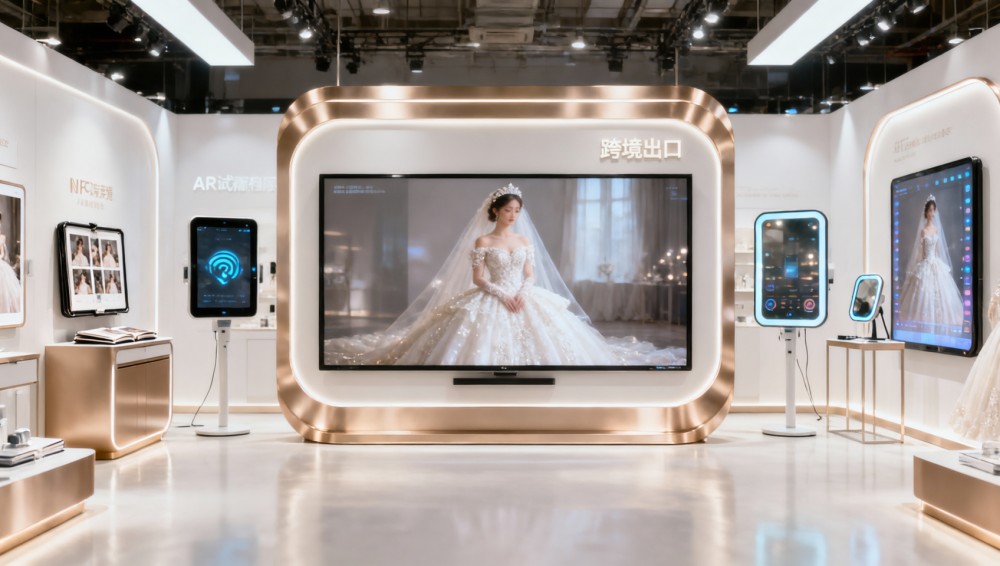
The zone presented 12 categories of wedding photography smart hardware, including NFC-enabled interactive albums, AR try-on mirrors, and AI lighting simulation screens. Among the exhibits, 73% were stated to meet both UL62368-1 and IEC60598 certification requirements.
The same event information shows that mainstream channel distributors from the United States, Japan, and Australia placed on-site orders worth more than US$21 million. The summary also indicates that overseas wedding photography studios are accelerating investment in digital display infrastructure.
Why Different Market Participants Are Watching This Closely
For manufacturers, certification is moving closer to the sales front
From an industry perspective, manufacturers of wedding display hardware may be affected first because the event highlights a direct connection between product readiness and export conversion. The visible share of dual-compliant products suggests that technical compliance is not separate from commercial discussion; it is part of the sales proposition in cross-border channel development.
What deserves closer attention is whether product design, testing documentation, and model planning are aligned early enough for overseas channel conversations, especially when buyers are making decisions on site.
For distributors and cross-border sellers, category definition is becoming clearer
Analysis shows that channel-side participants may view this not simply as demand for individual devices, but as demand for a more defined product group tied to wedding studio display upgrades. That matters for assortment planning, pricing structure, and how sellers explain use cases to professional buyers.
The main business impact may appear in product selection, buyer education, and after-sales preparation, particularly where hardware involves interactive or visual simulation functions.
For overseas studios, procurement may shift from decoration to infrastructure
Observably, the event summary points to a change in how wedding photography studios abroad are approaching their display environments. If studios are upgrading digital presentation infrastructure, procurement decisions may increasingly focus on how equipment supports client experience in the showroom rather than serving only a decorative role.
For end users, the key change to watch is whether purchasing priorities move toward integrated display tools such as interactive albums, virtual try-on functions, and lighting simulation equipment.
What Companies Should Track After the Fair
Watch how standards are used in actual buyer conversations
Analysis shows that the reported share of products meeting both UL62368-1 and IEC60598 deserves close follow-up. Companies involved in export, sourcing, or channel development should pay attention to how these standards are being requested, presented, and compared in real transactions, rather than treating certification as a background item.
Separate headline order value from delivery execution
What deserves closer attention is the difference between on-site ordering momentum and later-stage fulfillment. For suppliers and service teams, practical issues may include order confirmation, product documentation, delivery timing, and customer communication for buyers in the United States, Japan, and Australia.
Focus on the product groups that buyers are validating now
The event information specifically mentions NFC interactive albums, AR try-on mirrors, and AI lighting simulation screens. For companies evaluating product direction, these named categories provide a concrete signal about which smart display formats are currently drawing channel attention.
Prepare materials that support cross-border procurement decisions
From an operational perspective, suppliers may need to strengthen specification sheets, compliance files, and communication materials that explain usage scenarios clearly. This is especially relevant when the target customer is not a general consumer, but a professional studio or distribution buyer assessing equipment for business use.
How This Signal Should Be Read Now
Observably, this development is better understood as a strong category signal rather than a final industry conclusion. The first-time launch of a dedicated wedding smart display zone, the concentration of product types, and the order results together suggest that this niche is receiving more structured international demand attention.
At the same time, analysis shows that one fair does not by itself confirm long-term market stability, repeat purchase patterns, or standardized procurement behavior across all regions. The more useful reading at this stage is that digital display hardware for wedding photography has moved closer to mainstream cross-border commercial discussion.
A Practical Reading of the Event
In summary, the Wuxi event points to a more visible intersection between wedding photography equipment, digital display technology, and cross-border channel buying. The confirmed facts support the view that overseas buyers are already placing commercial attention on this segment, while the compliance profile of the exhibits shows that market access requirements remain central.
It is more appropriate to understand this as an actionable industry development with longer-term implications that still require observation, especially around repeat orders, delivery follow-through, and how overseas studios convert display upgrades into standard procurement practice.
Basis of This Article
This article is based on the user-provided news title, event date, and event summary related to the 2026 Yangtze River Delta Cross-Border E-Commerce Trade Fair in Wuxi. Specific official source links were not provided in the input, so further verification remains necessary.
For this type of industry update, commonly relevant source categories may include official event announcements, company disclosures, industry association releases, authoritative media coverage, and standard organization documents. Continued attention should be paid to any later official statements, follow-up order execution details, and additional confirmation related to certification and export delivery.
Recommended News
 Office FurnitureWhen does a custom executive office desk justify its higher cost?Discover when a custom executive office desk is worth the investment—from tailored layouts and integrated technology to durable materials and long-term value.Interior Sourcing LeadSep 22, 2026
 Office FurnitureWhich high back ergonomic office chairs fit all-day desk work?High back ergonomic office chairs for all-day desk work: compare lumbar support, seat depth, armrests, recline, and materials to find a better fit.Interior Sourcing LeadSep 21, 2026
 Commercial LEDWhen does a 200W linear high bay provide enough light for a warehouse?Discover when a 200W linear high bay delivers sufficient warehouse lighting, with practical guidance on lumens, mounting height, aisle layout, and uniformity.Commercial Tech EditorSep 20, 2026
 Home DecorWhat to check before ordering wholesale nesting side tables in EuropeWholesale nesting side tables Europe: assess materials, stability, compliance, packaging, landed cost, and supplier reliability before ordering with confidence.Interior Sourcing LeadSep 19, 2026