Industry News
Curation by industry experts
Hot Articles
Popular Tags
CPSC Tightens Blue Light Limits for LED Ring Lights
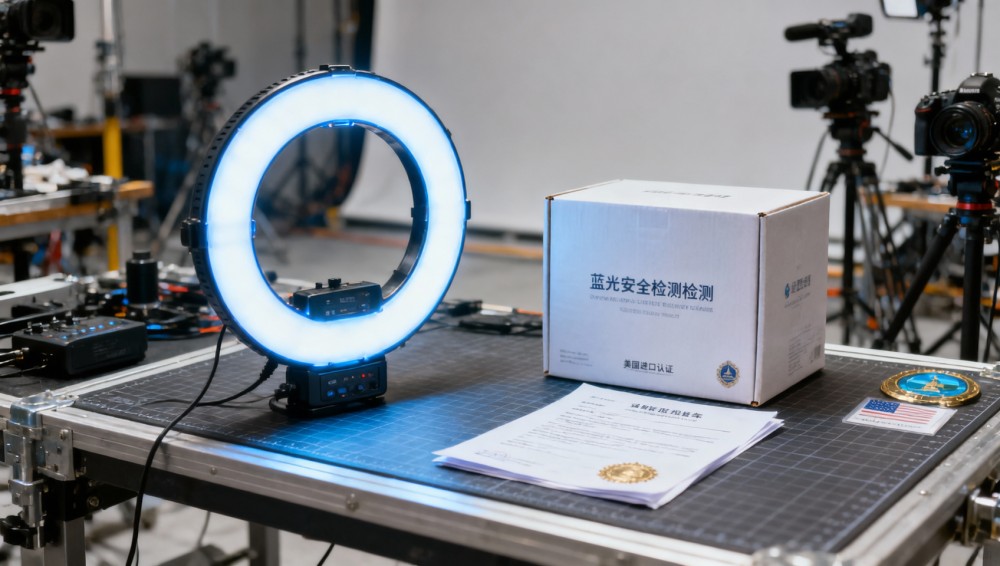
On July 5, 2026, the U.S. Consumer Product Safety Commission (CPSC) issued an urgent compliance alert that changes the immediate market-entry requirements for imported LED ring lights used in wedding photography, including smart dimming models. The alert ties U.S. import access to compliance with the updated photobiological safety standard ANSI/IES RP-27.3-2026, with particular emphasis on stricter Photochemical Blue Light Hazard limits. For exporters, importers, testing and certification participants, and buyers managing delivery schedules, this is not only a product safety update but also a trade and shipment-control issue because non-certified products may be detained or returned by CBP.
What the emergency alert confirms
The confirmed facts are limited but commercially significant. CPSC issued the alert on July 5, 2026. The products named in the alert are wedding photography LED ring lights imported into the United States, including smart dimming versions. According to the alert, these products must, effective immediately, comply with the updated ANSI/IES RP-27.3-2026 photobiological safety standard. The stated focus of the change is tighter limits for Photochemical Blue Light Hazard. The alert also states that products without certification may be detained by CBP or sent back.
Where the pressure is likely to appear first
Export shipments heading to the U.S. market
From an industry perspective, exporters and trading companies are likely to feel the impact first because the alert connects compliance directly to border handling. The main exposure is in pre-shipment review, product file preparation, and delivery timing. What deserves closer attention is whether current product documentation, test records, and certification status are sufficient to support shipment continuity under the newly referenced standard.
Manufacturing and product configuration control
Manufacturers of LED ring lights, especially those supplying wedding photography use cases and smart dimming variants, may need to reassess whether existing product configurations align with the stricter blue light hazard requirement. Analysis shows that the operational impact is not limited to production itself; it can also extend to model classification, technical documentation, and the handoff between engineering, quality, and export compliance teams.
Testing, certification, and conformity support work
Testing and certification-related service providers may see increased urgency from clients seeking confirmation against ANSI/IES RP-27.3-2026. Observably, the key issue for this part of the chain is not simply test demand, but whether conformity materials can be matched clearly to the specific products being imported. For companies already preparing shipments, document readiness may become as important as the technical result itself.
Buyers, distributors, and delivery planners
For procurement teams, distributors, and parties managing delivery commitments, the rule change may affect purchase timing, supplier screening, and acceptance conditions. The practical concern is that certification status now has a more direct connection to customs clearance risk. That means procurement reviews, supplier qualification checks, and delivery planning may need to place greater weight on proof of compliance before products move.
What companies should review now
Check whether certification status is usable for current shipments
Analysis shows that companies with products already allocated to the U.S. market should first confirm whether the relevant models are certified in a manner that aligns with the newly required standard. Because the alert states that uncertified products may be detained or returned, the immediate business question is whether existing shipment files can withstand customs and compliance review.
Re-examine technical files tied to blue light hazard claims
What deserves closer attention is the treatment of Photochemical Blue Light Hazard in technical and compliance records. Even where companies already maintain product safety files, this alert suggests that blue light hazard assessment may now sit closer to the center of import review for the covered product category. Firms should pay attention to whether test reports, product specifications, and supporting technical descriptions are internally consistent.
Review supplier and procurement controls for covered models
For companies sourcing finished ring lights or arranging OEM/ODM supply, observably the next practical step is to check whether suppliers can provide documentation that matches the products and configurations actually being purchased. This is particularly relevant where smart dimming versions are involved, because the alert expressly includes them within scope.
Monitor official wording and downstream execution signals
The input does not provide detailed implementation guidance beyond the immediate requirement and the stated CBP consequence. It is more appropriate to understand this as a compliance trigger that still requires close monitoring for execution language, certification interpretation, document expectations, and possible changes in procurement or tender wording across the market.
Why this reads as an execution signal
Observably, this development is more than a general safety reminder because it links a named product category, a specific updated standard, immediate applicability, and a stated border-control consequence. Analysis shows that the market should read it primarily as an execution signal for compliance and shipment handling rather than as a distant policy direction. At the same time, it would be premature to infer a wider enforcement pattern beyond what the provided alert expressly states. Continued attention is therefore likely to focus on how certification expectations are applied in practice and how quickly supply-chain participants adapt their documentation and shipment controls.
How the market may need to frame this development
From an industry perspective, the significance of this alert lies in the way a product safety requirement is presented as an immediate import condition for a defined LED lighting application. The most balanced reading is that this is an already effective compliance change for covered imports, combined with an enforcement signal that could affect certification workflows, procurement screening, and delivery scheduling. It is less useful to treat it as a broad market conclusion at this stage; the more practical approach is to view it as a targeted rule application that now deserves close operational follow-through.
Basis of this article and points still requiring verification
This article is based on the user-provided news title, event date, and event summary. For developments of this kind, relevant source categories usually include official notices, regulator releases, customs or trade authority information, industry association updates, standard-setting organization documents, and reporting by authoritative industry media. No specific official source link was provided in the input, so the exact official link remains to be verified on an ongoing basis. Observably, the areas that still warrant follow-up include detailed implementation language, certification interpretation, procurement-document changes, market feedback, and how affected companies carry out compliance in practice.
Recommended News
 Hand & Power ToolsHow to choose a hand saw for woodworking without tear-outHand saw for woodworking guide: choose the right tooth pattern, blade, and technique to achieve clean, precise cuts with less tear-out. Explore practical buying tips.Tooling & Hardware LeadOct 04, 2026
 Eco PackagingWhat affects the price of kraft paper rolls bought wholesale?Kraft paper rolls wholesale pricing depends on grade, basis weight, roll size, order volume, freight, and certifications. Learn how to compare landed costs and choose reliable value.Packaging Supply ExpertOct 03, 2026
 Commercial LEDHow to evaluate a canopy lights factory before placing a bulk orderCanopy lights factory evaluation guide: verify specifications, compliance, quality control, capacity, and after-sales support before placing a bulk order.Commercial Tech EditorOct 02, 2026
 Commercial LEDHow to choose lighting systems that meet workplace safety needsLighting systems for workplace safety: learn how to control glare, improve visibility, meet environmental demands, and protect workers with reliable, compliant lighting choices.Commercial Tech EditorOct 01, 2026