Industry News
Curation by industry experts
Hot Articles
Popular Tags
US CPSC Urges Voluntary Recall of Chinese LED Ring Lights Over Shock Risk
On May 19, 2026, the U.S. Consumer Product Safety Commission (CPSC) issued Safety Alert No. 26-087 concerning multiple models of LED ring lights—manufactured in Guangdong and Zhejiang provinces, China, and used in bridal photography studios—for risk of electric shock due to insulation failure in their power adapters. This alert directly impacts importers, distributors, lighting manufacturers, and third-party compliance service providers operating in or supplying the North American photography equipment market.
Event Overview
The U.S. Consumer Product Safety Commission (CPSC) published Safety Alert No. 26-087 on May 19, 2026. The alert identifies LED ring lights intended for bridal photography lighting—produced in Guangdong and Zhejiang, China—as posing an electric shock hazard due to insulation failure in their external power adapters. Twelve U.S.-based distributors have initiated a voluntary recall. No injuries have been reported, per publicly available information.
Industries Affected by Segment
Direct Trading Enterprises (U.S. Importers & Distributors)
These entities face immediate operational and reputational exposure: product withdrawal from inventory, potential liability claims, and heightened scrutiny during customs entry. The recall involves 12 U.S. distributors, indicating coordinated action across mid-tier channels—not limited to single-brand incidents.
Manufacturing Enterprises (OEM/ODM Lighting Factories in China)
Factories producing similar LED ring lights—or those relying on shared power adapter suppliers—may encounter increased pre-shipment verification demands from U.S. buyers. The root cause cited (insulation failure in adapters) points to component-level quality control gaps, not necessarily end-product design flaws.
Supply Chain Service Providers (Testing Labs, Certification Agents, Freight Forwarders)
Third-party compliance services may see rising demand for UL certification verification, insulation resistance testing, and adapter-specific safety documentation review. Forwarders handling photography lighting shipments to the U.S. may experience tighter document checks at port entry, particularly for products with non-UL-listed adapters.
What Relevant Enterprises or Practitioners Should Monitor and Do Now
Track Official Updates from CPSC and Partner Agencies
Monitor CPSC’s official website for updates to Alert No. 26-087—including expanded model lists, revised test protocols, or references to related enforcement actions (e.g., detention notices under 16 CFR Part 1115). Subscribing to CPSC email alerts is recommended for real-time notification.
Review Power Adapter Specifications and Certification Status
For all LED ring light SKUs destined for the U.S. market, verify whether the included power adapter carries valid UL 62368-1 or UL 60950-1 certification—and whether the certification covers the exact configuration shipped (e.g., input/output ratings, enclosure type, labeling). Do not assume compatibility based on similar models.
Prepare Documentation for Enhanced U.S. Market Entry Checks
Compile and retain test reports, supplier declarations of conformity, and adapter certification documents—not just for final products but for critical subassemblies. U.S. distributors are increasingly requesting these upfront before shipment release.
Assess Exposure Across Shared Component Suppliers
If your production uses power adapters sourced from common suppliers (especially unbranded or white-label units), proactively audit those suppliers’ UL certification scope and recent test history—even if your own product has not been named in the alert. Shared components represent a systemic vulnerability.
Editorial Perspective / Industry Observation
Observably, this alert functions less as an isolated incident and more as a calibration signal: it confirms that CPSC is intensifying focus on secondary power conversion components—particularly in non-high-voltage consumer electronics where insulation integrity is often assumed rather than verified. Analysis shows that the trigger was not a new hazard, but a pattern of repeated failures across distributed SKUs, suggesting cumulative field data informed the decision. From an industry perspective, this reflects a shift toward component-level accountability—not just end-product compliance—and signals growing expectations for traceability down to adapter batch level. It is not yet evidence of broad regulatory change, but it is a concrete indicator of where inspection priorities are shifting.
This incident underscores how localized safety findings—rooted in one product category and one geographic supply chain—can rapidly reshape verification expectations across adjacent segments of the professional imaging equipment ecosystem. Rather than signaling systemic noncompliance, it highlights a specific, addressable gap in adapter integration oversight. Current practice suggests proactive alignment with UL 62368-1 requirements for both full units and embedded power supplies is now operationally prudent—not merely a certification checkbox.
Information Source: U.S. Consumer Product Safety Commission (CPSC), Safety Alert No. 26-087, issued May 19, 2026. No additional sources or background data were referenced. Ongoing developments—including potential expansion of the recall scope or issuance of related import alerts—remain subject to official CPSC updates and are not confirmed at time of publication.
Recommended News
 Eco PackagingWhat affects the price of kraft paper rolls bought wholesale?Kraft paper rolls wholesale pricing depends on grade, basis weight, roll size, order volume, freight, and certifications. Learn how to compare landed costs and choose reliable value.Packaging Supply ExpertOct 03, 2026
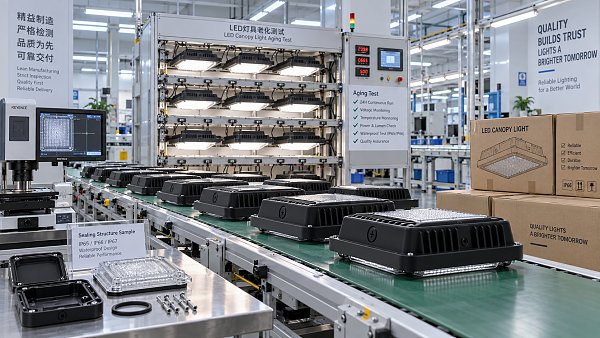
 Commercial LEDHow to evaluate a canopy lights factory before placing a bulk orderCanopy lights factory evaluation guide: verify specifications, compliance, quality control, capacity, and after-sales support before placing a bulk order.Commercial Tech EditorOct 02, 2026
 Commercial LEDHow to choose lighting systems that meet workplace safety needsLighting systems for workplace safety: learn how to control glare, improve visibility, meet environmental demands, and protect workers with reliable, compliant lighting choices.Commercial Tech EditorOct 01, 2026
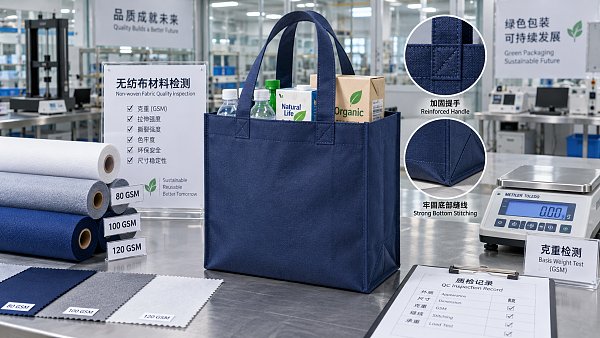
 Fabrics & YarnsWhat fabric weight works best for reusable non woven fabric bags?Non woven fabric for bags: discover the best GSM range for durability, load capacity, print quality, and cost-effective reusable bag sourcing.Textile Industry AnalystSep 30, 2026