Industry News
Curation by industry experts
Hot Articles
Popular Tags
Vietnam Imposes Anti-Dumping Duties on Chinese Wedding Photography Nonwovens
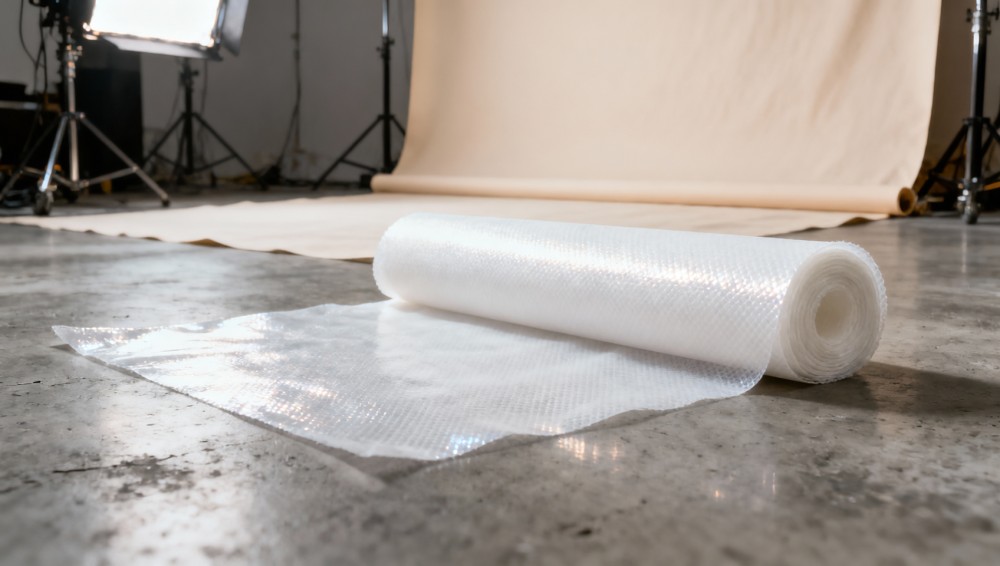
Vietnam has imposed anti-dumping duties on Chinese-made heat-bonded nonwoven fabric used in wedding photography, effective 20 May 2026. The measure directly affects suppliers, processors, and service providers across the regional visual content production supply chain—particularly those reliant on cost-sensitive, high-volume disposable textile inputs.
Event Overview
The Ministry of Industry and Trade of Vietnam issued its final determination on 18 May 2026, finding that imported heat-bonded nonwoven fabric for wedding photography (HS code 5603.94) originating from China was being sold at dumped prices. Anti-dumping duties ranging from 23.7% to 41.2% will apply to named exporters, effective 20 May 2026.
Impact on Specific Industry Segments
Direct trading enterprises: Exporters and cross-border distributors of HS 5603.94 nonwovens face immediate margin compression and customs clearance delays. Duty applicability is exporter-specific, meaning compliance verification—including origin documentation and product classification—has become operationally critical. Pre-clearance risk assessments are now essential before shipment.
Raw material procurement enterprises: Vietnamese and regional photo studio equipment importers and procurement agents sourcing these nonwovens must reassess landed cost structures. Since the product serves as a consumable input—not a branded component—price elasticity is high; buyers may shift volume toward alternative substrates or local alternatives, though none currently match the functional performance of heat-bonded nonwovens in veil backing or scenic draping.
Processing and manufacturing enterprises: Domestic Vietnamese converters—those laminating, cutting, or assembling headpieces, backdrops, or props using this base material—face dual pressure: rising input costs and tighter delivery windows due to customs scrutiny. Their ability to pass through cost increases is constrained by competitive pricing in the mid-tier studio market.
Supply chain service enterprises: Freight forwarders, customs brokers, and trade compliance consultants specializing in ASEAN–China textile flows report increased demand for tariff classification reviews and origin certification support. However, their exposure remains indirect—revenue growth hinges on clients’ continued reliance on China-sourced inputs rather than full supply chain relocation.
Key Considerations and Recommended Actions
Verify exporter-specific duty rates before shipment
Duty rates vary significantly (23.7%–41.2%) depending on company-level findings in the final determination. Traders must consult Vietnam’s official list of named respondents and confirm whether their entity falls under a separate rate, zero rate, or the residual rate.
Reassess HS classification and product scope alignment
The measure applies strictly to heat-bonded nonwovens under HS 5603.94. Enterprises should audit technical specifications—including bonding method (thermal vs. chemical), fiber composition, and grammage—to determine if substitute materials (e.g., spunbond polypropylene with ultrasonic sealing) fall outside the scope.
Explore certified third-country sourcing or regional blending options
While no ASEAN-based producer currently replicates the exact functionality at comparable scale, some Malaysian and Thai converters offer small-batch thermal-laminated alternatives. Sourcing via Vietnam’s CPTPP partners may qualify for preferential treatment—if traceability and value-add thresholds are met.
Editorial Perspective / Industry Observation
Analysis shows this case is not primarily about price distortion—it reflects Vietnam’s broader recalibration of import dependency in low-value-added textile intermediates. Observably, the selection of wedding photography nonwovens—a niche but rapidly growing application—signals regulatory attention shifting toward digitally enabled creative services, where input cost volatility directly impacts service pricing and SME viability. From industry perspective, this measure is better understood as an early indicator of tightening non-tariff discipline on B2B consumables entering ASEAN’s experiential economy—not just a standalone trade remedy.
Conclusion
This anti-dumping action underscores how narrowly defined trade remedies can ripple across fragmented, just-in-time creative supply chains. It does not signal broad decoupling from Chinese inputs, but rather highlights the increasing operational cost—and compliance overhead—of maintaining China-centric sourcing for discretionary, image-driven sectors in Southeast Asia. A rational interpretation is that resilience will increasingly hinge on agility in classification, certification, and multi-source qualification—not wholesale substitution.
Source Attribution
Official determination published by the Ministry of Industry and Trade of Vietnam (Decision No. 1428/QĐ-BCT, dated 18 May 2026); HS code guidance per Vietnam’s 2026 Import Tariff Schedule Annex II; WTO Anti-Dumping Agreement Article 12 notifications filed on 20 May 2026. Note: Implementation details—including review timelines, appeal procedures, and potential new exporter investigations—remain subject to official updates and are under continuous monitoring.
Recommended News
 Eco PackagingWhat affects the price of kraft paper rolls bought wholesale?Kraft paper rolls wholesale pricing depends on grade, basis weight, roll size, order volume, freight, and certifications. Learn how to compare landed costs and choose reliable value.Packaging Supply ExpertOct 03, 2026
 Commercial LEDHow to evaluate a canopy lights factory before placing a bulk orderCanopy lights factory evaluation guide: verify specifications, compliance, quality control, capacity, and after-sales support before placing a bulk order.Commercial Tech EditorOct 02, 2026
 Commercial LEDHow to choose lighting systems that meet workplace safety needsLighting systems for workplace safety: learn how to control glare, improve visibility, meet environmental demands, and protect workers with reliable, compliant lighting choices.Commercial Tech EditorOct 01, 2026
 Fabrics & YarnsWhat fabric weight works best for reusable non woven fabric bags?Non woven fabric for bags: discover the best GSM range for durability, load capacity, print quality, and cost-effective reusable bag sourcing.Textile Industry AnalystSep 30, 2026