Industry News
Curation by industry experts
Hot Articles
Popular Tags
Smart Lighting Bulk Order: What Affects Lead Time, MOQ, and Pricing
Why do lead time, MOQ, and pricing move so much in a smart lighting bulk order?
A smart lighting bulk order rarely behaves like a standard commodity purchase.
The quoted figures can change quickly, even when product photos look similar.
That happens because smart lighting combines electronics, mechanical parts, software logic, certifications, and packaging decisions in one sourcing package.
In practical terms, delivery and cost depend on how simple or configurable the product really is.
A basic Bluetooth downlight and a DALI-enabled commercial panel can sit in the same category, but their sourcing profiles are very different.
The same is true for MOQ.
Minimum order quantity is often shaped by driver sourcing, PCB assembly runs, housing tooling, color variation, and carton efficiency.
This is why early comparisons should look beyond headline unit price.
Global Supply Review often frames this issue as a supply chain visibility problem rather than a simple quote problem.
That distinction matters.
When the cost structure is visible, negotiation becomes cleaner and delivery risk becomes easier to judge.
What usually drives the longest lead time?
The longest delay is rarely caused by final assembly alone.
More often, the bottleneck sits upstream in components or approval steps.
For a smart lighting bulk order, the slowest items are usually LED drivers, control modules, chips, sensors, and custom housings.
If firmware changes are required, validation can add another layer.
Compliance also changes the timeline.
Projects needing CE, UL, FCC, RoHS, energy testing, or local market labeling tend to move slower than catalog models.
The delay does not always come from testing itself.
Sometimes it comes from document correction, sample revision, or a mismatch between certified and shipped configurations.
A more realistic way to read lead time is to split it into stages:
- engineering confirmation and bill of materials lock
- component procurement and incoming inspection
- sample approval or pilot run
- mass production and burn-in testing
- final packaging, labeling, and shipment booking
When suppliers only give one total number, there is less clarity on where slippage may happen.
A staged timeline is usually more useful than a fast promise.
Is MOQ really fixed, or can it be negotiated?
MOQ is negotiable in some cases, but not always in the way buyers expect.
If the product already exists, the main limit may come from packaging batches or component reels.
If the order involves custom housing, private label packaging, firmware changes, or new tooling, MOQ becomes more rigid.
The better question is not simply, “Can MOQ be lower?”
It is, “Which part of the smart lighting bulk order creates the MOQ floor?”
That answer often reveals room for compromise.
For example, a shared neutral carton may reduce packaging MOQ.
A standard driver may lower electronics MOQ.
A phased color rollout may keep the total order viable without forcing every SKU into the same quantity.
This quick table helps separate flexible MOQ points from hard limits.
A negotiable MOQ usually comes from simplifying variables, not from asking for a concession in isolation.
Why can pricing for a smart lighting bulk order vary so widely?
Two products can share wattage, size, and appearance, yet land at very different costs.
The reason sits inside the specification stack.
Driver brand, LED chip grade, dimming protocol, wireless chip, heat dissipation design, IP rating, and expected lifetime all change price.
Then there are hidden commercial items.
Warranty reserve, spare ratio, packaging strength, test reports, and payment terms can quietly move the total landed cost.
In many RFQs, one supplier quotes the light only.
Another includes accessories, labeling, and export carton upgrades.
That makes line-by-line comparison essential.
When reviewing a smart lighting bulk order, these pricing questions are worth asking early:
- Is the control protocol Zigbee, Bluetooth Mesh, Wi-Fi, DALI, or 0-10V?
- Are the LEDs and drivers named brands or open-source equivalents?
- Does the price include certification documents and retest risk?
- Are software pairing and app compatibility already validated?
- What failure rate assumption sits behind the warranty?
A low quote may still be reasonable.
It just needs to be transparent enough to prove where savings come from.
How can quotes be compared without missing hidden risk?
A clean comparison starts with normalizing the RFQ.
Without that step, each supplier may answer a different question.
In actual sourcing work, a usable comparison sheet should cover technical scope, commercial scope, and delivery assumptions together.
That is often the difference between a usable quote and a misleading one.
The checklist below is a practical filter.
This kind of framework fits well with GSR-style sourcing intelligence.
It turns quote review into a structured comparison, not a guessing exercise.
What mistakes slow down approval or distort total cost?
One common mistake is treating customization as cosmetic only.
A logo change may seem simple, but if it affects labels, manuals, compliance marks, or box dimensions, the impact spreads.
Another mistake is approving samples without locking the production version.
A sample can pass visual review while still leaving component substitution open.
Payment terms also shape real cost.
A quote with a lower unit price may require less favorable cash terms, shorter validity, or limited warranty support.
Shipping seasonality matters as well.
If the smart lighting bulk order lands near holiday congestion or container imbalance, transit cost can erase unit savings.
The more reliable approach is to watch for four warning signs:
- sample approved, but BOM not frozen
- certificates mentioned, but not matched to exact SKU
- lead time promised, but material availability not confirmed
- MOQ accepted, but tooling or packaging charges sit outside the quote
These are small gaps on paper, yet they often create the largest disputes later.
What is the smartest next step before placing a smart lighting bulk order?
Start by reducing ambiguity before pushing for price.
That means defining the required protocol, certification market, brightness tolerance, finish, packaging level, and approval process in one document.
Then ask each supplier to respond against the same scope.
For a smart lighting bulk order, the strongest negotiation position usually comes from specification discipline, not from aggressive bargaining alone.
A sound review should answer three things clearly:
- What exactly is being built and approved?
- Which part of the timeline carries the most risk?
- Which cost items are fixed, variable, or volume-sensitive?
Once those answers are visible, MOQ discussions become more practical, pricing becomes more comparable, and lead time becomes easier to trust.
That is the point where a sourcing decision becomes defensible.
A final review of BOM detail, certification scope, and delivery staging is usually the most effective next move.
Recommended News
 Carton & PlasticsHow to assess seam quality in 250ml aluminum beverage cansLearn how to assess seam quality in 250ml aluminum beverage cans with practical visual checks, precise measurements, teardown methods, and defect-control guidance.Packaging Supply ExpertSep 28, 2026
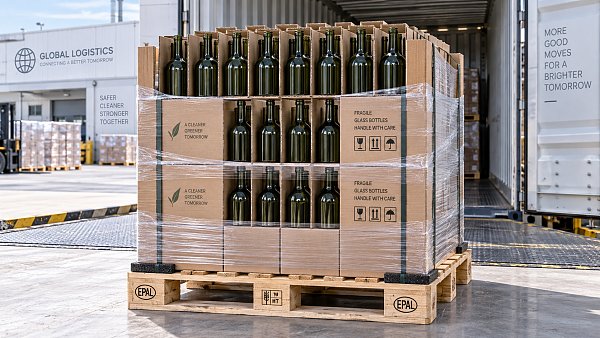
 Carton & PlasticsWhat drives breakage rates in bulk wine bottles wholesale orders?Bulk wine bottles wholesale buyers: discover what drives breakage rates, from glass quality and packaging to pallet loading, and reduce costly claims.Packaging Supply ExpertSep 27, 2026
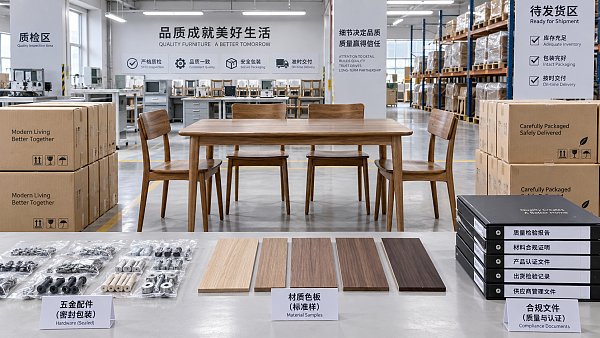
 Office FurnitureHow supplier scorecards reduce risk in furniture procurementFurniture procurement supplier management becomes more resilient with supplier scorecards that track quality, delivery, compliance, and corrective actions. Learn how to reduce sourcing risk.Interior Sourcing LeadSep 26, 2026
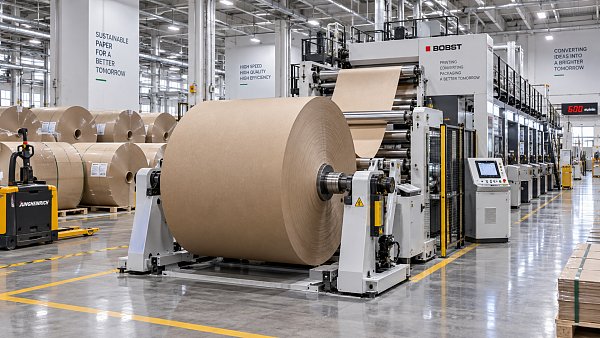
 Office Paper & Printing PaperHow roll diameter affects downtime when using jumbo paper rollsJumbo paper rolls can cut changeovers and downtime—if your unwinder, handling, and tension control can support them. Find the optimal roll diameter for smoother output.Packaging Supply ExpertSep 25, 2026