Industry News
Curation by industry experts
Hot Articles
Popular Tags
Hidden Costs of Choosing Low-Grade Corrugated Carton Boxes in Bulk Orders
The Real Price of Low-Grade Corrugated Cartons in International Supply Chains

In global trade and packaging logistics, corrugated carton boxes remain a silent backbone of efficiency—but choosing low-grade variants in bulk orders often comes at a hidden cost. For procurement professionals sourcing across sectors from ergonomic office chairs to blister packaging, poor-quality cartons can jeopardize product safety, inflate logistics expenses, and undermine brand reputation. Global Supply Review (GSR) investigates how subtle compromises in material strength and sustainability standards impact long-term performance, offering data-driven insights to guide smarter sourcing decisions.
A corrugated box may seem like a commodity, but its specification directly affects 5–10% of total logistics expenditure and up to 20% of return rates in global e-commerce fulfillment. When packaging engineers downgrade paper flute grades or liner weights to cut unit costs by as little as USD 0.05 per box, the financial losses from product damage and shipment rework can be 10 to 30 times higher over an annual procurement cycle.
The challenge is not only structural. Inconsistencies in paper GSM (grams per square meter), adhesive bonding, and moisture resistance rating below 7% can deteriorate compression strength by 25%–40%. The resulting deformation during container stacking compromises both product integrity and warehouse safety. For multinational exporters operating under strict performance metrics, these numbers transform a low-cost purchase into a liability.
Procurement teams at various supply chain tiers—from OEMs to 3PL providers—must therefore re-evaluate their cost calculation models. The unit price of a carton box is no longer the decisive metric; total cost of ownership (TCO) encompassing replacement, handling, and compliance should drive purchasing strategy.
Material Composition and Structural Weak Points

Corrugated boxes rely on the synergy of three layers: linerboard, corrugating medium, and adhesive. The linerboard’s kraft pulp quality and the medium’s flute geometry determine resistance to crushing, moisture absorption, and vibration. Low-grade variants often use recycled fiber proportion exceeding 80%, while premium export packaging maintains a 60%–70% ratio to ensure balance between sustainability and strength.
Common issues with downgraded cartons include inconsistent flute height (±0.5 mm deviation), excessive glue application reducing cushioning efficiency by 15%, and poor ply adhesion causing delamination. When compressed at 23°C and 50% RH, such cartons can lose 30% of their Edge Crush Test (ECT) value within 48 hours. These technical shortcomings ripple across inventory accuracy and damage control systems.
To assist procurement professionals, the following table summarizes the comparative parameters frequently observed between low-grade and export-grade corrugated cartons.
These variations, seemingly small, translate into markedly different logistics outcomes. A 10% higher GSM can raise shipping durability by 25%, reducing product replacement frequency and improving carbon efficiency through reduced waste cycles. Corporate sustainability targets, aligned with ISO 14001, increasingly penalize excessive packaging waste—an area where low-grade cartons fail quickly.
Hidden Operational and Compliance Costs
Beyond direct product failures, low-grade cartons generate invisible costs across six dimensions: rework, safety incidents, transport instability, brand compliance, insurance premiums, and ESG scoring. Quantitatively, a warehouse handling 100,000 shipments per quarter may experience an additional damage ratio of 1.5%–2.5%, translating to 1,500–2,500 replaced items per season. At an average replacement cost of USD 8 per unit, this equates to USD 12,000–20,000 in quarterly loss.
Moreover, non-compliance with environmental directives such as the EU Packaging and Packaging Waste Regulation or ASTM D5276 drop test standards can result in shipment rejections. Many third-party auditors now enforce a minimum Box Compression Test (BCT) threshold of 4.5 kN for export goods weighing over 15 kg. Substandard cartons often fail at around 3.0 kN, posing safety liabilities during palletization and container loading.
For brands operating in consumer electronics, cosmetic distribution, or food processing—where contamination and presentation matter—fibre shedding or ink migration beyond 0.6 mg/dm² can violate Good Manufacturing Practice (GMP) norms. Each recall or shipment rework not only increases unit cost but also erodes trust metrics that digital marketplaces use for ranking suppliers.
To visualize this multi-factor cost impact, the following table maps operational losses associated with low-grade cartons.
These figures emphasize that any short-term savings below 10% on carton procurement can rapidly evaporate under audit and quality failure scenarios. Strategic sourcing policies should therefore integrate risk-weighted pricing models rather than traditional lowest-bid selection.
Decision Framework for Smarter Carton Procurement
An evidence-based procurement process evaluates corrugated carton suppliers across four measurable axes: material science, process control, sustainability, and quality certification. Each contributes 25% to the final supplier score, ensuring balanced assessment and traceability in supplier audits.
To operationalize smarter selection, GSR recommends a five-step evaluation:
- Define load and stacking requirements based on product weight (e.g., 10–30 kg categories).
- Request laboratory test reports—ECT, BCT, and Cobb tests conducted within the last 6 months.
- Validate fiber sourcing policies aligned with FSC® or PEFC™ standards.
- Conduct pilot shipment of 500–1000 units to simulate real logistics stress.
- Review post-delivery impact: crush rate, humidity resistance, and recyclability score above 85%.
A procurement audit cycle structured on these parameters usually spans 3–4 weeks and can cut long-term replacement cost by up to 40%. It is also critical to verify production parameters such as flute type (B, C, or BC double-wall) and adhesive temperature range (170–190°C for starch-based glues) to ensure performance consistency across seasons.
Future Outlook: Innovation and Circular Packaging Economics
Industry data shows that global corrugated box demand will grow by 3.6% annually through 2028, driven by e-commerce and sustainable packaging mandates. The shift toward high-performance lightweight boards using 15–20% less fiber content without compromising ECT values demonstrates how technology, not compromise, reduces cost. Advances in high-stiffness semi-chemical fluting and bio-based adhesives can extend box lifecycles by 25% while reducing CO₂ emissions by 12% per ton of fiber.
Manufacturers integrating AI-based quality inspection systems with ±0.2 mm variance detection improve production yield by 7–10%. For global buyers, such technological transparency enhances supplier reliability scores and ensures compliance with digital traceability standards emerging under EU EcoDesign directives.
Procurement specialists are encouraged to collaborate with packaging technologists to establish long-term carton sustainability roadmaps. This includes defining a minimum 3-year recycling improvement plan and monitoring post-consumer recovery targets exceeding 75%, aligning corporate ESG reporting with measurable performance improvement.
FAQ: Addressing Key Procurement Questions
What carton specifications suit export packaging above 20 kg?
Use double-wall corrugation (BC type) with liner GSM above 150 and ECT ≥32 kN/m. Moisture-resistance coating or wax-free polymer treatment enhances integrity during 4–6 week sea shipments.
How often should carton compression testing be performed?
Routine validation every 10,000 units or once every 3 months ensures consistent mechanical performance and compliance with ISO 12048 stacking tests. Deviations over 5% from specification trigger corrective action plans.
What are the most common procurement missteps when buying cartons in bulk?
Relying solely on supplier price sheets, ignoring humidity storage conditions, and skipping incoming quality inspection. Each of these can increase defect incidence by 2–5% during peak operations.
Conclusion: Building Resilient Packaging Ecosystems
The decision to choose between low-grade and high-grade corrugated cartons extends beyond budget considerations. It defines compliance risk, environmental footprint, and customer perception in equal measure. Procurement teams must balance cost efficiency with structural integrity, viewing carton boxes as engineered components within a complex logistics ecosystem.
Global Supply Review (GSR) continues to empower sourcing managers, quality leaders, and enterprise decision-makers with actionable intelligence to build resilient packaging strategies. Choosing the right grade today protects not only the shipment but also the brand’s global reputation tomorrow.
For detailed material insights, technical guidance, or to request a customized supplier evaluation framework, contact GSR to access dedicated packaging intelligence and global sourcing support that drive measurable improvements in sustainability, quality, and cost optimization.
Recommended News
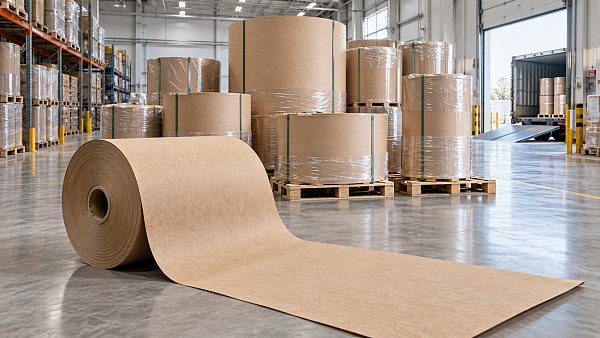
 Eco PackagingWhat affects the price of kraft paper rolls bought wholesale?Kraft paper rolls wholesale pricing depends on grade, basis weight, roll size, order volume, freight, and certifications. Learn how to compare landed costs and choose reliable value.Packaging Supply ExpertOct 03, 2026
 Commercial LEDHow to evaluate a canopy lights factory before placing a bulk orderCanopy lights factory evaluation guide: verify specifications, compliance, quality control, capacity, and after-sales support before placing a bulk order.Commercial Tech EditorOct 02, 2026
 Commercial LEDHow to choose lighting systems that meet workplace safety needsLighting systems for workplace safety: learn how to control glare, improve visibility, meet environmental demands, and protect workers with reliable, compliant lighting choices.Commercial Tech EditorOct 01, 2026
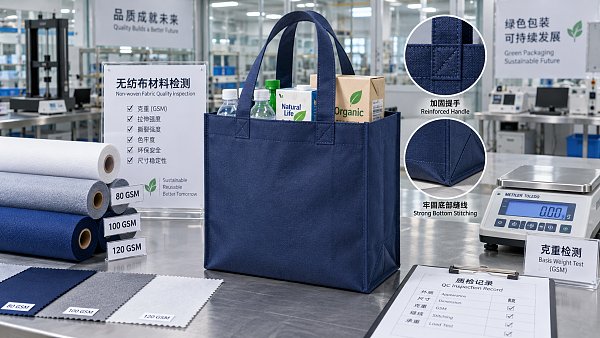
 Fabrics & YarnsWhat fabric weight works best for reusable non woven fabric bags?Non woven fabric for bags: discover the best GSM range for durability, load capacity, print quality, and cost-effective reusable bag sourcing.Textile Industry AnalystSep 30, 2026