Industry News
Curation by industry experts
Hot Articles
Popular Tags
How to choose cosmetic packaging tubes for formula compatibility
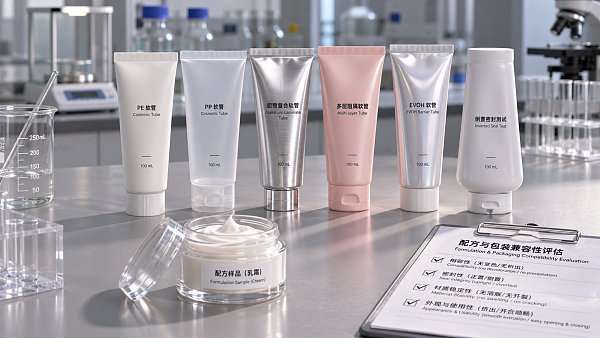
Choosing cosmetic packaging tubes starts with a compatibility question: can the complete package protect the formula and dispense it reliably through its intended shelf life? Appearance and dispensing convenience matter, but fragrances, oils, acids and other ingredients can interact with the tube body, barrier layers, closure or decoration. A tube that looks suitable on a sample table may still lose volatile ingredients, change the product’s odor or develop a leaking seal during storage.
For technical evaluators, the practical task is to connect formulation risks with material properties, then verify the proposed package under representative conditions. The following framework helps product development, quality and procurement teams compare options, define testing and document the evidence needed for a sourcing decision.
Start with the formula’s exposure risks
Before requesting tube samples, prepare a formulation brief that describes the finished product and its intended use. A supplier does not necessarily need the complete confidential formula, but it does need enough information to recommend materials and identify known limitations.
- Volatile and fragrant components: Solvents and fragrance materials can migrate through packaging, be absorbed into polymers or alter the odor profile. Loss of a small but sensory-important component may be noticeable before a large weight change occurs.
- Oils and other lipophilic ingredients: Certain oils can be absorbed by polymer components or cause swelling and softening. Assess the tube, cap and any liner or valve that contacts the product.
- Acids, alkalis and reactive actives: Record the formulation’s pH and relevant chemical identities. pH alone does not predict compatibility; concentration, solvent system and contact time also matter.
- Oxygen- or light-sensitive ingredients: Identify which quality attributes can change through oxidation or light exposure, and whether the product needs a specific barrier or opaque construction.
- Physical behavior: Viscosity, particles and dispensing force influence orifice size, closure design and seal stresses. A scrub, for example, may leave particles in the closure and interfere with resealing.
Define the intended shelf life, fill temperature, distribution regions and expected storage conditions at the same time. The relevant environment is the filled, closed package in its actual supply chain, including hot warehouses, transport and repeated consumer use.
Compare cosmetic packaging tubes by construction
Tube names often describe a broad material family rather than a complete specification. Two tubes sold as polyethylene laminate can differ in layer structure, barrier performance, sealant chemistry and decoration. Ask for the proposed construction and test data for the actual specification.
A barrier layer is not the same as a barrier package. Oxygen or vapor can also enter or leave through the closure, dispensing opening, shoulder and seals. The relative contribution of each path depends on the design and storage conditions. A high-barrier body cannot automatically compensate for a poorly sealing cap.
Assess material data in context
Request oxygen transmission rate and water vapor transmission rate data when these properties are relevant. Check the test method, temperature, relative humidity and specimen: a flat film result supports comparison but does not by itself establish the performance of a finished tube. EVOH, for example, can be affected by moisture, so a dry-condition figure may not represent the intended use environment.
Barrier needs also run in both directions. Moisture loss may concentrate a water-based product, while moisture ingress can affect a moisture-sensitive formula. For fragranced products, ask whether the supplier has relevant data on volatile transmission or absorption; oxygen barrier values alone do not demonstrate fragrance retention.
Evaluate the complete pack, not only the tube body
The product-contact surface may include the inner tube layer, shoulder, cap, dispensing insert, valve, liner and seal materials. Establish which components touch the formula during storage and use, including when the pack is inverted or squeezed. Request the identity of contact materials and notification of changes to resin grades, additives, colorants and component sources.
Closures deserve particular attention. A flip-top can be convenient for a shower product, while a narrow nozzle may give better application control for a treatment. Both still require evidence of seal integrity, acceptable opening force and clean dispensing. Viscous residues or particles around an orifice can prevent full closure even when the unused pack passes a leak test.
Decoration can introduce a separate failure mode. External oils, solvents, cleaning products or abrasion may damage inks, varnishes and labels during use. Confirm that printing and adhesive systems are suitable for the tube substrate and expected exposure. If decoration is applied before filling, check that the filling and sealing process does not distort or contaminate it.
Build a compatibility test around the decision
Testing should answer whether the intended formula and final package will meet agreed requirements over the intended life. There is no universal temperature, duration or pass limit that proves compatibility for every cosmetic product. The brand’s technical team should set a protocol based on formulation risk, target markets and available stability knowledge.
- Define the samples and baseline. Use representative formula batches and production-intent tubes, closures and decoration. Record component specifications and batch identifiers. At the start, measure relevant product attributes and package condition, including appearance, odor, pH where applicable, viscosity, fill mass and seal condition.
- Include appropriate controls. Store the same formula in a suitable reference container to help distinguish formula instability from packaging effects. Where useful, retain empty package samples to identify material or decoration changes unrelated to the formula.
- Set storage and orientation conditions. Include real-time storage and justified accelerated conditions, with sampling intervals. Store selected units upright and inverted or on their sides to expose the closure and shoulder to the formula. Add light exposure or temperature cycling when relevant to distribution and use.
- Inspect both formula and package. Look for color or odor changes, phase separation, precipitation and changes in viscosity or active content where analytically appropriate. Inspect for swelling, paneling, stress cracking, delamination, corrosion, print damage and leakage. Measure weight change when volatile or moisture loss is a concern.
- Exercise the dispensing system. At selected intervals, open, close and dispense representative units. Assess leakage, cap function, dispensing force and product delivery, including performance after residue has accumulated around the opening.
- Investigate failures before approval. Compare the affected units with controls, identify whether the failure comes from the formula, component, assembly or process, and retest the revised system. Do not treat a cosmetic appearance defect as evidence that seal performance is acceptable, or vice versa.
Accelerated storage is useful for screening and comparing candidates, but it is not a guaranteed conversion to shelf life. High temperatures can produce failure mechanisms that are absent in normal use, or miss slow changes that matter later. Continue real-time studies against the claimed shelf life and define the consequences if ongoing results fail.
Set measurable acceptance criteria before testing
“No adverse change” is difficult to apply consistently. Specify the attributes, methods, sampling points and limits that matter to the product: for example, an agreed viscosity range, an analytical limit for a sensitive active, no visible leakage under a defined procedure, and acceptable closure operation after repeated use. Where sensory assessment matters, define how samples will be compared and who is qualified to assess them.
If there is a concern about substances migrating from packaging into the product, arrange a risk-based assessment with appropriate analytical expertise. Component information, intended exposure and applicable market requirements should guide whether extractables or leachables studies are needed. A supplier declaration alone does not establish compatibility with a particular finished formula.
Connect laboratory results to filling and supply
A laboratory sample can pass while a commercial tube fails because the production process changes the seal or stresses the pack. Run a filling-line trial using representative equipment, fill temperature, product viscosity and line speed. Check fill accuracy, product contamination in the seal area, tail-seal appearance and integrity, cap application and the tube’s ability to withstand downstream handling.
Agree on a seal inspection and leak-test method that is sensitive to the expected failure modes. A pressure or vacuum test may be useful, but its settings and acceptance criteria need validation for the package; passing one method does not prove that every slow permeation or closure failure has been ruled out. Include transport and handling trials where the route or pack design justifies them.
For regulatory review, identify the markets where the cosmetic will be sold and obtain relevant material declarations and supporting information. Requirements differ by jurisdiction and product category. Food-contact compliance may be useful supporting information, but it does not by itself establish that a tube is suitable or compliant for a particular cosmetic formula and market.
Make the sourcing decision on evidence and total cost
Compare qualified candidates using a documented scorecard. Start with non-negotiable requirements: product stability, package integrity, dispensing performance and applicable regulatory documentation. Then compare commercial factors among the candidates that pass, rather than allowing a low unit price to offset an unresolved compatibility failure.
- Evidence quality: Does the supplier provide construction details, relevant test conditions and traceable component information? Are the results for the proposed specification or only for a similar material?
- Manufacturing fit: What changes to filling, sealing, inspection or tooling are required? Include trial costs and the risk of lost output from an unstable process.
- Supply continuity: Assess lead times, minimum order quantities, component availability, production location and the process for approving a substitute material or supplier.
- Quality cost: Consider inspection, rejects, leakage investigations, returns and disposal alongside the quoted tube price. A more expensive construction may be justified if it controls a documented failure risk.
- End-of-life requirements: Verify recyclability claims against the intended market, actual tube construction and local collection and sorting conditions. A material label alone does not guarantee that a package will be recycled.
Before placing a production order, assemble the approved formula and package specifications, compatibility results, line-trial records, acceptance limits and change-control responsibilities in one decision file. If a barrier layer, closure resin, coating or filling condition changes later, assess whether the existing evidence still applies and repeat the relevant tests. That discipline turns an initial tube selection into a package that can be sourced and controlled over time.
Recommended News
 Carton & PlasticsHow to choose cosmetic packaging tubes for formula compatibilityChoose cosmetic packaging tubes with confidence. Compare materials, assess formula compatibility and define tests that help prevent leaks and protect product quality.Packaging Supply ExpertNov 24, 2026
 Home DecorMEBEL Moscow Highlights Furniture Supply Gap After Western Brand ExitsMEBEL Moscow 2026 highlights furniture supply gaps after Western brand exits. Explore opportunities for Chinese suppliers and buyers seeking alternatives.Interior Sourcing LeadNov 23, 2026
 Garment MfgIndonesia’s 2027 Minimum Wage Rise Challenges Textile Industry CostsIndonesia’s 2027 minimum wage rise could reshape textile costs. Explore the reported West Java increase and what suppliers and buyers should verify.Textile Industry AnalystNov 23, 2026
 Supply Chain InsightsAI Takes Focus at Jiangsu Textile and Apparel Supply Chain ExpoAI takes focus at the Jiangsu Textile and Apparel Supply Chain Expo. Discover what it could mean for product development, sourcing and delivery.Nov 23, 2026