Industry News
Curation by industry experts
Hot Articles
Popular Tags
Packaging Automation Costs: When Does the Investment Pay Off?
Why Packaging Automation Costs Deserve a Closer Look
For many companies, packaging automation has moved from a nice upgrade to a real cost-control decision. Labor volatility, throughput pressure, and margin compression are pushing the topic onto the executive agenda.
The hard part is not understanding the concept. It is knowing when packaging automation costs turn into measurable payback instead of becoming another expensive capital project.
That decision matters across light manufacturing, from food cartons and e-commerce mailers to textile packs, furniture accessories, lighting kits, and industrial hardware bundles. The economics change by product mix, labor profile, and quality requirements.
Global Supply Review tracks these shifts closely because sourcing decisions now depend on more than unit price. Buyers increasingly weigh resilience, compliance, traceability, and output consistency alongside direct packaging automation costs.
A useful way to evaluate the investment is simple: look beyond machine price, map the full operating impact, and compare realistic payback windows under normal and stressed conditions.
The Cost Signals That Usually Mean the Timing Is Right
If several of the signals below are already visible, packaging automation often moves from optional to financially sensible much faster than expected.
- Labor costs stay high or unpredictable, especially when overtime, seasonal hiring, and turnover keep pushing packaging automation costs lower than manual packing on a per-unit basis.
- Order volume rises steadily, but output quality slips. That usually means manual packaging is nearing its limit, and packaging automation can stabilize speed, sealing quality, and labeling accuracy.
- Packaging errors create hidden expense through rework, returns, or damaged goods. In that case, the real packaging automation cost may be lower than ongoing quality losses.
- SKU variety is growing, yet production planning still relies on manual adjustments. Flexible packaging automation becomes valuable when changeovers are frequent but still manageable through modular equipment.
- Compliance pressure increases around traceability, barcode accuracy, or sustainability reporting. Automated systems often make data capture easier and reduce the cost of audit-related mistakes.
- Expansion plans depend on output growth, but floor labor is hard to secure. That is often the moment when packaging automation starts protecting future capacity, not just current efficiency.
What Actually Sits Inside Packaging Automation Costs
The machine price is only one line item. A solid decision needs a wider cost picture, especially when comparing suppliers across regions or evaluating long-term sourcing risk.
Direct investment
This includes equipment, conveyors, controls, installation, tooling, and integration with upstream or downstream lines. For a semi-automatic setup, the entry point may look manageable. For a fully integrated line, the number grows quickly.
Operating impact
Energy use, spare parts, preventive maintenance, film or carton compatibility, operator training, and line supervision all belong here. These items rarely block a project, but they can stretch payback if ignored early.
Transition costs
Downtime during commissioning, temporary dual running, debugging, and workflow redesign often create the biggest surprises. In practice, this is where many packaging automation cost estimates become too optimistic.
Strategic cost effects
Some gains are less visible but still material. Better pack consistency can reduce claims. Better data capture can support customer compliance. Better throughput can reduce outsourcing or contract packing dependence.
When the Investment Usually Pays Off
Most payback conversations start with labor savings. That is useful, but incomplete. A realistic ROI model for packaging automation should combine labor, scrap, downtime, throughput, and quality-related savings.
In many mixed-industry operations, semi-automatic systems can pay back in 12 to 24 months if manual labor is expensive and product flow is stable. Fully automated lines often need 24 to 48 months, sometimes longer.
Payback tends to accelerate when three things happen together: demand is consistent, packaging formats are repeatable, and labor replacement or redeployment creates immediate savings.
It slows down when product variety is extreme, changeovers are frequent, or upstream production is too unstable to keep the line fed. In those cases, packaging automation may still be right, but the sequence matters.
- Build the ROI model with three cases: expected, conservative, and stressed. That simple step reveals whether packaging automation still works when uptime, labor savings, or volume come in below plan.
- Use cost per packed unit, not only total labor reduction. This makes packaging automation easier to compare across plants, suppliers, and product categories with different volume profiles.
- Separate avoidable labor from redeployed labor. If headcount cannot actually be reduced or reassigned, the projected savings behind packaging automation costs may be overstated.
- Put a value on damage reduction and claim prevention. For fragile lighting, printed goods, and hardware kits, packaging automation often protects margins through better consistency.
- Include working capital effects where automation improves throughput. Faster packing can shorten order cycles and reduce finished goods congestion during peak shipping periods.
How the Answer Changes by Operating Scenario
High-volume, limited-SKU production
This is usually the strongest case. If product dimensions are predictable and pack patterns rarely change, packaging automation can deliver quick output gains with relatively low operational complexity.
The main checkpoint is line balance. If upstream production stops often, a fast packaging cell will not reach its modeled return.
Medium-volume, mixed-format operations
This is where careful equipment selection matters most. Flexible packaging automation can still work well, but only if changeover time, tooling cost, and operator skill are built into the investment case.
A modular rollout often makes more sense here than full-line automation from day one. It lowers risk and gives cleaner performance data.
Low-volume, highly customized packaging
This is the toughest environment for fast payback. If every order needs unique inserts, manual verification, or irregular dimensions, packaging automation costs may stay high relative to the achievable efficiency gain.
In those cases, partial automation is often the smarter path. Labeling, case erecting, weighing, or sealing may offer better returns than a fully automated end-of-line system.
The Overlooked Risks That Distort the Business Case
The most common mistake is treating packaging automation as a machine purchase instead of a process redesign. The equipment may work perfectly while the business case still disappoints.
- Do not model savings from ideal uptime alone. Early-stage packaging automation usually needs tuning, and short unplanned stops can materially change real output.
- Watch material compatibility closely. Films, corrugate quality, labels, and inserts that work manually may behave differently under automated speed and pressure.
- Check supplier support depth before signing. Low purchase price can become expensive when spare parts, remote diagnostics, or local service response are weak.
- Avoid oversizing the system for future demand only. Excess capacity raises packaging automation costs now, while actual utilization may remain low for years.
- Treat ESG and traceability requirements as financial variables. Better reporting, lower waste, and more consistent material use can support both compliance and sourcing credibility.
A Practical Way to Decide Before Committing Capital
A clear decision process does not need to be complicated. It needs to be disciplined, cross-functional, and grounded in actual operating data rather than supplier promises.
- Measure the current baseline first: labor hours, units per shift, error rate, damage rate, changeover time, and peak-season overtime. Without this, packaging automation ROI is guesswork.
- Start with the bottleneck step, not the whole line. A focused automation project often proves value faster and sharpens the next-phase investment decision.
- Request supplier trials using real materials and real pack formats. That reduces the risk of approving packaging automation based on demo conditions that never repeat on site.
- Tie the investment review to sourcing strategy. Equipment reliability, service access, and consumable compatibility should align with broader supply chain resilience goals.
- Review payback alongside strategic fit. Even when packaging automation costs recover slightly slower, the project may still make sense if it strengthens quality, compliance, and delivery consistency.
Where to Focus Next
The best packaging automation decisions usually come from asking one direct question: which cost is hurting more right now, the investment itself or the ongoing inefficiency of staying manual?
If labor instability, quality loss, and throughput constraints are already visible, the payback clock may be closer than expected. If product variation is still extreme, partial automation may be the better first move.
Across packaging, textiles, hardware, lighting, and furniture-related supply chains, the most reliable approach is to compare total packaging automation costs against measurable operational pain, not assumptions.
That is also where a data-led sourcing view becomes valuable. With grounded benchmarks, supplier context, and sector-specific insight, the investment decision becomes less about hype and more about timing, fit, and control.
If the baseline numbers are ready, the next step is straightforward: test one realistic automation scenario, model payback conservatively, and see whether packaging automation improves both cost structure and supply chain confidence.
Recommended News
 Eco PackagingHigher Fees Urged for Hard-to-Recycle Plastics Under California’s EPR PlanCalifornia’s EPR plan faces calls for higher fees on hard-to-recycle plastics. Explore potential packaging cost impacts and how to prepare while adoption remains unconfirmed.Packaging Supply ExpertOct 20, 2026
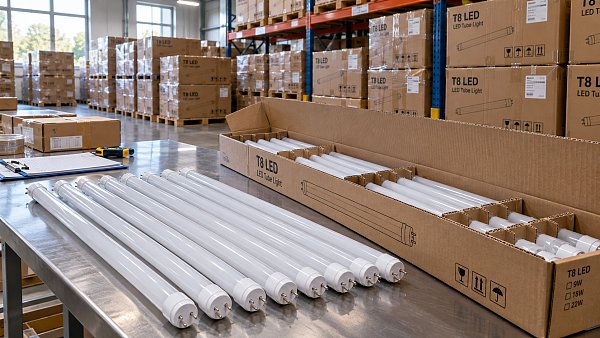
 Commercial LEDHow much should you pay per T8 LED tube when buying in bulk?Compare T8 LED tube price quotes for bulk orders and uncover hidden installation, freight, and warranty costs. Learn how to choose compliant tubes at the best total value.Commercial Tech EditorOct 20, 2026
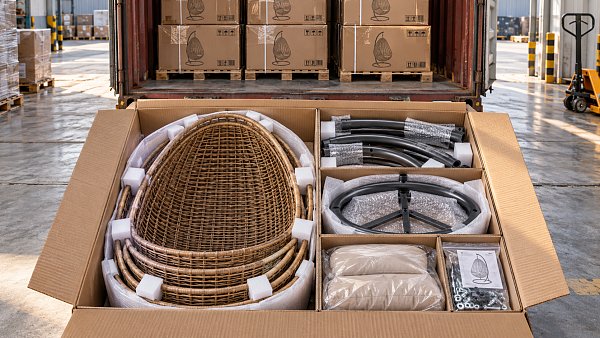
 Outdoor FurnitureHow packaging affects freight costs for wholesale wicker egg chairsExplore wicker egg chair wholesale packaging strategies to cut freight costs, improve container loading, and protect profits. Compare packing options for lower landed costs.Interior Sourcing LeadOct 19, 2026
 Supply Chain InsightsHow to use supply chain resilience metrics to assess recovery riskUse supply chain resilience metrics to compare recovery time, survival buffers, and financial exposure. Learn how to assess disruption risk and prioritize mitigation that protects service.Oct 18, 2026