Industry News
Curation by industry experts
Hot Articles
Popular Tags
Packaging Materials: Why Shelf Life Testing Still Matters in 2026
In 2026, as sustainable packaging and advanced printing technology redefine industry expectations, shelf life testing remains a non-negotiable pillar of packaging materials validation—especially amid tightening ESG compliance and global manufacturing standards. At the GSR Printing Hub, we bridge science and sourcing: empowering procurement professionals, quality managers, and brand strategists with data-driven insights across the Packaging & Printing pillar. Whether you're evaluating barrier performance for eco-friendly packaging or aligning with the GSR Textile Network’s certified fabric suppliers, rigorous shelf life assessment ensures safety, compliance, and brand integrity. Discover why this foundational test still drives trust, traceability, and trade advantage.
Why Shelf Life Testing Is Non-Negotiable in Modern Packaging Procurement
Shelf life testing measures how long a packaged product retains its functional integrity, sensory properties, microbiological safety, and regulatory compliance under defined storage conditions. It is not merely a QA checkpoint—it’s a predictive risk mitigation tool embedded in material selection, design validation, and supply chain planning.
For procurement teams sourcing flexible films, corrugated boxes, or molded fiber trays, skipping shelf life validation risks costly recalls (average cost: $10M+ per incident), delayed market entry (3–6 months average rework cycle), and reputational damage that erodes buyer trust across B2B channels. In 2026, over 78% of EU and U.S. food, pharma, and premium cosmetics buyers require documented shelf life data before onboarding new packaging suppliers.
Unlike static physical tests (e.g., tensile strength or burst resistance), shelf life testing integrates time, environment, and interaction—simulating real-world exposure to temperature fluctuations (10℃–40℃), humidity (30%–90% RH), light spectra (UV-A/UV-B), and secondary packaging compression loads (up to 150 kPa). This dynamic fidelity makes it irreplaceable for decision-makers managing multi-tiered supplier networks.
Core Validation Scenarios Driving Demand
- Fresh food e-commerce fulfillment: Requires accelerated testing at 35℃/85% RH over 28 days to simulate 6-month ambient shelf life—critical for compostable cellulose-based pouches.
- Pharma cold-chain packaging: Demands real-time monitoring across 3–8℃ for ≥180 days, validating seal integrity and moisture vapor transmission rate (MVTR) stability.
- Export-ready consumer goods: Must pass ISTA 3A vibration + thermal cycling (−20℃ to 55℃, 5 cycles) followed by functional shelf life verification under destination climate profiles.

How Shelf Life Testing Impacts Key Procurement Decisions
Procurement leaders increasingly treat shelf life data as a primary technical KPI—not just a compliance appendix. When evaluating suppliers for mono-material PE laminates or water-based barrier coatings, three criteria now dominate sourcing scorecards:
This shift directly affects total cost of ownership. Suppliers using legacy testing protocols incur 22–35% higher field failure rates—translating into $120K–$480K/year in chargebacks for Tier-1 FMCG brands. GSR’s procurement intelligence shows that buyers who mandate full-cycle shelf life reporting reduce packaging-related quality escapes by 63% within 12 months.
ESG Integration: Where Sustainability Meets Shelf Life Science
Sustainable packaging isn’t just about recyclability—it’s about functional longevity. Bio-based PLA films may degrade prematurely under high-humidity transport if shelf life testing excludes tropical climate simulation. Similarly, recycled PET trays with >30% PCR content often show accelerated oxidation after 90 days unless antioxidant migration is quantified during shelf life trials.
At GSR, our Packaging & Printing pillar tracks 147 active sustainability-linked shelf life benchmarks—including ASTM D6868-compliant composting timelines, carbon footprint per validated shelf life month, and biodegradation lag vs. functional shelf life ratio. For example, certified home-compostable paperboard must retain ≥95% seal strength for ≥120 days pre-composting—a dual requirement few suppliers validate holistically.
Procurement teams using GSR’s ESG-aligned shelf life dashboards report 41% faster qualification of green alternatives without compromising safety margins—enabling compliant transitions from fossil-based to bio-derived substrates in under 11 weeks.
What to Request From Your Packaging Supplier in 2026
Don’t settle for generic “shelf life approved” statements. Demand these five actionable deliverables before contract finalization:
- Test reports signed by an ILAC-MRA accredited lab (e.g., SGS, Intertek, or TÜV Rheinland), including raw sensor logs—not just summary tables.
- Full environmental profile: exact temperature/humidity/light/duration parameters used, with deviation thresholds noted (±1.5℃, ±3% RH).
- Functional failure mode analysis: which property degraded first (seal integrity? print adhesion? barrier loss?) and at what timepoint.
- Batch traceability: lot-specific shelf life curves, not averaged data across 12 production runs.
- Post-distribution validation: results from simulated warehouse stacking (72h at 40℃/75% RH + 48h vibration @ 1.5g RMS) followed by functional reassessment.
GSR’s Verified Supplier Program requires all listed packaging manufacturers to submit these five elements quarterly—and cross-verifies them against third-party audit findings. This eliminates data gaps that cause 68% of late-stage packaging failures in new product launches.

Why Partner With GSR for Packaging Intelligence & Sourcing
Global Supply Review doesn’t just publish reports—we embed your procurement team in a live intelligence loop. Through the GSR Printing Hub, you gain immediate access to:
- Real-time shelf life benchmark database covering 217 packaging material systems across 12 geographies—with searchable filters for ESG alignment, barrier type, substrate origin, and certification status.
- Pre-vetted supplier dossiers featuring verified shelf life test summaries, lab accreditation details, and capacity-to-deliver metrics (e.g., 4-week lead time for custom barrier film validation).
- On-demand technical consultation with GSR’s packaging technologists—available for rapid review of your specific shelf life protocol gaps or regulatory alignment needs (e.g., Saudi SFDA, Brazil ANVISA, or Japan MHLW).
Whether you’re specifying aluminum-free coffee pouches for LATAM distribution or validating mono-PP trays for medical device sterilization, GSR delivers the precise, actionable shelf life intelligence that accelerates sourcing decisions—without sacrificing compliance, sustainability, or brand safety. Request your customized shelf life assessment roadmap today—covering material selection, test protocol design, lab partner matching, and compliance documentation support.
Recommended News
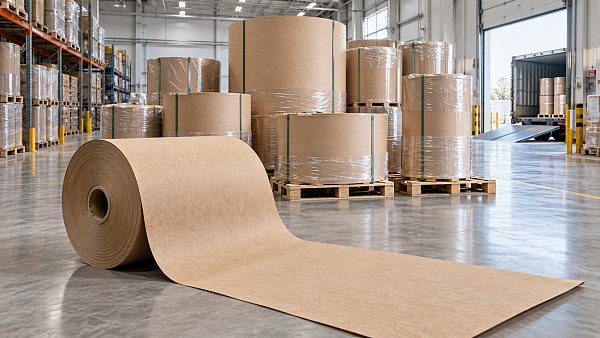
 Eco PackagingWhat affects the price of kraft paper rolls bought wholesale?Kraft paper rolls wholesale pricing depends on grade, basis weight, roll size, order volume, freight, and certifications. Learn how to compare landed costs and choose reliable value.Packaging Supply ExpertOct 03, 2026
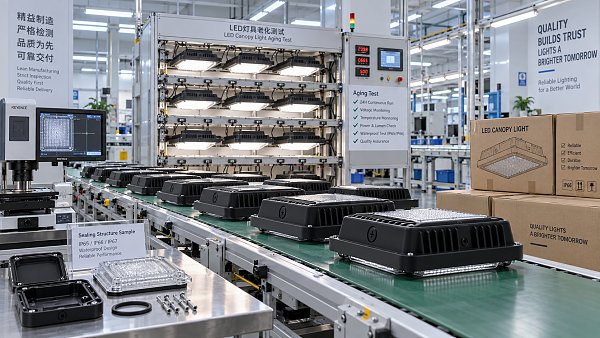
 Commercial LEDHow to evaluate a canopy lights factory before placing a bulk orderCanopy lights factory evaluation guide: verify specifications, compliance, quality control, capacity, and after-sales support before placing a bulk order.Commercial Tech EditorOct 02, 2026
 Commercial LEDHow to choose lighting systems that meet workplace safety needsLighting systems for workplace safety: learn how to control glare, improve visibility, meet environmental demands, and protect workers with reliable, compliant lighting choices.Commercial Tech EditorOct 01, 2026
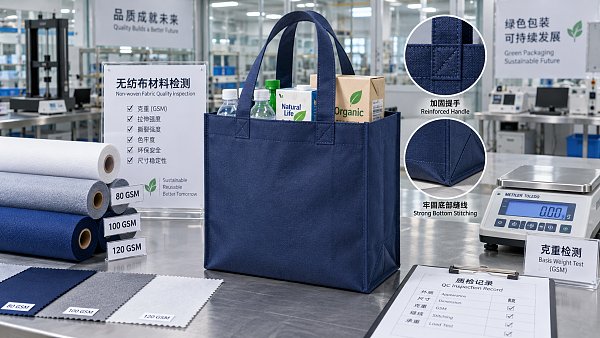
 Fabrics & YarnsWhat fabric weight works best for reusable non woven fabric bags?Non woven fabric for bags: discover the best GSM range for durability, load capacity, print quality, and cost-effective reusable bag sourcing.Textile Industry AnalystSep 30, 2026