Industry News
Curation by industry experts
Hot Articles
Popular Tags
Indonesia's New Regulation Requires Indonesian Language Labeling and Recycling Symbols on All Imported Food Packaging by July 2026, Chinese Exporters Need 45-Day Lead Time for Label Redesign
Indonesia's New Packaging Labeling Rules: Key Impacts and Actions for Exporters
Introduction
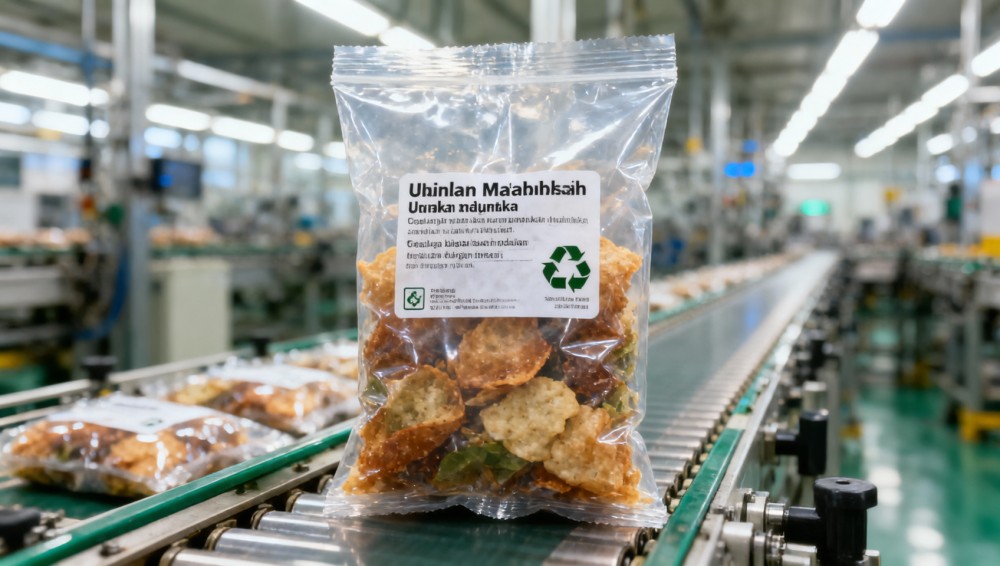
On March 27, 2026, Indonesia's BPOM (Food and Drug Administration) issued Regulation SE No. HK.02.02/B/4567/2026, mandating that all imported food packaging must display material composition (e.g., 'PP#5') and recycling symbols in Indonesian starting July 1, 2026. This regulation directly affects food exporters, packaging suppliers, and logistics providers, particularly those from China who typically require a 45-day lead time for label modifications. Non-compliant products will be barred from customs clearance, making this a critical operational consideration for cross-border trade.
Event Overview
The new rule specifies that all imported food packaging—including plastic containers, films, and labels—must clearly indicate material composition and recycling instructions in Indonesian. The regulation takes effect on July 1, 2026, with no grace period announced. BPOM's notice highlights that non-compliant shipments will be rejected at Indonesian ports. Chinese exporters, who dominate a significant portion of Indonesia's food imports, report needing approximately 45 days to complete mold adjustments, ink compatibility tests, and small-batch validations.
Impact on Key Industries
1. Food Exporters
Manufacturers exporting processed foods, snacks, or beverages to Indonesia must overhaul packaging designs. The immediate challenge involves updating artwork templates and coordinating with printing vendors—processes that may disrupt existing production schedules.
2. Packaging Material Suppliers
Providers of pre-printed packaging films or labels face technical adjustments, particularly for multi-layer materials requiring precise recycling symbols. The requirement for Indonesian-language labeling may necessitate region-specific inventory management.
3. Logistics and Trade Compliance Services
Forwarders and customs brokers must update documentation checklists to include BPOM's new labeling verification. This adds another layer to pre-shipment inspections, potentially extending clearance timelines.
Key Action Points for Businesses
1. Timeline Management
Given the 45-day adaptation cycle, exporters should initiate label revisions by May 2026 at the latest. Late adjustments risk missing the July 1 deadline.
2. Supply Chain Coordination
Manufacturers need to confirm packaging suppliers' capacity for multilingual labeling and symbol engraving. Dual-language versions (e.g., Chinese-Indonesian) may require separate production lines.
3. Regulatory Verification
BPOM's final implementation guidelines (expected by Q4 2025) should be monitored for potential exemptions or modified requirements for specific packaging types.
4. Cost Implications
Budget for additional expenses including plate remaking (estimated 15-20% cost increase per SKU) and potential minimum order quantity (MOQ) adjustments from packaging vendors.
Industry Observations
Analysis suggests this move aligns with Indonesia's broader push for domestic waste management standardization. While the regulation appears straightforward, its execution may reveal complexities—particularly for composite materials lacking standardized recycling codes. From an industry perspective, this could accelerate adoption of digital labeling solutions (e.g., QR codes linking to multilingual content) to future-proof against similar regional requirements.
Conclusion
Indonesia's labeling mandate represents a concrete operational hurdle rather than a mere administrative change. Exporters should treat this as a supply chain pivot point, using the compliance process to audit packaging sustainability—a growing differentiator in Southeast Asian markets. Until BPOM releases detailed technical specifications, businesses would be prudent to adopt conservative interpretations of the rules.
Source
BPOM Regulation SE No. HK.02.02/B/4567/2026 (March 27, 2026). Implementation details pending further clarification from Indonesian authorities.
Recommended News
 Carton & PlasticsHow to assess seam quality in 250ml aluminum beverage cansLearn how to assess seam quality in 250ml aluminum beverage cans with practical visual checks, precise measurements, teardown methods, and defect-control guidance.Packaging Supply ExpertSep 28, 2026
 Carton & PlasticsWhat drives breakage rates in bulk wine bottles wholesale orders?Bulk wine bottles wholesale buyers: discover what drives breakage rates, from glass quality and packaging to pallet loading, and reduce costly claims.Packaging Supply ExpertSep 27, 2026
 Office FurnitureHow supplier scorecards reduce risk in furniture procurementFurniture procurement supplier management becomes more resilient with supplier scorecards that track quality, delivery, compliance, and corrective actions. Learn how to reduce sourcing risk.Interior Sourcing LeadSep 26, 2026
 Office Paper & Printing PaperHow roll diameter affects downtime when using jumbo paper rollsJumbo paper rolls can cut changeovers and downtime—if your unwinder, handling, and tension control can support them. Find the optimal roll diameter for smoother output.Packaging Supply ExpertSep 25, 2026